Duolingo Update: Broken Business or Rare Bargain

Get smarter on investing, business, and personal finance in 5 minutes.
Business Update
Duolingo is a stock that had massive growth expectations embedded in it, and many investors thought they would be a sort of category killer in education, weaponizing AI to absolutely dominate this category and expand out from language learning to all sorts of different lessons like math, chess, but really everything that can be taught.
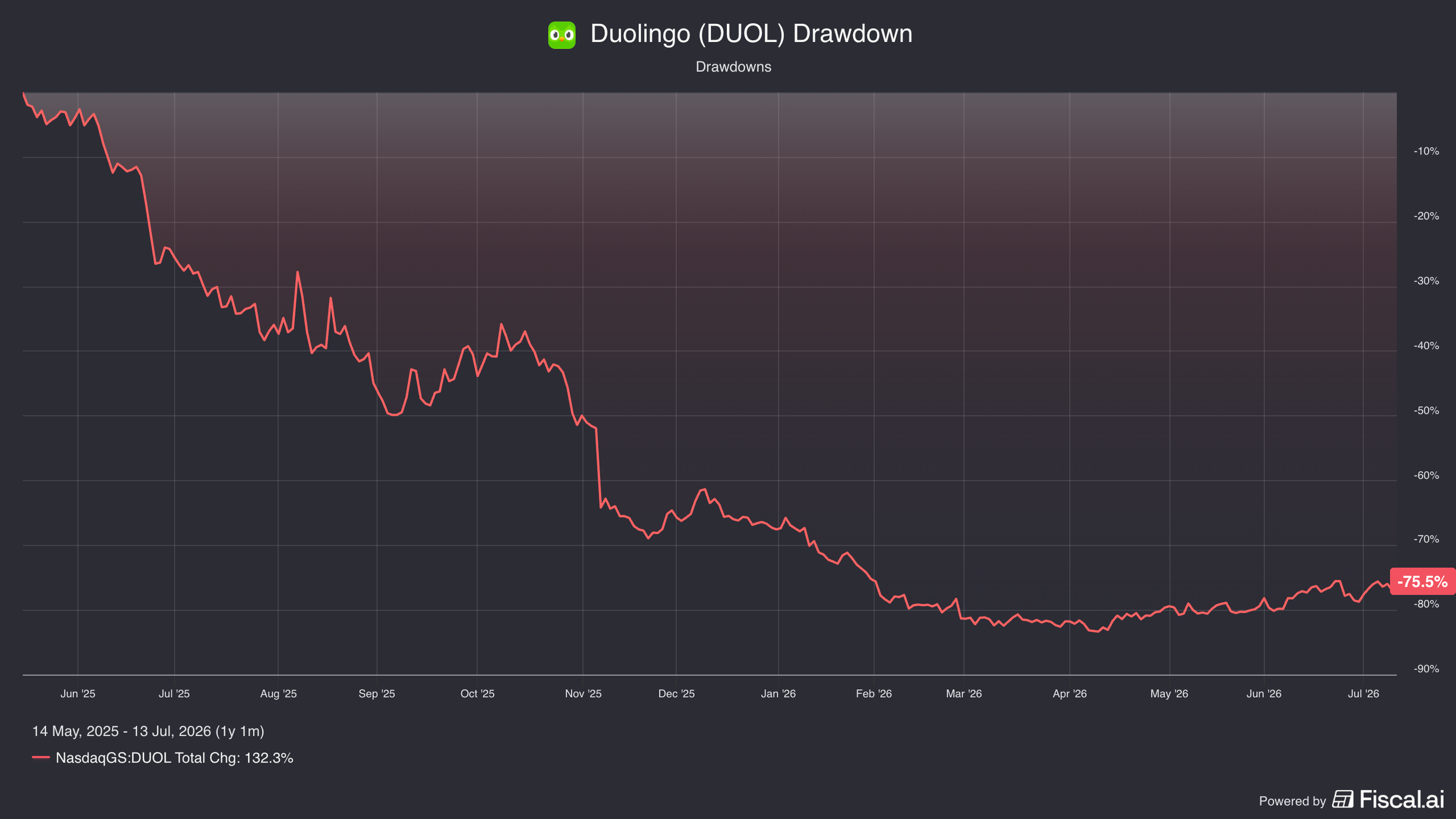
Instead, what ended up happening was growth decelerated starkly, and now the stock is down -75%.
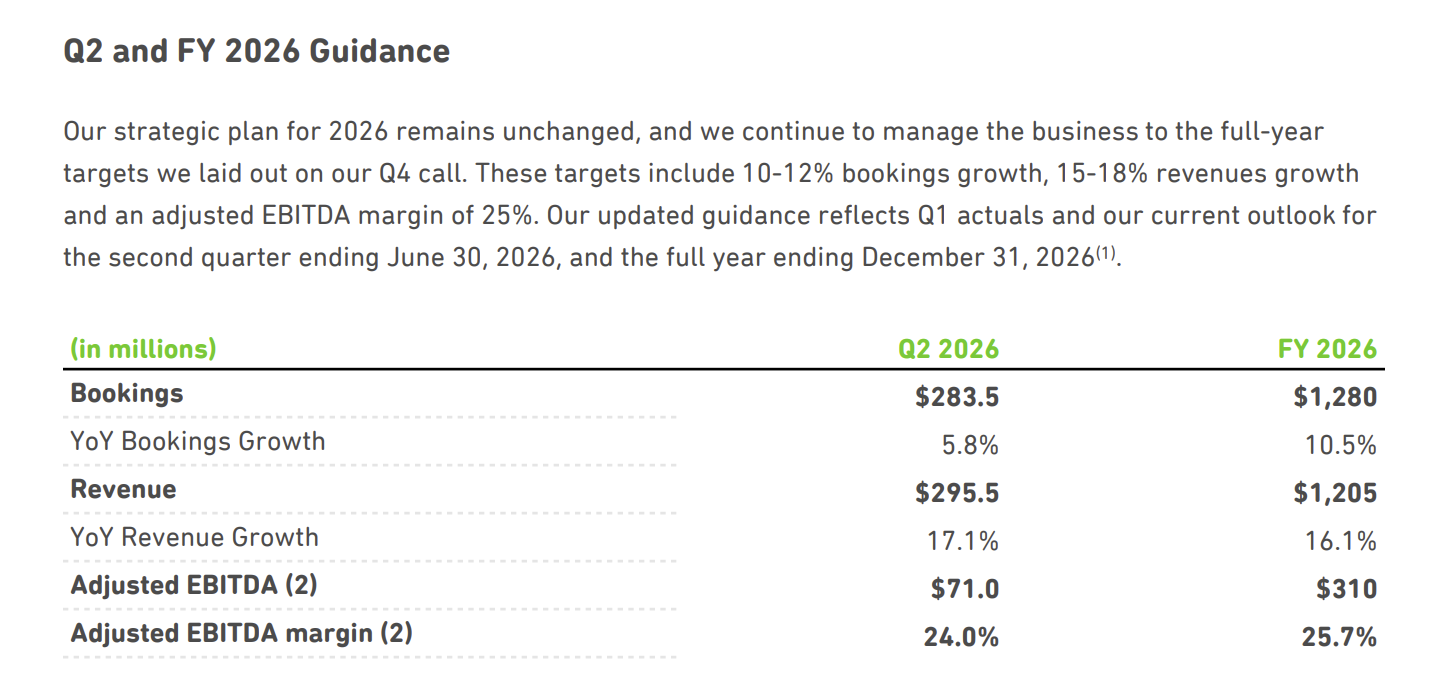
Whereas revenues grew 40% in 2025, next quarter they're guiding bookings to grow just 6%.
So the key question investors have to ask here is, is this a business model that is broken, or is some of this actually self-inflicted?
And could this be an inflection point, maybe an opportunity for investors?
We will cover all of this in this week’s Five Minute Money on Duolingo!
Slowing Growth.
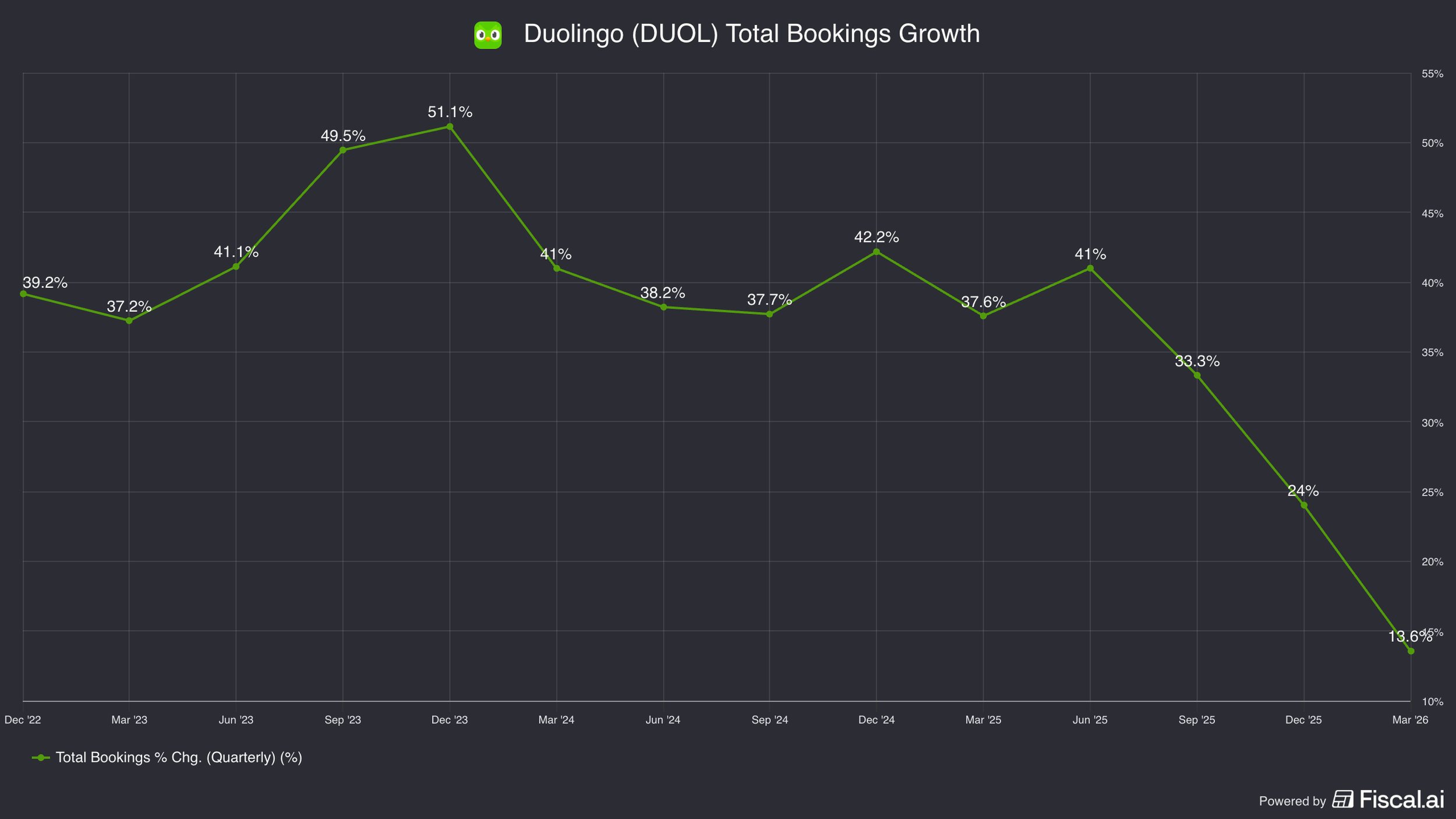
In 3Q25, they posted 33% bookings growth.
I'm going to talk a lot about bookings growth instead of revenue growth, because it's a more forward-looking indicator.
In this quarter, 3Q25, this, in my opinion, was the quarter where things really started changing for the business.
They posted 33% bookings growth at the time, but then guided to a stark deceleration of 22%.
Now, the CEO, Louis von Ahn, at the time said that this was because they were going to focus less on monetization.
They were going to curtail some unhinged marketing that they were doing, and instead really focus on the key value prop and incorporating AI in order to make it a better app.
And so in this quarter, this, in my opinion, was where there started to be what we could call some red flags.
The following quarter, in 4Q25, they did post 24% bookings growth, which just slightly beat at the high end, but then they guided again to another deceleration, this time 11% bookings growth for the quarter.
So this is now the second consecutive quarter of bookings growth really falling a lot.
And then in the following quarter, they posted 14% bookings growth.
They guided again to a deceleration, this time of bookings growth of just 6% for 2Q '26.
So this is a really strong drop-off that rightly had a lot of investors concerned.
Debunking the AI Threat Narrative.
Now, there's been a lot of reasoning attributed to this slowdown and the stock price downfall, but I think a lot of it honestly is just wrong.
A lot of people have been very worried about AI, saying that AI is going to kill Duolingo, or that there's going to be a lot more app competition because it's a lot easier to make apps, or that people will use ChatGPT to learn languages.
I don't think ChatGPT or AI in general is actually a threat to Duolingo, and I think what's really happening is just a more classic growth issue.
What's really happened here, in my opinion, is a company was just growing very quickly, and they ran out of users for their existing value prop.
So my hypothesis of what's really gone wrong with Duolingo is simply that their product didn't have enough users that really resonated with it.
If you recall, there were two things I was saying that Luis von Ahn wanted to strategically shift in 3Q25.
The two big things he said were, "We're going to curtail unhinged marketing," and the second is, "We're going to focus more on making Duolingo a better educational tool, incorporating AI."
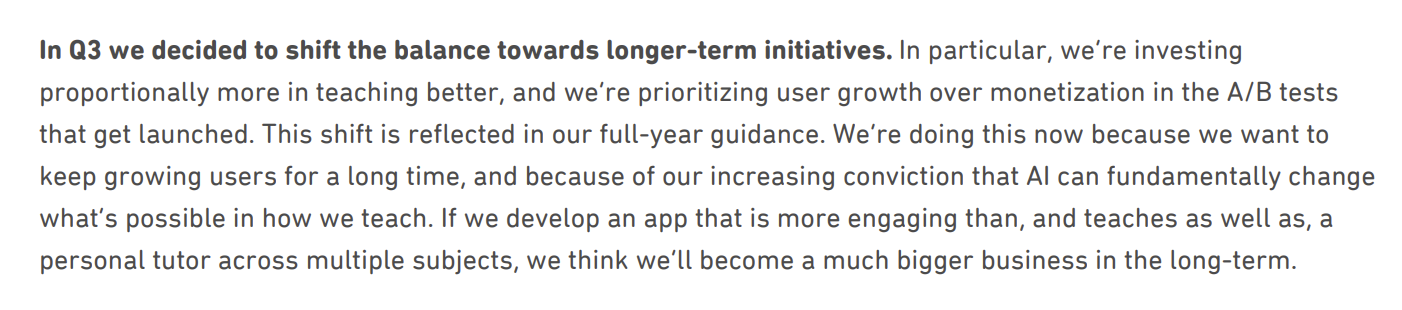
So whether they did this with AI or without AI, I think the idea is the same, which is that they needed to improve the product.
Now these two things together, to me, suggested more underlying issues with the business than maybe was apparent to a lot of investors.
Because you have them changing their product, you have them changing their go-to-market strategy, at the same time you have them saying that we're not going to monetize as aggressively.
So there is an aspect of this that is self-inflicted, but it's not like we immediately saw the user growth numbers increase a lot.
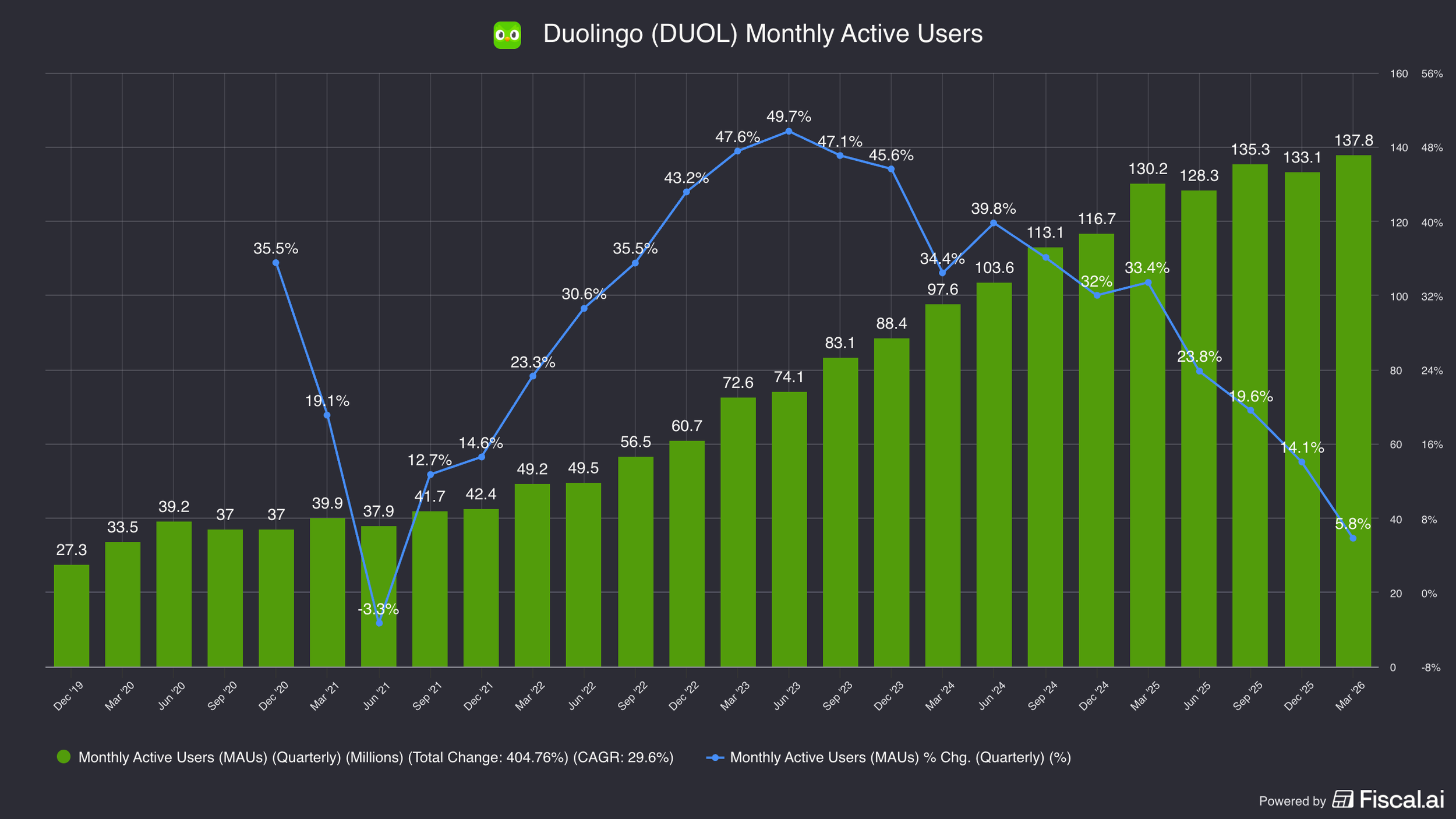
In fact, monthly active users were up only 6% y/y in the last quarter, and that's been consistently dropping.
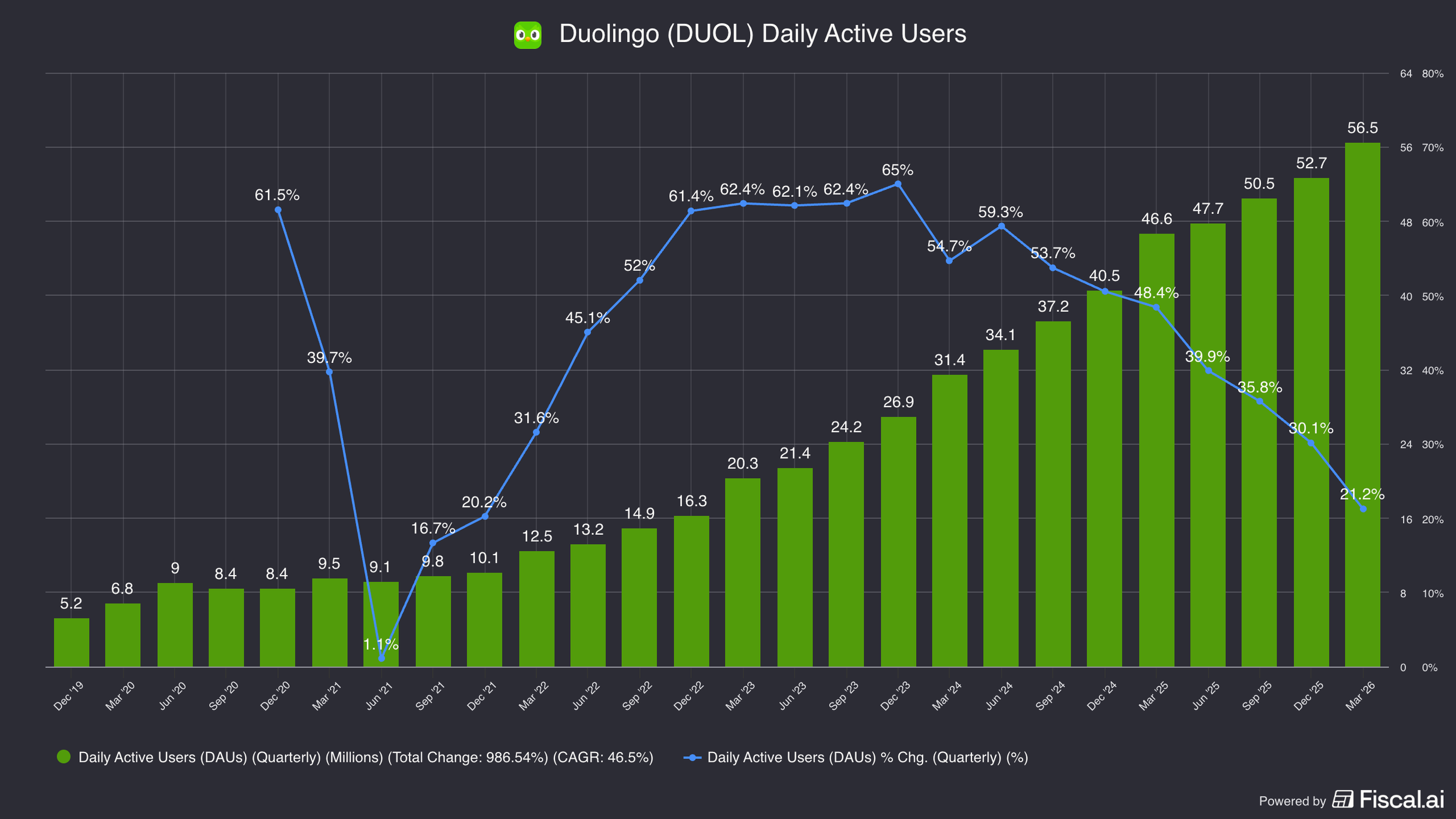
Instead, they've said, let's focus more on DAUs.
So DAUs were up 21% y/y in the last quarter, up to 56mn users using the app every day.
However, that's still down from a year ago of them being at 48%.
My hypothesis is that many people think, or they advertise themselves as, a language learning app, but I don't think that's how most people really use it.
I think it's more like, "I want to have a little bit of fun learning some words," with a score streak to keep and a bit of a gamified experience, and I don't want to spend very long on this app either.
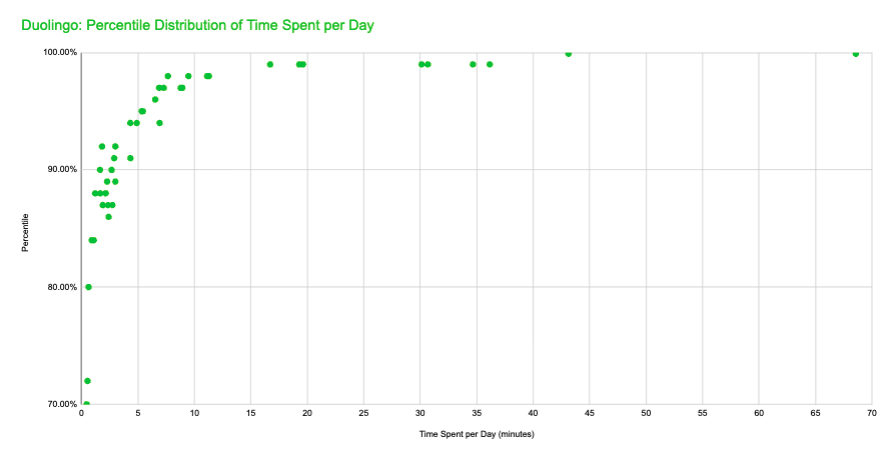
And in fact, they copied Spotify and did this Wrapped data sort of thing at the end of the year.
In that data, it stated that over 90% of users are spending under a couple of minutes a day on the app.
So to me, what this is, is they had a product that they were very good at advertising and marketing a lot for, and there are a lot of people that did enjoy using the app.
But at some point, they realized this wasn't really going to allow them to actually learn a language, and so many of them churned off of the app forever.
And the ones that stayed, it's less about really learning a language, and it's more about having fun learning a little bit.
You feel like you learn a couple words, but you're not going to get to fluency really by just using the Duolingo app.
Now, if we look at their existing monthly active users of about a 130mn, and we make some simple churn assumptions, it's pretty likely that they've had over half a billion registered users on the app at some point.
So they've actually churned through a lot of their potential addressable market, and these users aren't coming back.
Why the Marketing Strategy Had to Change.
This is key to them dropping the unhinged marketing, because the marketing was designed to get people to download the app and try it, not to win back people who already left.
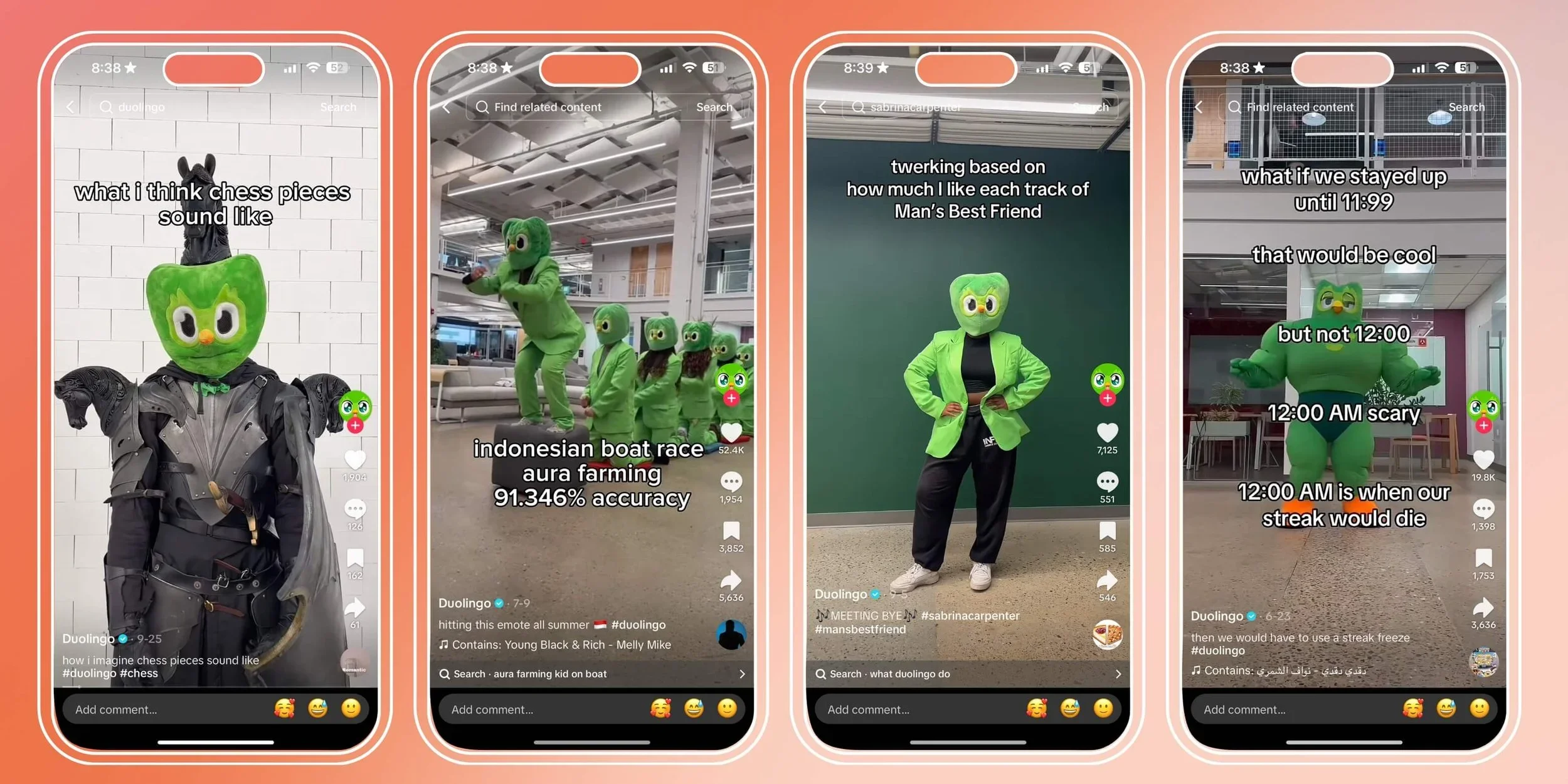
Once you get to the app and realize it's not really fulfilling your preferences, you churn, and you're not going to come back just because you see another unhinged marketing campaign.
Maybe you'll come back, though, if you get a message that suggests the app has actually changed.
So I think that's the first reason why they changed their marketing tactics, though they framed it as, "This isn't really the way we want our brand to be perceived anymore."
I think that's kind of foolish.
I think it just wasn't working the same way, because they're still using those same tactics in newer markets.
It's very effective to get users onto the platform, but it's not going to be effective marketing to reacquire churned users, and growth going forward for Duolingo is going to rely a lot more on reacquiring customers who tried the app and left, which is usually a harder thing to do because people who've already left don't have positive perceptions of the app.
That, together with the fact that they said they need to get better at education and help people actually learn languages, suggests that their core value prop, the existing product, is just not good enough for what most people want.
So rather than letting this be a slow bleed, they accelerated it.
They said, "We're not going to focus on monetization right now. We're going to really just focus on the product, and instead of trying to get extra money from existing users, let's make the product better. Let's create more consumer surplus first."
And so they did self-inflict a little bit of this pain, a little bit of this growth slowdown, and now they're back at the drawing board trying to increase the value of the product.
Rebuilding the Value Proposition with AI.
So just backing up for a second, a good business is one that's able to create value for a consumer and then monetize a portion of that value, while still keeping what's called a consumer surplus, meaning it's fulfilling more consumer preferences than are strictly necessary to get the sale.
That just wasn't the case for most people, and so that's why they've emphasized product issues more.
That's why they've leaned a lot on AI to roll out a lot more courses and lessons, using AI conversations so people can talk to an AI figure and use their language skills, and AI adventures that simulate real-world cases of when you'd need to use a language.

All of this to me is the right way to go, and it makes sense that they're doing it.
But the fact that they had to do it isn't a positive; they saw this growth slowdown coming, and this is how they're reacting to it.
Whether Duolingo can become a genuine learning tool rather than just a fun, gamified habit is still an open question.
What I would emphasize is that when a company has a stark deceleration in growth, it's a very hard thing to re-accelerate, which is what they're calling for in the back half of this year.
They're calling for bookings to grow 10.5% y/y versus 6% in 2Q, which implies bookings re-accelerate again in 3Q and 4Q.
There's a secondary question of whether that's enough growth at current valuation levels to warrant an investment, and what the implied return would be, which we'll get to in a moment.
Good Growth vs. Bad Growth.
The big thing I want to emphasize is that when a company is growing very quickly and adding a lot of new users, it's hard to understand what the retention is of existing users.
With these unhinged marketing campaigns, it was clearly effective at getting new users into the app, but what was missing was how many users were leaving, so we couldn't get a great read on how much people actually appreciated the existing value prop.
I talked about this in a growth video I did, on what separates good growth from bad growth.
One of the big differences between eBay and Amazon was that Amazon actually grew slower than eBay but was much better at retaining users.

eBay grew quicker, but a lot of new users tried it, got ripped off or ran into too much friction with the auctioning and back-and-forth, and eventually stopped using the app.
Real valuable growth is when you're able to retain existing users, even if that means growing slower.
What the Wrapped data suggests, where a lot of users don't use the app for more than a couple minutes a day, is that Duolingo has a very tenuous grasp on the user: you use it because you get notifications and don't want to break your streak, not because you're dying to go back and really learn a language.
This is what happens when you invest in growth stocks and they don't meet expectations: you can see very sharp drawdowns.
I'm generally uncomfortable assuming a high level of growth for exactly this reason.
Yes, that means missing some opportunities, but it also means not getting caught assuming a company will keep growing 30% a year when it's actually about to guide to 6%.
If you want to invest in growth, you probably want more bets, sized smaller, because a larger portion of them aren't going to work out.
When a company doesn't meet the growth priced into its valuation, there's no downside protection, and the drawdown can be really rough.
What Duolingo Is Doing Right.
Now, I will say a few things about Duolingo that I think are rather positive.
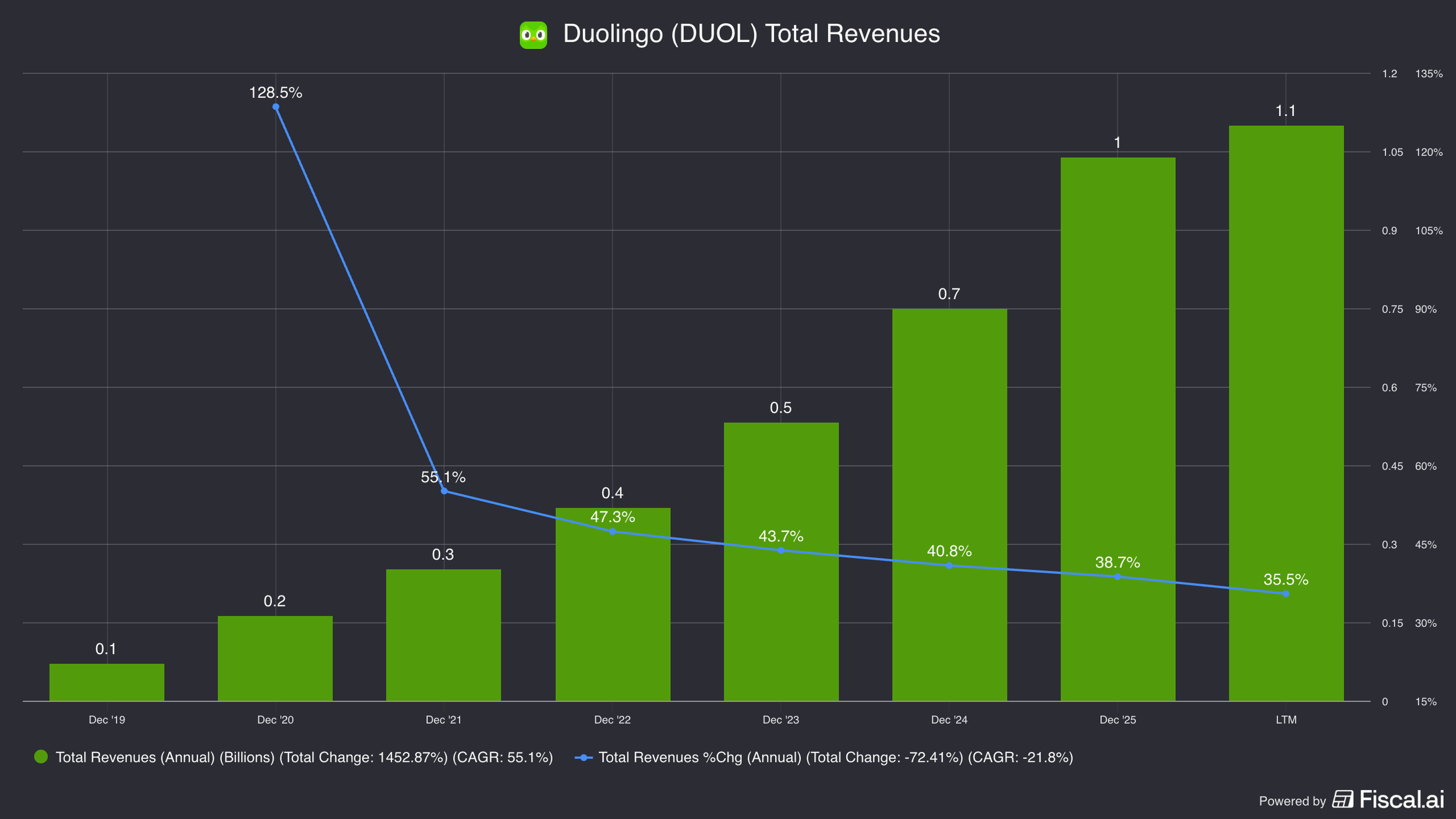
One is that it is very hard to create a mobile app business that is profitable and can generate $1bn in revenue; they're doing $1.1bn right now, and they already had to beat out a lot of different competitors to get there.
I think a lot of the moves they've made in the past couple quarters to improve their value prop are exactly what you'd want to see a founder-owned business do: going back to first principles and asking how to provide a better product for the customer.
Using AI, they're not only able to create a lot more content: they did 20,500 courses alone last quarter, versus 7,800 a year ago and 1,800 two years ago, which shows how much AI is accelerating their product roadmap.
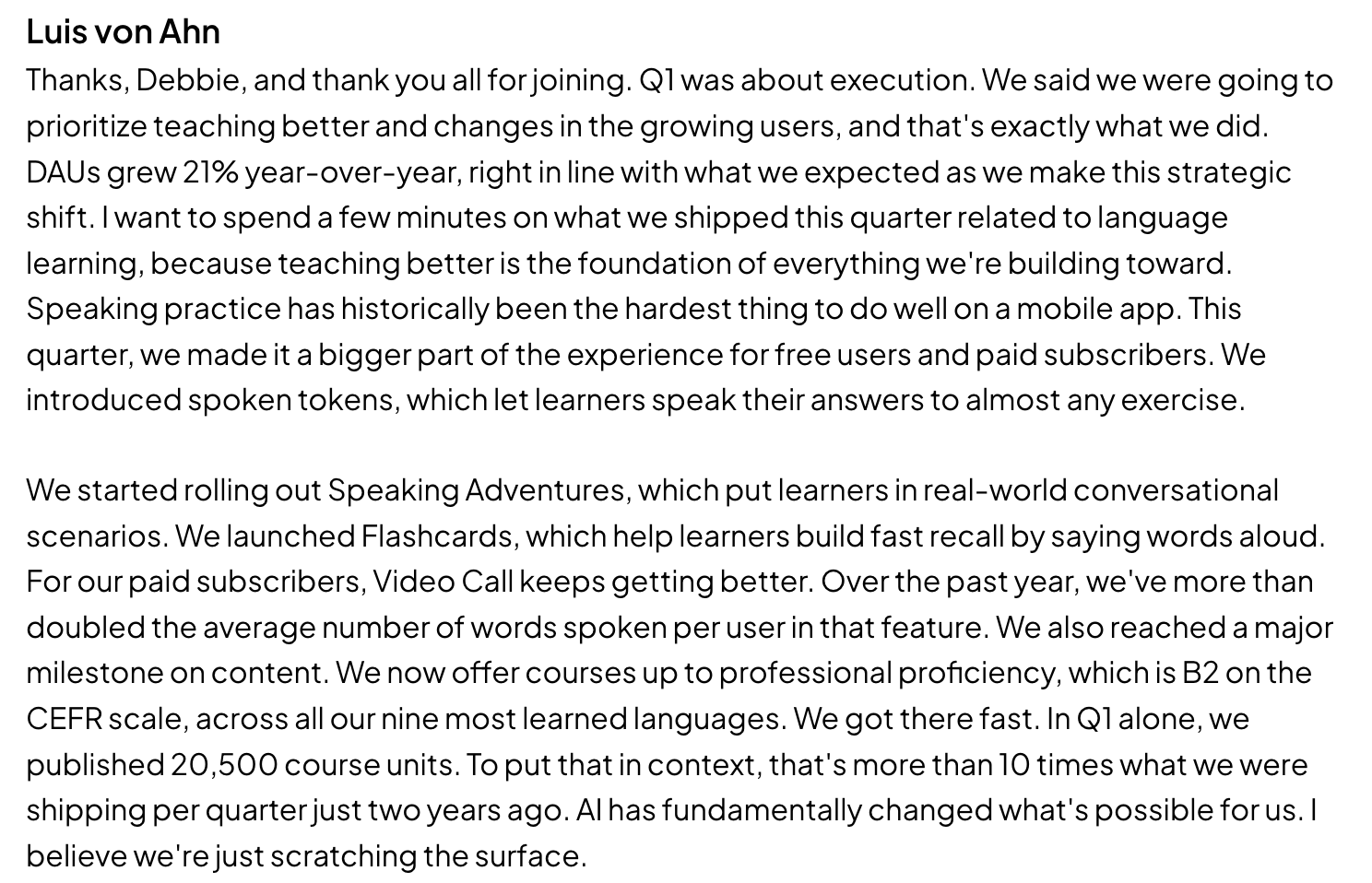
They're also rolling out new categories like chess and math, which could open up the TAM further.

Ultimately, the key question is whether they can create a product that serves a higher consumer preference than the gamified learning experience they're serving today.
If they could actually teach someone a language, people would pay a lot more for that, even with fewer users monetized at a higher rate, since ultimately what they want to do is help people learn.
I've used Duolingo myself, for Mandarin, and while it taught me a handful of words over several months, it never got me close to fluency, which matches what friends of mine who've used it say too.
So I think they're doing the right things, but this transition is still not over.
Ultimately, it comes down to what's priced into the stock, and the stock is around a hundred and thirty-two dollars a share, and the expectations baked into that are much, much lower than before.
Valuation.
At a $132 a share, you have about a $5bn enterprise value, because they do have a little bit over $1bn in cash.
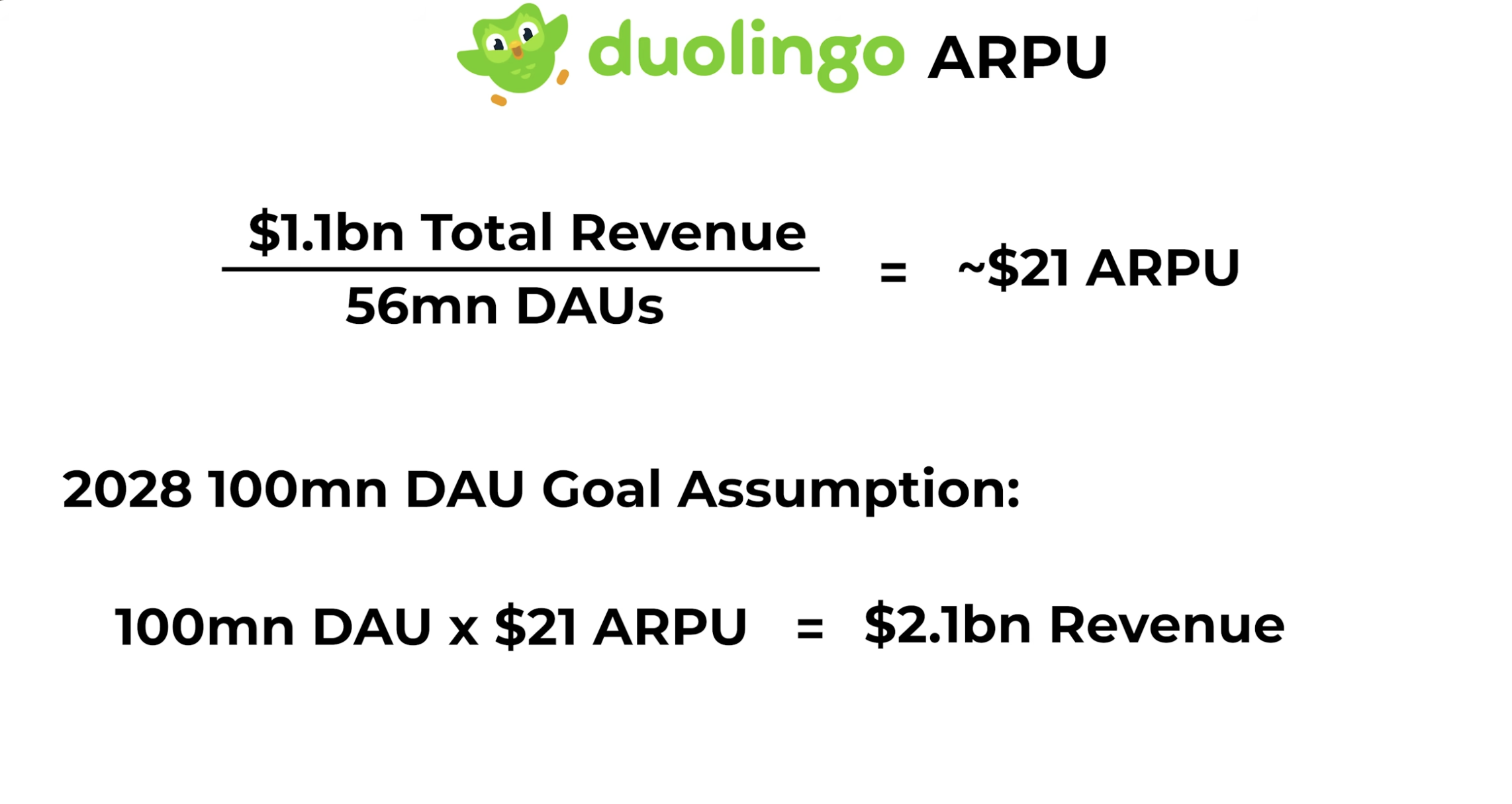
Now, the way I'm going to look at valuation for this business is I'm going to take their 100mn DAU target by 2028, and I'm going to apply the current ARPU they're currently generating.
So if we take their total revenues right now, $1.1bn, divide by 56mn DAUs, they're making about $21 per user.
Now, I know that's not a perfect translation, because, yes, they have a little bit of advertising revenue on the freemium users versus the paid users.
But roughly speaking, I think it's okay we use this.
So $21, we're going to keep that flat.
And if they could get to a 100mn DAUs, then you're getting $2.1bn in revenue.
Right now, operating margins are around 14.5%.
Let's say they could get that to 25%.
I think there could be more upside from there, but let's just use that 25% figure for now, a little bit of conservatism there.
If you tax it 20%, you get about $420mn in NOPAT.
Now, if you're comparing that to their current enterprise value, that means they're basically trading at 12x 2029 earnings.
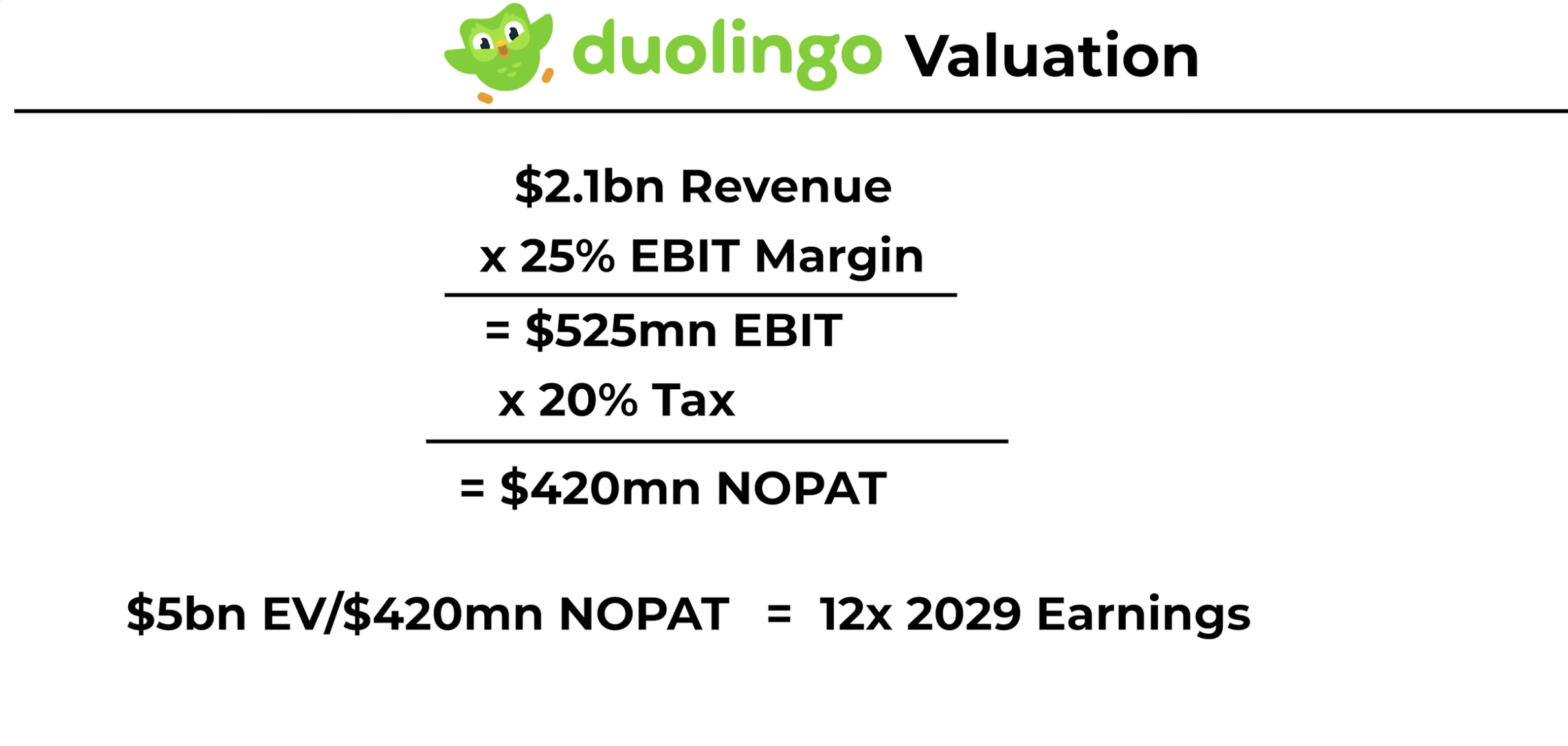
You could increase the ARPU or margin assumptions if you want; this is just a framework, and these seem like reasonably conservative estimates if they can achieve what they're talking about, putting them at 12x 2029 earnings.
And I say 2029 instead of 2028 because if they get those 100mn users by the end of 2028, then that'll be the following year when that actually ends up happening.
Now let's say you put a 20x multiple on that, which depends how much they're growing ultimately, whether or not that's a fair multiple.
If they're growing a high single-digit number at that point, 20x is probably fair.
Now if we are using just the 20x multiple, that's going to be about a 20% annualized return from here.
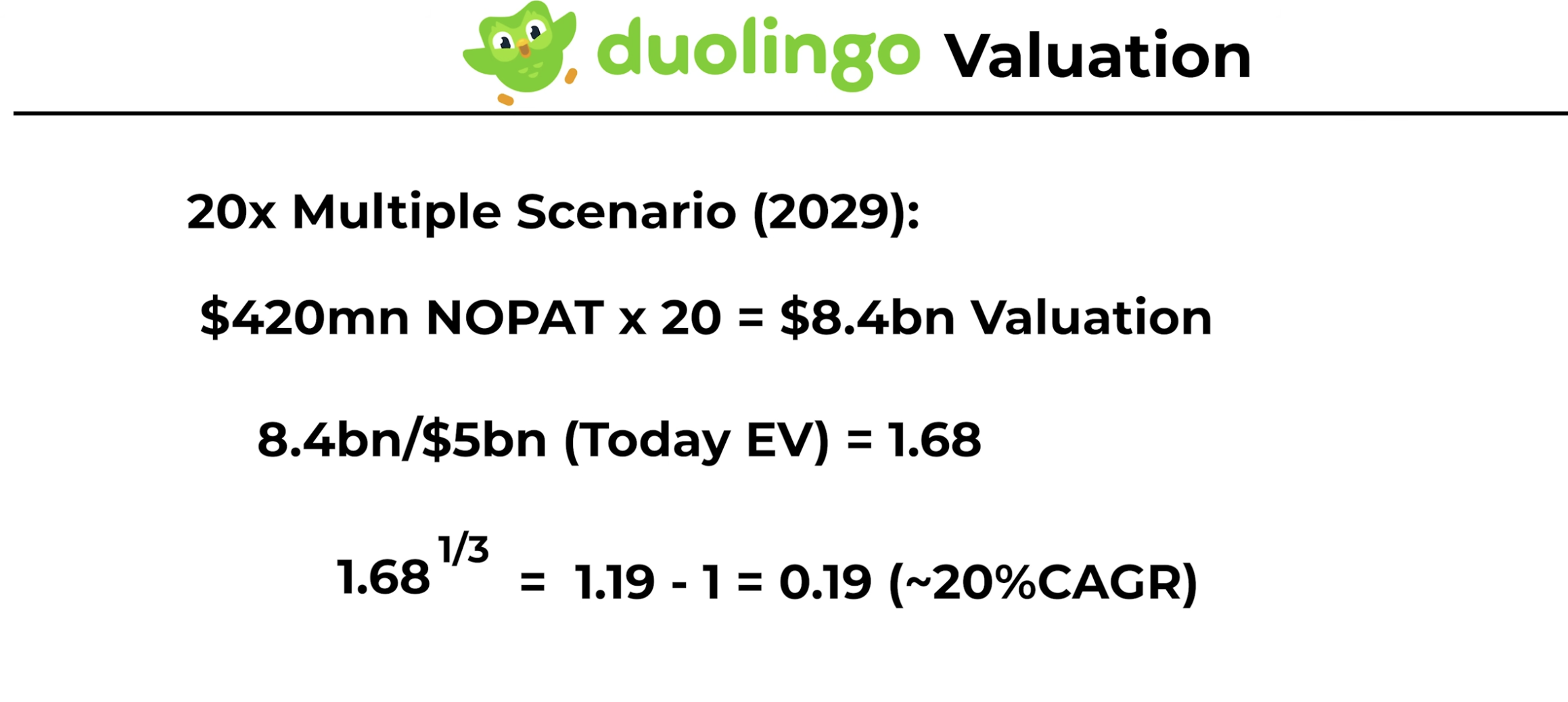
And I'm basically assuming that investors are willing to pay that 2029 earnings estimate we have in 2028.
So that year is not accounted for in the CAGR, because you're paying a multiple on forward earnings.
So that gets you a pretty solid return, right?
But you still have to have the company go from generating right now 6% bookings growth to really re-accelerating that a lot, which means you have a lot of faith in management, you have a lot of confidence in this product and this business.
If they are able to re-accelerate growth, grow a mid-teens number, I think 25x can be fair.
If they could get to 20% plus growth at that point, which would really be fantastic, really re-accelerating growth, 30x+ multiple could be fair.
Risks and Why This Isn't a Conservative Bet.
For a lot of investors, this will not read as a conservative assumption.
I typically don't invest in turnaround companies, because the execution risk is much higher: you're not talking about a management team running the same playbook that worked before, you're talking about them doing something different.
I don't know if the new, less unhinged marketing approach is going to work as well, whether churned customers are willing to give Duolingo another chance, or whether they'll come to associate it with genuine learning rather than a gamified experience.
It's not a conservative assumption to make that bookings are going to re-accelerate from mid-single-digit growth to 20% plus, which is what's implied in the math above.
My advice would be to stay very cognizant of the assumptions implied in any return math you do: run the same framework, and ask yourself honestly whether you're comfortable with that much of a re-acceleration in growth.
Some investors will gain confidence in this kind of business where others pass, and that's what makes a market.
Ultimately, it is up to you to make that decision.
For more on Duolingo, check out this video below.
Nothing in this newsletter is investment advice nor should be construed as such. Contributors to the newsletter may own securities discussed. Furthermore, accounts contributors advise on may also have positions in companies discussed. Please see our full disclaimers here.
