How Fred Liu of Hayden Capital Finds and Invests in Emerging Compounders

Get smarter on investing, business, and personal finance in 5 minutes.
Below are key takeaways from my recent interview with Fred Liu of Hayden Capital. A special thank you to my analyst Matthew Harbaugh for compiling these notes below.
Fred Liu’s Investment Framework.
Fred Liu describes Hayden Capital as a global, concentrated tech investor that focuses on “companies that can 3x or 5x their earnings power over a decade plus.”
The portfolio typically holds five to 15 names, with the goal of compounding capital alongside businesses as they become more valuable over time.
His emphasis is less on short-term business changes and more on durable traits like founder quality and culture, since “what doesn’t change is really the founder and the culture that they instill in these businesses.”
He started in e-commerce, especially in the U.S. and Indonesia, and has since expanded into consumer entertainment, fintech, and software. Geographically, the mandate has also widened beyond the U.S. and Asia into Japan and Latin America.
Across all of these markets, he looks for owner-operators who “think outside of the box and disrupt the status quo,” because those founders are more likely to build differentiated businesses in less conventional environments.
Why He Runs a Concentrated Portfolio.
Fred argues that concentration works because returns follow a power law.
In his view, “the top 20% of ideas generates all of our alpha,” while the rest mostly nets out.
He shares that Berkshire Hathaway’s success came from a handful of winners.
That framework explains why he is comfortable starting with small positions and adding only when evidence improves.
New investments often begin as tracker-sized positions, sometimes below 2% to 5%, while conviction is still forming.
He then builds the position as KPIs confirm the thesis and the range of outcomes narrows.
In his portfolio structure, new positions are under 5%, core positions are 10%+, and the biggest names can grow into the mid-teens or even 20%.
Position Sizing and Trimming.
Fred has historically been willing to let winners compound for long periods, but he says market structure has changed.
He points to higher volatility across both small and very large companies such as Netflix dropping -30% over a month, and notes that, in some cases, the same stock can imply very different returns depending on where it is in the cycle.
Because of that, he is more open than before to trimming and re-entering later at better prices.
He describes this as a more tactical response to a market where “there is more volatility in the market today.”
Investing in Rational Capital Allocators.
Fred prefers rational capital allocators over empire builders.
He believes many management teams are motivated by ego and want to maximize revenue or size, even when that is not the best use of capital.
By contrast, he wants teams that can make counterintuitive decisions quickly and shut down ideas that are not working.
He points to Sea Limited as an example of this discipline.
The company tested new geographies, including India and Eastern Europe, and then moved on when the economics did not justify continued investment.
For Fred, that willingness to pivot is a positive signal, not a failure, because it shows management is not “just gonna spend into oblivion.”
E-commerce Framework.
Fred studied the e-commerce model thoroughly.
If he had to build an e-commerce business from scratch here is what he would do.
Fred’s e-commerce framework starts with the idea that emerging markets should be built mobile-first.
He argues that in these markets people often first experience shopping through a phone rather than a desktop, and that mobile constraints naturally favor super apps and multi-vertical behavior.
In desktop markets, by contrast, switching tabs and price-comparing is easier, so businesses tend to remain more vertically segmented.

He also prefers long-tail, less commoditized categories such as clothing and beauty.
Those products are harder to price compare and more dependent on platform experience, content, and trust.
He also notes that female shoppers tend to leave more detailed reviews, which helps create richer product pages and more useful consumer feedback loops.
Sea Limited and Shopee.
Fred says one reason he increased his Sea Limited position was that “time spent and order frequency was increasing.”
That mattered because it suggested Shopee was becoming more sticky and more habitual.
He viewed that as evidence that the platform was building real mindshare, especially in markets where consumers have limited app capacity and tend to favor the few apps they use most often.

He also emphasizes execution as a moat when e-commerce penetration is still low.
In the interview, he told a story where Shopee could copy new features from Lazada quickly and often execute them “three times as better.”
At that stage, he believes speed of iteration, user engagement, and category selection matter more than classic first-mover advantage.
Today, Sea Limited is going through a reinvestment phase where EBITDA margins in relation to GMV have dropped to 0.5%.
He sees Sea Limited hitting 2-3% EBITDA of GMV from 0.5% in the near future after their reinvestment phase and when they do, the stock should “re-rate materially.”
Why Amazon is Weaker in Emerging Markets.
Fred argues that Amazon’s strengths do not always translate well outside the U.S. In lower-income markets, “price matters more than delivery speed,” which makes same-day shipping a harder value proposition for cheap products.
His broader point is that consumer behavior, income levels, and logistics expectations vary enough that a winning U.S. e-commerce model may not be the right model elsewhere.
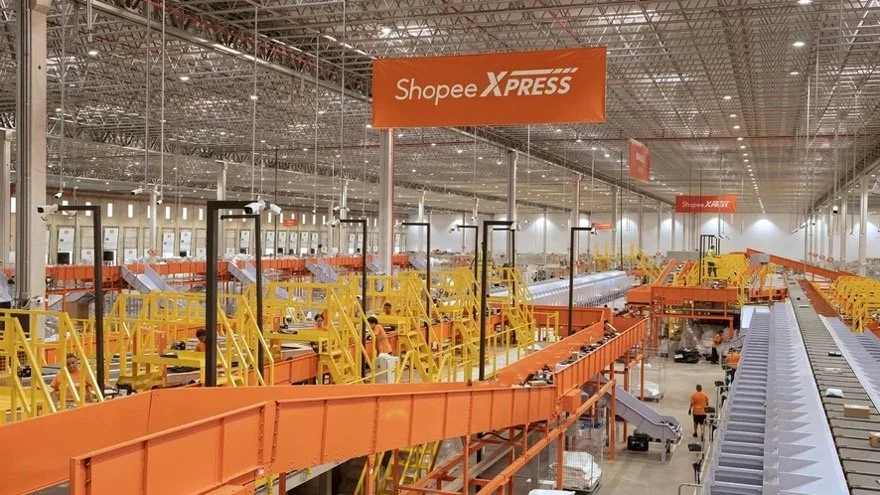
That is one reason he thinks Shopee’s model fits its markets better. Rather than competing on premium logistics, it competes on engagement, price sensitivity, and frequency.
In his view, that is a better match for emerging-market consumer behavior.
Why Pinduoduo Overtook Incumbents.
Fred sees Pinduoduo as another example of a company that succeeded by being a fast follower rather than a pioneer.
He says they “have always been the fast followers and copiers,” letting others spend money on experimentation first and then learning from their mistakes.
In his view, that is especially powerful in China, where many startups burn cash trying to invent a business model before a better-capitalized player arrives.
He also highlights Pinduoduo’s focus on tier-3 cities and lower average order values.
That approach fit a very different consumer profile from Alibaba’s more tier-1 city orientation.
The result was a business model tailored to price-sensitive users who cared less about delivery speed and more about value.

Shopee vs Mercado Libre in Brazil.
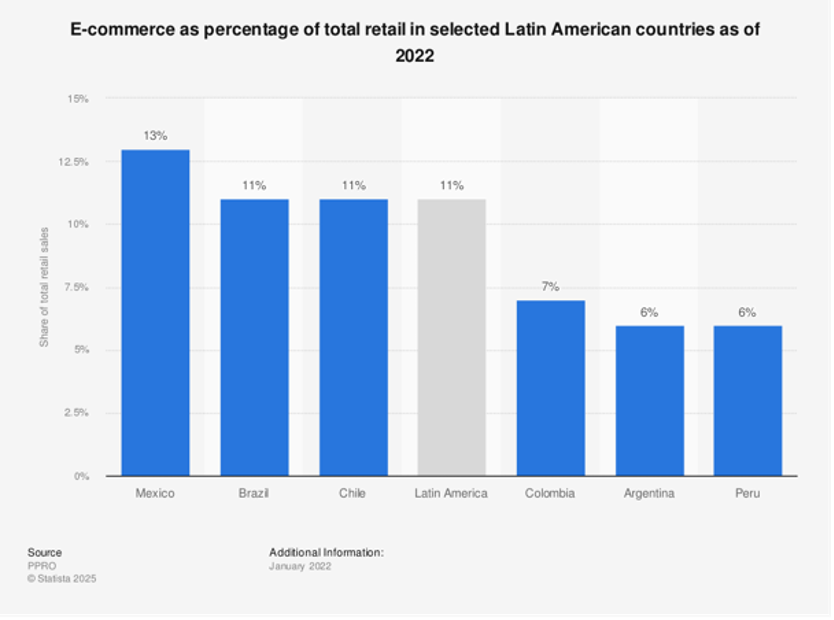
Fred is constructive on Brazil because he sees a more favorable backdrop for e-commerce than in many other emerging markets.
He points to better credit infrastructure, higher GDP per capita, and a consumer base that can support profitable operations if a company targets the right segment.
In his framing, Mercado Libre is more focused on the top 5% of households, while Shopee is aimed at the bottom 95%.

He also believes e-commerce penetration tends to rise as countries get richer.
That makes Brazil, in his view, an attractive market where long-term adoption should continue to deepen and both should win.
Why Fred Invested in AppLovin.
Fred says the market long misunderstood AppLovin as just a mobile gaming company, while he saw a larger ad-tech opportunity.
He points to the company’s access to roughly 200 million players as a key asset, because that data gave it visibility that other ad networks did not have, especially when Apple launched ATT.
He also says the MoPub acquisition helped AppLovin own both supply and demand, giving it broader control across the ad stack.

His view is that AppLovin behaves somewhat like a market maker such as a Citadel in the ad market, earning a spread by matching demand with supply.
The upside beyond gaming comes from improving ad conversion from 1.3% to 5% and expanding into e-commerce advertising.
That said, he still views it as a call option layered on top of a strong gaming base.

AppLovin Risks.
Fred sees valuation as a real risk, since the market may already be assigning substantial value to the gaming business alone.
Their e-commerce business however is a call option.
He also acknowledges that a large platform company like Apple or Meta could create disruption.

His argument, however, is that AppLovin is more entrenched than many investors assume, and that ecosystem incentives may make it harder for those giants to fully displace it.
He does not dismiss the risk, but he frames it as a tail risk rather than the base case.
In his view, the stronger the network effects and data advantages become, the harder it is for a platform giant to unwind the business without damaging the broader ecosystem.
For more insights from Fred Liu, check out the interview below.
Nothing in this newsletter is investment advice nor should be construed as such. Contributors to the newsletter may own securities discussed. Furthermore, accounts contributors advise on may also have positions in companies discussed. Please see our full disclaimers here.
