Why You Would Have Missed Amazon in 2000
Get smarter on investing, business, and personal finance in 5 minutes.
Which company would you rather own?
A faster growing business with more users and is profitable, or a business with fewer users that's growing slower and is losing a lot of money at an accelerated rate.
Well, if you picked the first business, congratulations, you just purchased eBay and you passed out on Amazon.
Now, this is why investing is so hard because any textbook would've told you, you did the right thing.
You picked the company that was growing faster and was profitable and you avoided this company that was losing a lot of money.
That who knows what would've happened in a few years, maybe they went bankrupt.
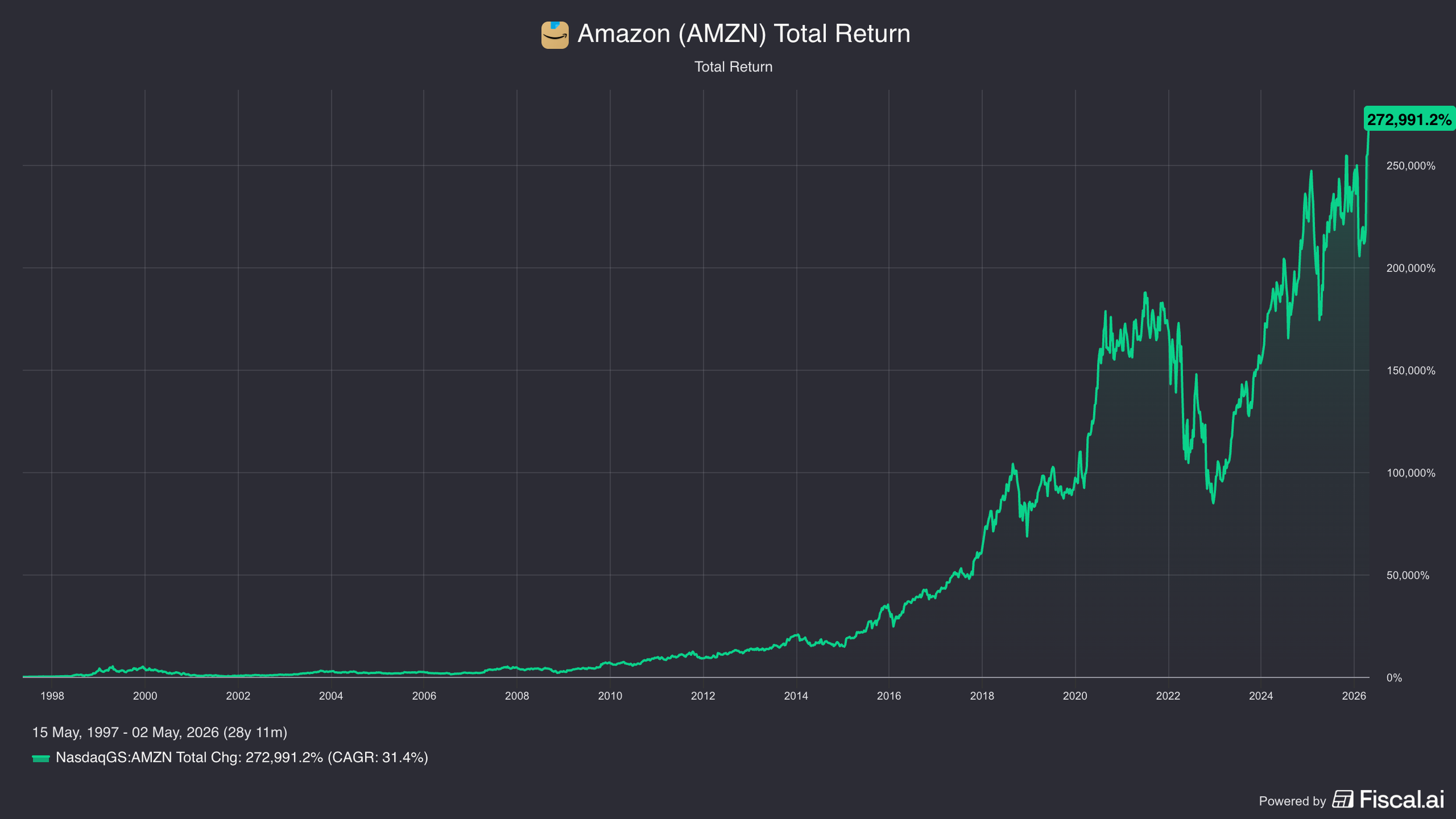
And of course, what ended up happening was Amazon was the far superior investment.
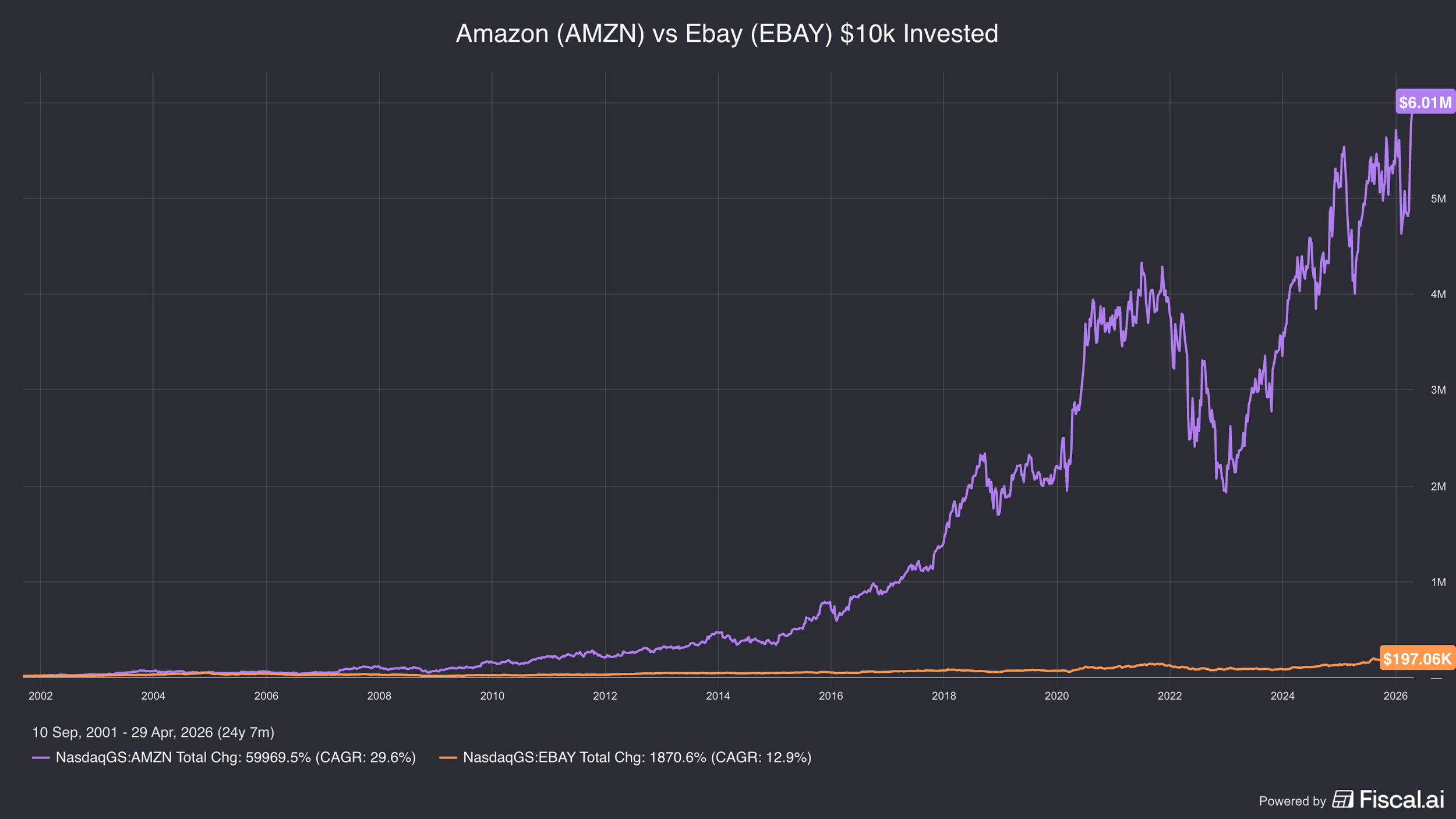
But if we look at the year 2000 and look at the actual numbers that they give us, it's not so obvious what to decision to make.
In the year 2000, eBay had 22 and a half million customers versus Amazon's 20 million.
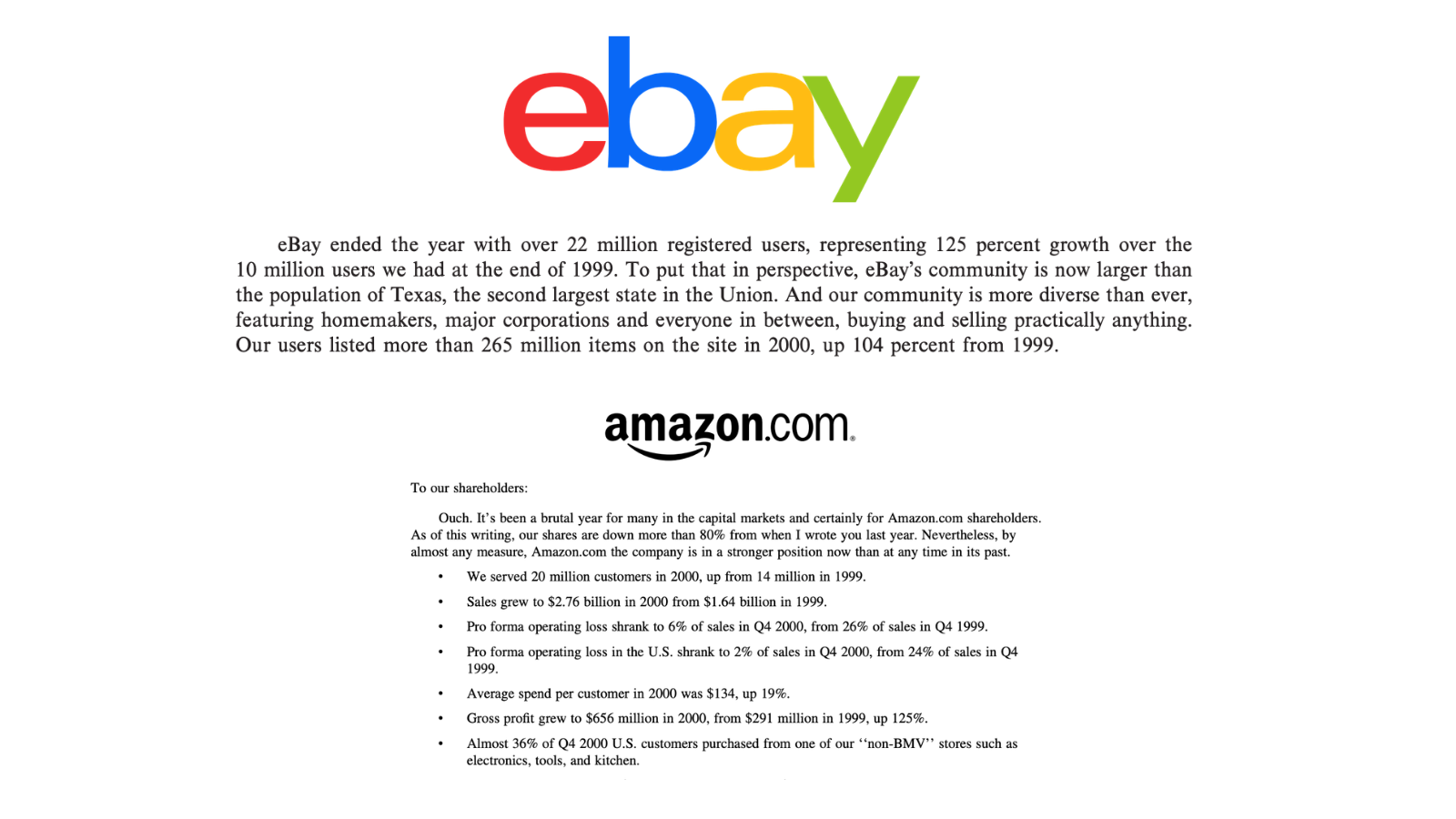
Their user growth was 125% versus Amazon, who only grew users at 40%.
They were growing revenues at about 93% versus Amazon's 68%.
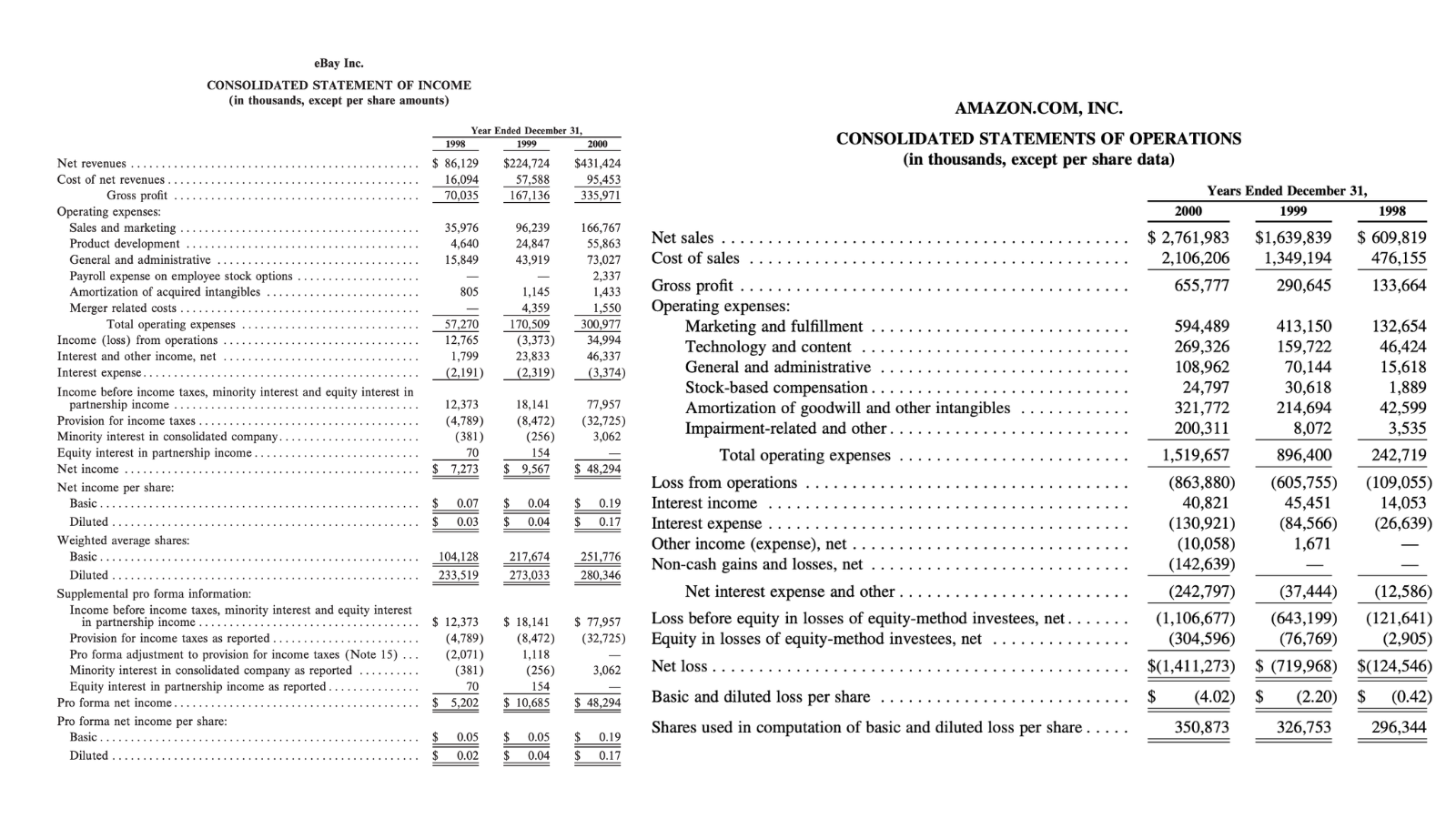
And on top of that, eBay was posting a profit of $35 million versus Amazon that was posting a loss of $860 million and that loss was actually up year over year.
And so as an investor looking at this, how would you have actually known that Amazon would be the better investment?
And what makes this even harder is the fact that Amazon traded at a far higher valuation.
At the time, Amazon was almost three times as expensive as eBay.
What is the takeaway that would allow you to reproduce this sort of understanding to an investment today?
Ultimately, the answer comes down to understanding consumer preferences and how that shows up in retention.
What is a Great Business?
A good business does three things:
1. Create value
2. Take a portion of that value
3. Protect that value
There's a disconnect between the thing a business offers and what you really want from the business.
If you take a marketing class, a basic business class, they'll talk about product market fit.
But the problem with this idea of product market fit is there's a lot of different markets and sometimes the same product can work well in different markets than it's intended to.
Milkshakes and the Job to be Done.
If you're familiar with Clay Christensen, he was a Harvard business professor who came up with the idea of Innovator's Dilemma.

He has this brilliant example where he talks about going to a McDonald's and noticing that a lot of people were buying milkshakes in the morning.
The question he had was, “Why was everyone buying milkshakes in the morning? What is the real market here?”
If you were a business person at McDonald's, maybe you thought, “Well, you know, people just love getting sweet desserts in the morning. And you know, our milkshakes are delicious and they're a good price and they're convenient. That's why people want to buy them.”
That would've been wrong because it turned out the reason why these people were buying these milkshakes was they were in a rush on the way to work and they wanted to eat in their car and it'll be quick too, because McDonald's are everywhere and it's not expensive.
Seeing this, Clay Christensen came up with the idea of a “job to be done,” where he says, "we hire certain products to do a job."
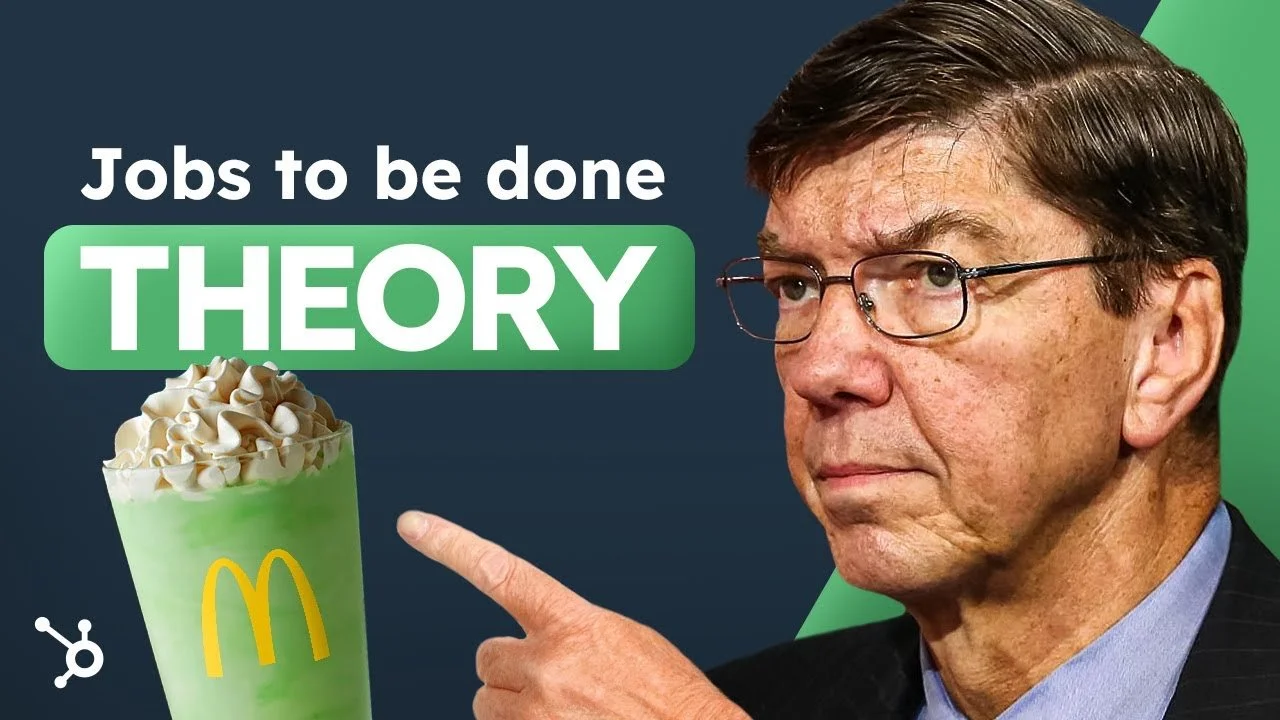
The job to be done here was a product that will fill me up enough that I can have on my way to work that's very quick and inexpensive too.
We can also look at this from the perspective of preferences were each of these individually fulfilled things were their own preference.
In this case, the person purchasing the milkshake had a preference for something that could be 1) eaten in one hand, 2) something that was convenient, and 3) it fills you up.
Thinking in terms of preferences, we see that this idea of a market doesn't really make sense that much.
What is the market right now for milkshakes?
It wasn't actually a market for milkshakes, as it turned out, the real market was a market for something to eat on the way to work.
The consumer hierarchy of preferences is basically the other side of the value prop.
A business offers a value proposition and a customer has their own sort of preferences.
If enough of these preferences get fulfilled by the value prop, then you'll get a sale.
Consumer Hierarchy of Preferences.
Now, if you are well-versed in psychology, maybe you've noticed it sounds pretty similar to Maslow's Hierarchy of Needs.
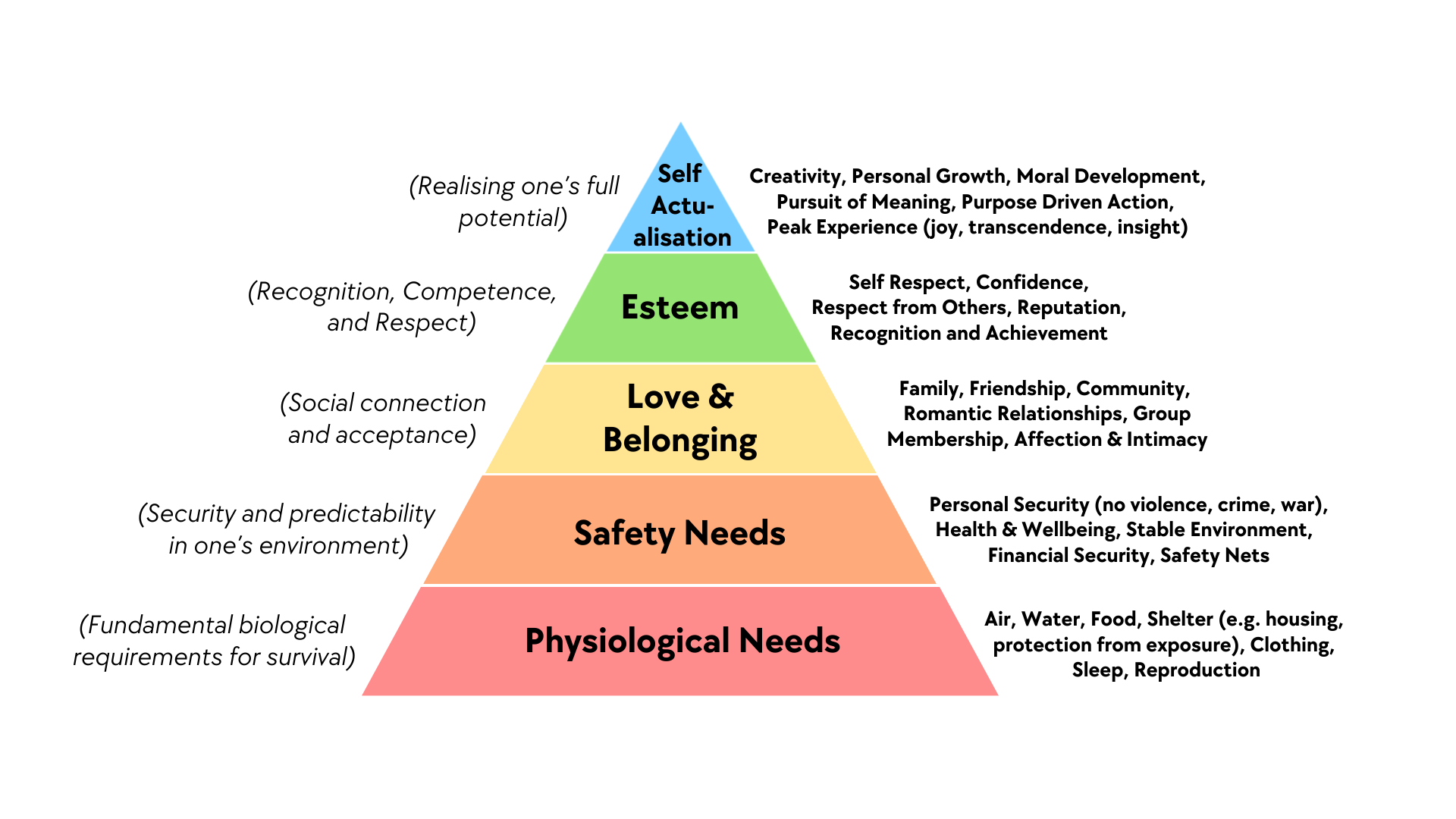
The idea of Maslow’s Hierarchy of Needs is you fulfill these bottom order desires and then you can move up beyond that.
The consumer hierarchy of preferences is that same idea applied to a customer buying something.
Let's say that you have a dinner tonight and you need a new button down T-shirt.
You are going to the store and you need the t-shirt today, so the first preference is it has to be available today.
The second preference you have is it has to look decent.
The third preference you might have is that it needs to be under $100.
And then the fourth preference is that it needs to fit.
If you can find an item that fits these four preferences, that company's getting a sale.
And so all the company has to do is make sure they're fulfilling these preferences up to the point that you are willing to buy.
Now there's a key part to this that's important to grasp, which is that a lot of businesses will not just fulfill these four preferences, they'll fulfill other preferences as well.
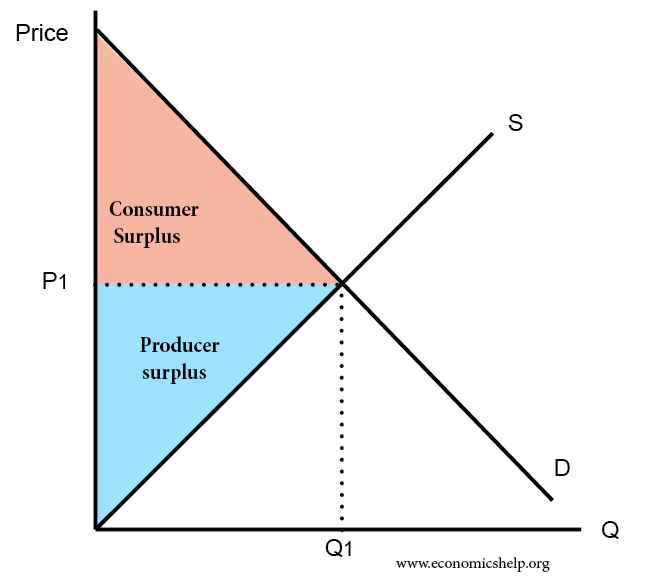
When a business fulfilled more preferences to a consumer that was necessary in order to elicit a sale, they create consumer surplus.
This is the reason why we all love Costco.
Costco's a poster child of consumer surplus.
The reason why is because as it turns out, the preferences that people have are for high quality goods at low prices.
Customers are willing to shop in a warehouse that is not very nicely designed and pull stuff off of pallets and all of that because their preference above and beyond everything else was for low prices and high quality goods.
That value prop is so strong that it's actually creating consumer surplus with the customer.
And we can kind of get a sense that that's there because if Costco raised their prices 3%, how many people would stop shopping at Costco? Probably not many.
This shows by focusing on just these couple preferences at the cost of everything else, allowed them to build a very strong and sustainable value prop that customer's preference.
The value prop is what a company offers and the consumer preferences are what a customer values.
Etsy Mistake.
Etsy is the number one marketplace for homemade, idiosyncratic, vintage goods.
The thesis behind an investment was that customers are going to do a lot of their shopping at Walmart or Amazon, but there’s a whole category of goods that they want that are going to be unique.
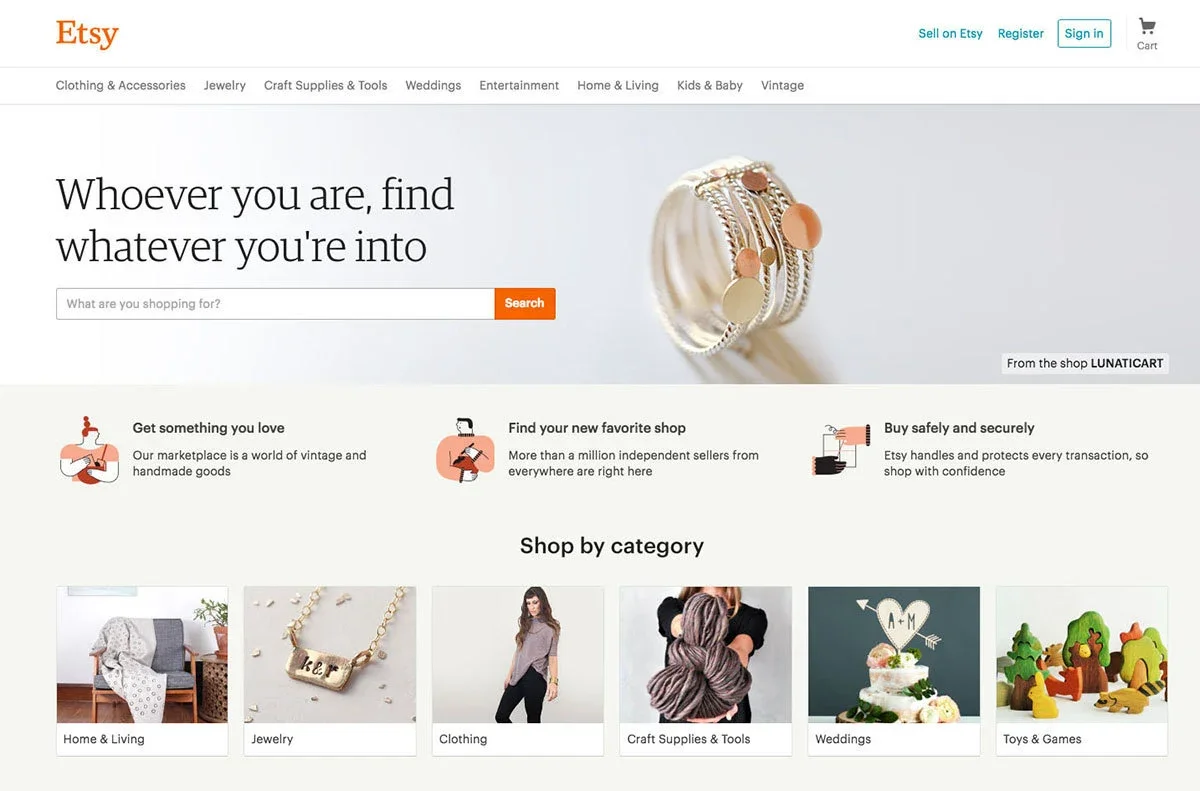
You may not want a cheap industrial mass market throw pillow from China that everyone else has, you want a unique handcrafted throw pillow that stands out.
Etsy had over 8 million sellers, a lot of unique items and SKUs that you can't get anywhere else.
Now as it turned out, people do not care that much about handmade and this became apparent to me when CEO Josh Silverman made this kind of offhand comment where he said Temu was increasing the cost of their advertising.
This did not make any sense and just some background on Etsy, Etsy would help sellers find customers by advertising on their behalf.
For example, they would buy Google search ads and then showed the seller's item on that search ad, and if there was a sale and it was completed, then the seller would pay a commission to Etsy for helping complete that sale.
Now this comment by CEO Josh Silverman saying that Temu was increasing their advertising cost perplexed me because if you know how the advertising works it's an ad auction and you're basically buying on a basis of return on ad spend.
And so if you are looking for, let's say a custom home throw pillow, then Etsy should be in the best position to offer you that ad, pay the least amount of money for it too, because it's a value prop that's matching your preferences, right?
It shouldn't actually be inflationary to ad prices at all.
The fact that he said Temu was increasing the ad pricing on Etsy implied that customers were kind of indifferent to whether or not they're buying that throw pillow on Etsy or on Temu.
That is a huge problem for Etsy, because if customers aren't valuing homemade, idiosyncratic, unique items that aren't mass produced goods then guess what?
They really don't have much going for them.
It turned out to be a case where Etsy was very good at this value prop, but this value prop missed a lot of what the consumer preferences were because consumer's preference still lower prices, it turned out fast delivery to as well, but also convenience.
A lot of times when you're searching on Etsy, it takes a long time.
You have to search through a lot of different items and some people really enjoy that, but the other problem with this is that Etsy has an average shipping time of 2 weeks.
Etsy is known to be good at providing unique gift giving items, but if you forget to get a gift, the fast delivery will be very important to the buyer, and if the shipping times is 2 weeks, there will be a lot of gift purchases that will be passed on.
The thing I realized was that customers did not preference the things Etsy was very good at.
Now for some purchase, like when you get a new apartment, maybe you are going to Etsy for a lot of your home shopping because you don't want to hit Amazon up for all that.
But that's a one time purchase, and then you're off, you're churned, you're not going back there again and so that was the issue with Etsy.
This framework of the consumer hierarchy preferences and starting to see things this way in terms of what a consumer preference helped me realize that there's certain sort of economic activity that has a higher preference than others.
And when it has a higher preference, it's going to tend to be more sustainable.
The Rise and Fall of Wish.
Wish was a booming e-commerce business a few years ago and then fell into irrelevancy.
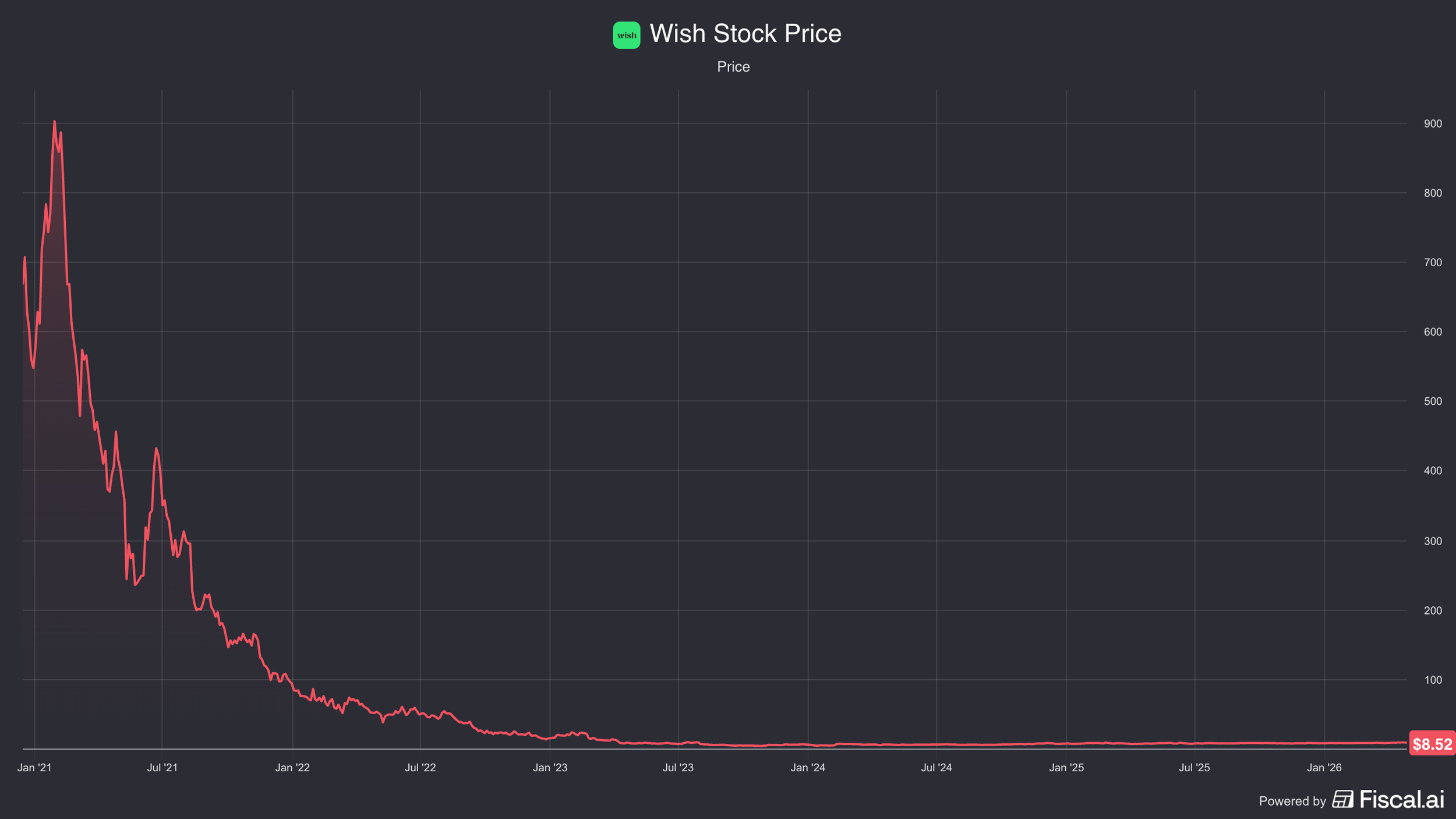
There's basically a lot of e-commerce activity that is primarily compelled.
Someone is only buying something because there's a big promo, there's a countdown clock, there's all of these kind of gimmicks on the app that make you think, “I'm buying a bunch of stuff. It's cheap. It's kind of fun.”
There's a discovery element to it. There's a novelty element to it. And it's very spontaneous, right?
It’s very often let's say if you were on the Wish app back a few years ago, you're buying stuff you don't really need, but it's so cheap and it's kind of fun buying it.
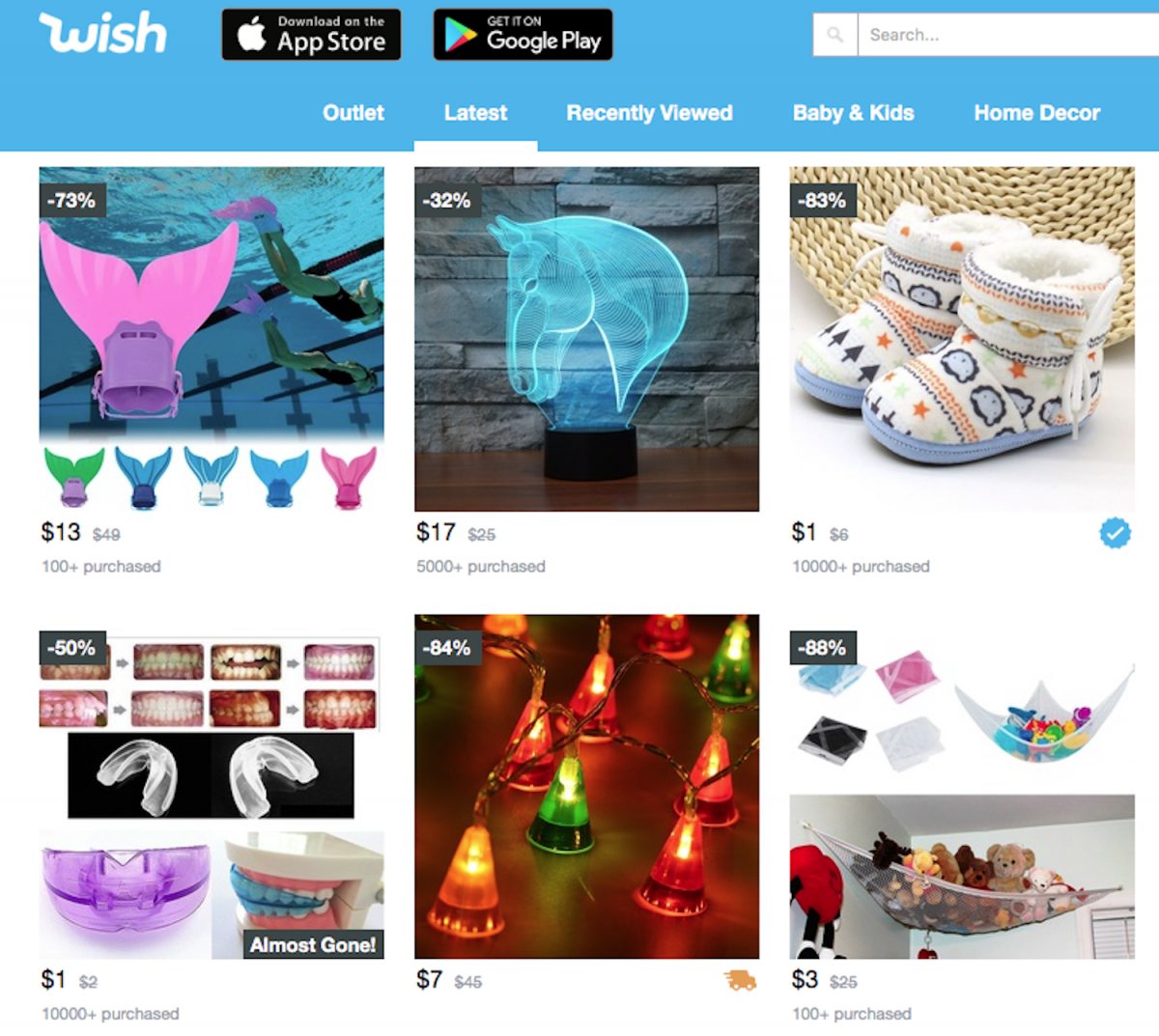
And then, you get this package and you're like, what the hell did I just buy?
Just because you get someone to purchase something doesn't always mean it's a good thing.
But when you're talking about an e-commerce platform, you should be doing a lot of purchasing on it.
You should be coming back frequently and the issue with a lot of these wish shoppers was they were kind of compelled to purchase something and regret the purchase and churn.
This sort of commerce activity is not good.
Whereas in contrast, if you're thinking about ordering toothpaste, laundry detergent, paper towels, stuff like this from Amazon, and you just never have to worry about it.
It shows up at your doorstep. If there's ever an issue, they take care of it.
This is not a transaction you're going to regret, right?
This where we can start to visualize what a potential investment in Amazon in 2000 could look like.
Amazon Investment Analysis.
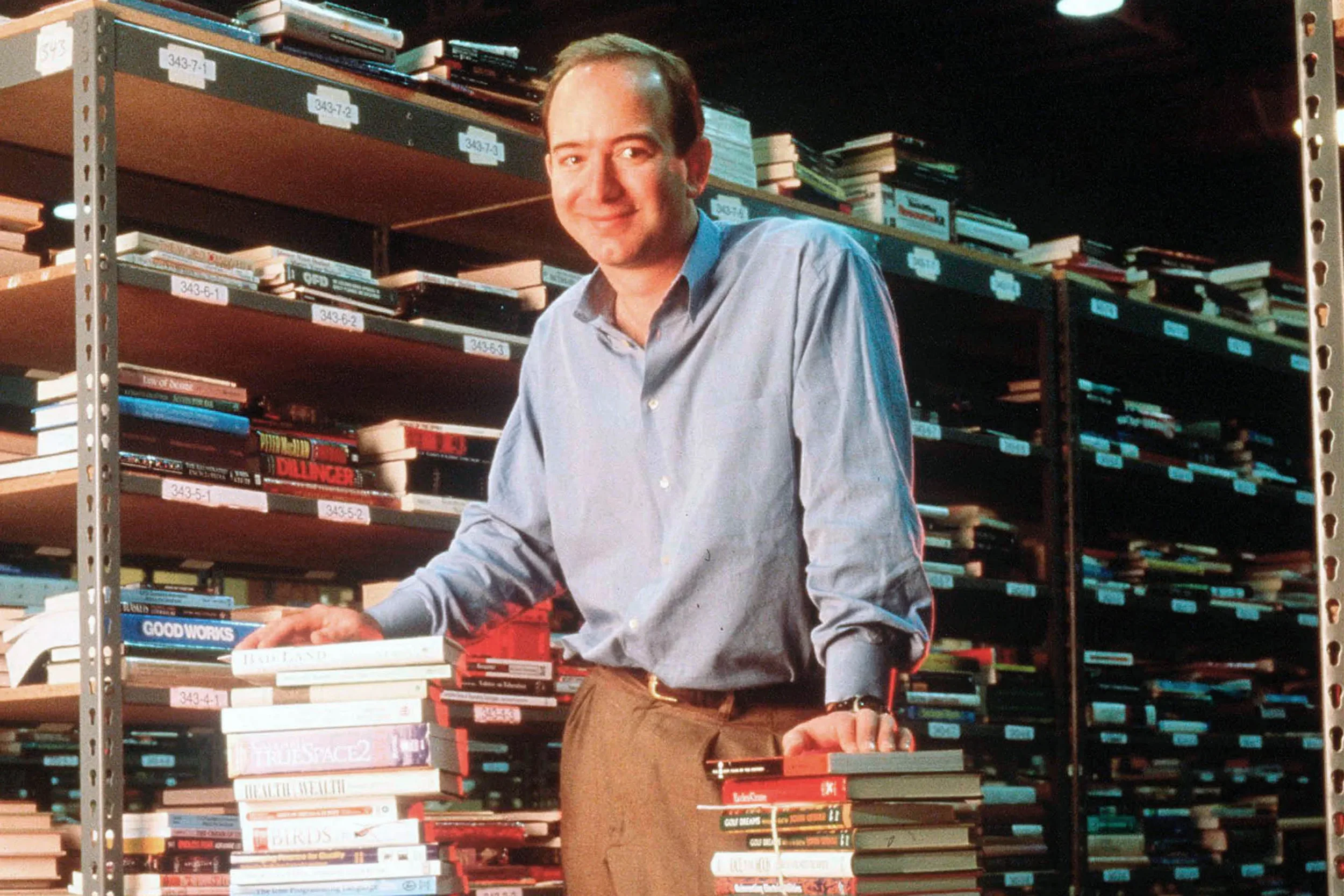
If you read Jeff Bezos letters at the time, it's pretty widely propagated now that he talked a lot about having the widest selection, the cheapest prices, and the fastest deliveries.

We can see now through a new framework that that was Amazon's value prop, and then the question is whether or not consumers preference those things.
I think without much evidence we could say that customers do value low prices, they do value selection, and they also value fast delivery.
You could understand that if they were building a business just focusing around those value props and continued to get better and better at it, then that was probably going to be them building a business in an area where a customer really valued these things.
It's not like Etsy building a value prop in homemade that customers only care about for a small, small portion of purchases.
These are things people care about a lot for all of their purchases really.
But how can we prove that though?
Ultimately, it's comes down to retention.
If you think about it, what it means when you're retaining a user and you get someone coming back to you to buy again.
They're saying the money I gave you was a fair trade.
Or maybe it was even better than a fair trade if they really loved the product and would've been willing to pay more.
And so that is why retention is such a key metric when you're looking at any business, especially businesses that are growing very quickly, because we had eBay growing really quickly and we had Amazon growing pretty quickly too at the time.
The question is though, how much of this growth is coming from new users?
How much from existing users?
Remember earlier that eBay's revenue growth was 93% while their user growth was 125%?
What is the implication there for where a lot of their revenue growth is coming from?
Whereas in contrast, do you remember what Amazon's user growth was?
It was 40% compared to revenue growth of 68%.
What we see is that these numbers are sort of inverted, right?
You have in one case, users growing more than revenue, whereas in the other case, you have users growing less than revenue and it turned out that the latter case is actually a better sign because that means that a lot of this growth is coming from existing users.
They don't actually need more users to come back in order to replace customers that left because they're keeping onto their customers.
And if we think about these two platforms in kind of a key difference between them was that eBay was a fragmented third party marketplace.
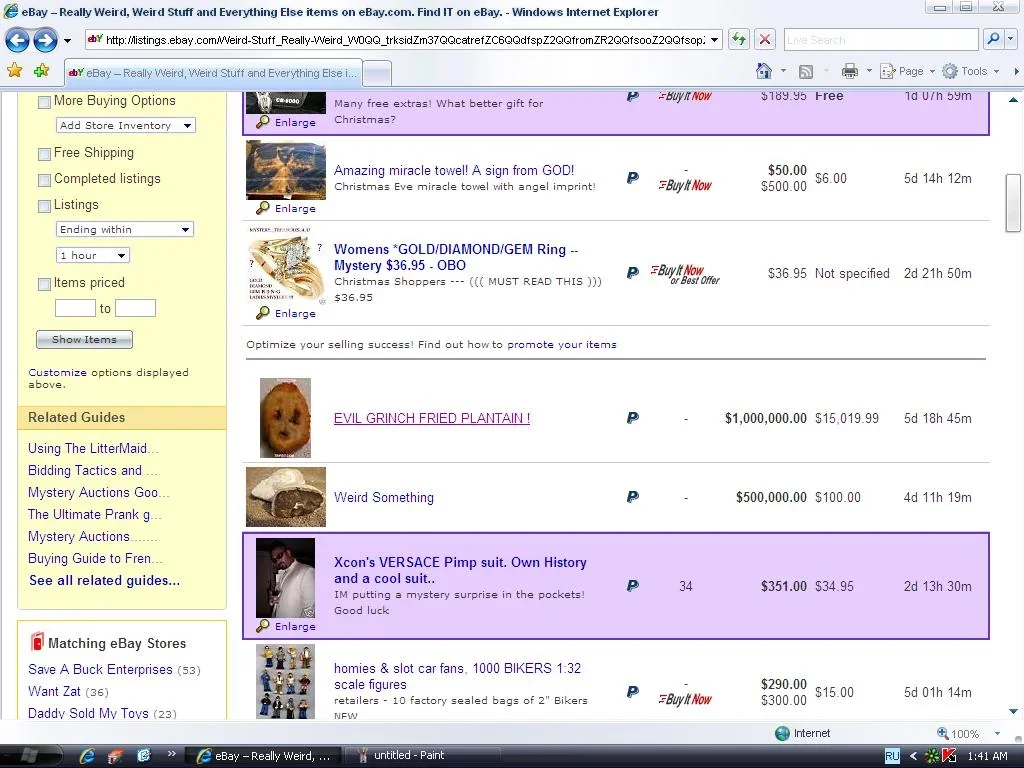
There's a lot of things that can go wrong when you have hundreds of thousands of different sellers selling lots of different goods.
It creates a lot of opportunity for disappointment because if you bought something from eBay that wasn’t what you expected, there were no guarantees.
Amazon in contrast and part of the reason why it was so successful was when they did invite third party merchants to sell on their platform, this was after they kind of already had an established base and reputation, but also they would stand behind any sales on their marketplace, even if it was a third party merchant.
A customer didn't have to worry about a third party merchant ripping you off because Amazon would stand behind that sale and refund you.
And the reason why they were doing this was they wanted to build customer trust so they could build customer habit so that they could continue to scale and that they would be able to retain their existing user base without them leaving.
In contrast, a lot of people would shop on eBay a few times and then as soon as you had one bad experience and there was no support team, nothing, you were done with that.
Which is what happened and a lot of people churned from eBay forever and they were much too late to figure out that you need to have sort of seller guarantees that you need to have mediation on the platform and you need to stand behind any sort of sale there.
In contrast by Amazon focusing on what could be these potential churn events where something goes wrong and instead turning them into customer loyalty by making it right by the customer, you know, the refunds is really all, all it really took it allowed them to not only retain that user.
It also allowed them to then have that user talk about how great of an experience it is shopping on Amazon.
This had two effects 1) they did not have to reacquire a new user, and 2) your customer acquisition cost goes down since a loyal customer will tell their friends how great of an experience it is to shop on Amazon.
So all of this is why focusing on retention is such a key indicator.
There's this idea that's commonly portrayed called the leaky bucket, where imagine you're trying to fill a bucket full of water, and it doesn't matter how fast that hose is, it could be a fire hose spewing out water very quickly, as long as there's a hole in the bucket, it will never stay full.
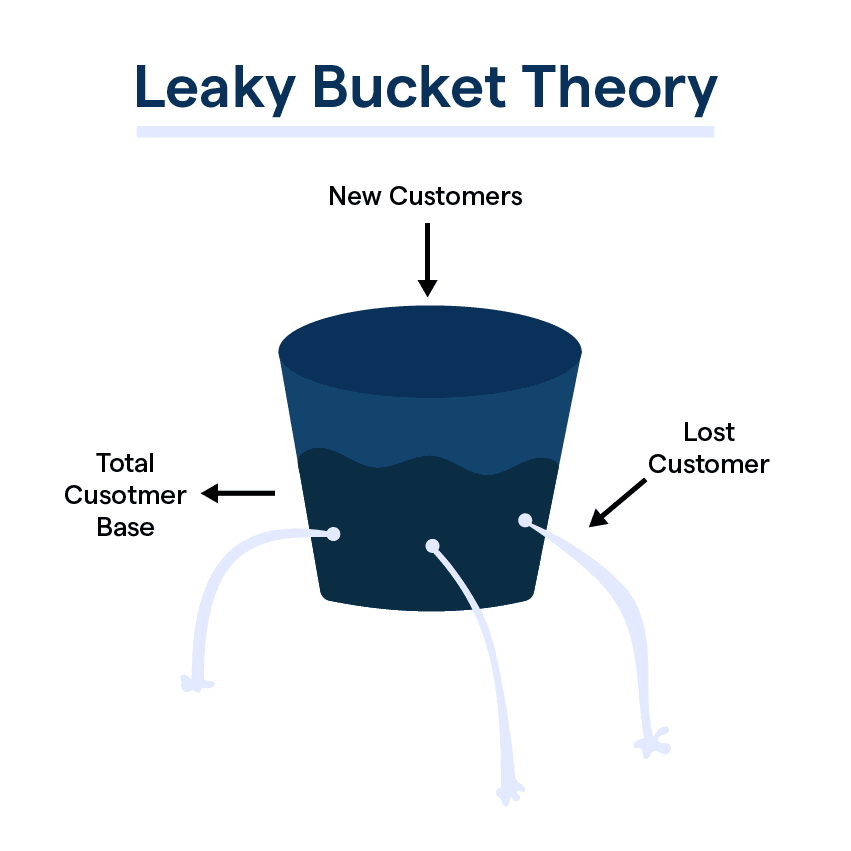
Whereas in contrast, if the bucket has no leaks whatsoever, you could use a teaspoon to fill it up and eventually it will become a full bucket.
This is an argument for sustained and controlled growth in retaining your customers, basically making sure the growth you're getting is not these empty calories that I mentioned earlier.
Wish e-commerce a great example of empty calorie growth.
They could grow top line a lot, but all of this growth, they needed to offer subsidies and promos in order to get the customer to buy on that site and then what ended up happening was the customer left and so then they would have to spend more money again to get that same customer back.
All of the money they were spending was to try to drive top line growth for sort of inherently uneconomic activity.
Whereas in contrast, if Amazon was going to spend money, it would be to refund a customer for a purchase.
They did, and it was in order to build trust on the platform.
So they would continue to buy on the platform without issue.
So you could see how different it is, even if you're spending $50 on a customer in each area in one area, the customer's just taking advantage of you.
They don't like this product, they're not coming back.
The value prop doesn't match the consumer preferences.
It's only working cause you're lowering the price enough, whereas in contrast with Amazon, you're building a sustainable value prop.
The second implied lesson in all of this is that high growth can actually be a problem.
Amazon grew in a very controlled and methodical way.
They started in books, then they moved to music, CDs, DVDs, and they slowly moved out from there.
Facebook too, also only operated first on Harvard, and then they opened up to other Ivy League schools and then other colleges, and then other EDU accounts and move from there. In contrast, Friendster, which was very similar to early Facebook and was much bigger than Facebook, lost their lead because they grew too fast.
Growth Investing Tips.
A lot of this is really going to be qualitative and just understanding the customer's psychology.
If you're thinking about the consumer, what is their consumer's hierarchy of preferences? What are the things that they preference the most?
And is the company meeting those preferences? And if they are, are they doing so in a lasting and sustainable way?
You want to understand how the consumer hierarchy of preferences fits in with the value prop of the company and seeing whether or not that is actually sustainable.
The next things that you could look at is you can look at S&M, sales and marketing.
You could see whether or not a company is getting leverage on this line item.
Now it's a little tricky though because there's kind of two kinds of S&M.
There's maintenance S&M and growth S&M, the same way that we could think about maintenance and growth capex.
The idea here is that some marketing is directed to getting new users, other marketing is directed to keeping existing users.
Now, most of the time you don't want to see that a company has to spend a lot of money to keep existing users.
Now, sometimes it's still going to happen though, and it's not always problematic.
Let's say a company rolls out a new offering, okay, well you're going to give them a promo if they try that new offering, right?
So that's a common way that a company can try to penetrate an existing buyer base for a new service.
Sometimes there also might be the case where it is an existing buyer and you're trying to build a habit.
Uber or Lyft, a great example of this, where they gave a lot of promos to buyers for a long period of time because they wanted them to continue to stay on their app because they, they both needed the scale, but they're both trying to build customer habit to hopefully get to the point that you're no longer price checking between the apps.
Ultimately, Uber was able to pull most of those promos away.

It's not always worrisome, but it's generally not something you want to see.
You want to see a company spend money to acquire a user, not have to spend more money on them to keep them.
When the value prop is strong enough, they don't need to do spend on S&M in order to elicit a sale, in order to build the habit.
The value prop is strong enough that it stands on its own.
Now, companies don't always give, you know, gross buyers versus, uh, net new buyers, but they'll sometimes give you some data around that.
What you want to see is old users on a platform continuing to stay, ideally spending more money.
Coupang puts out this slide that it shows their different cohorts of customers and every cohort spends more money than the last.
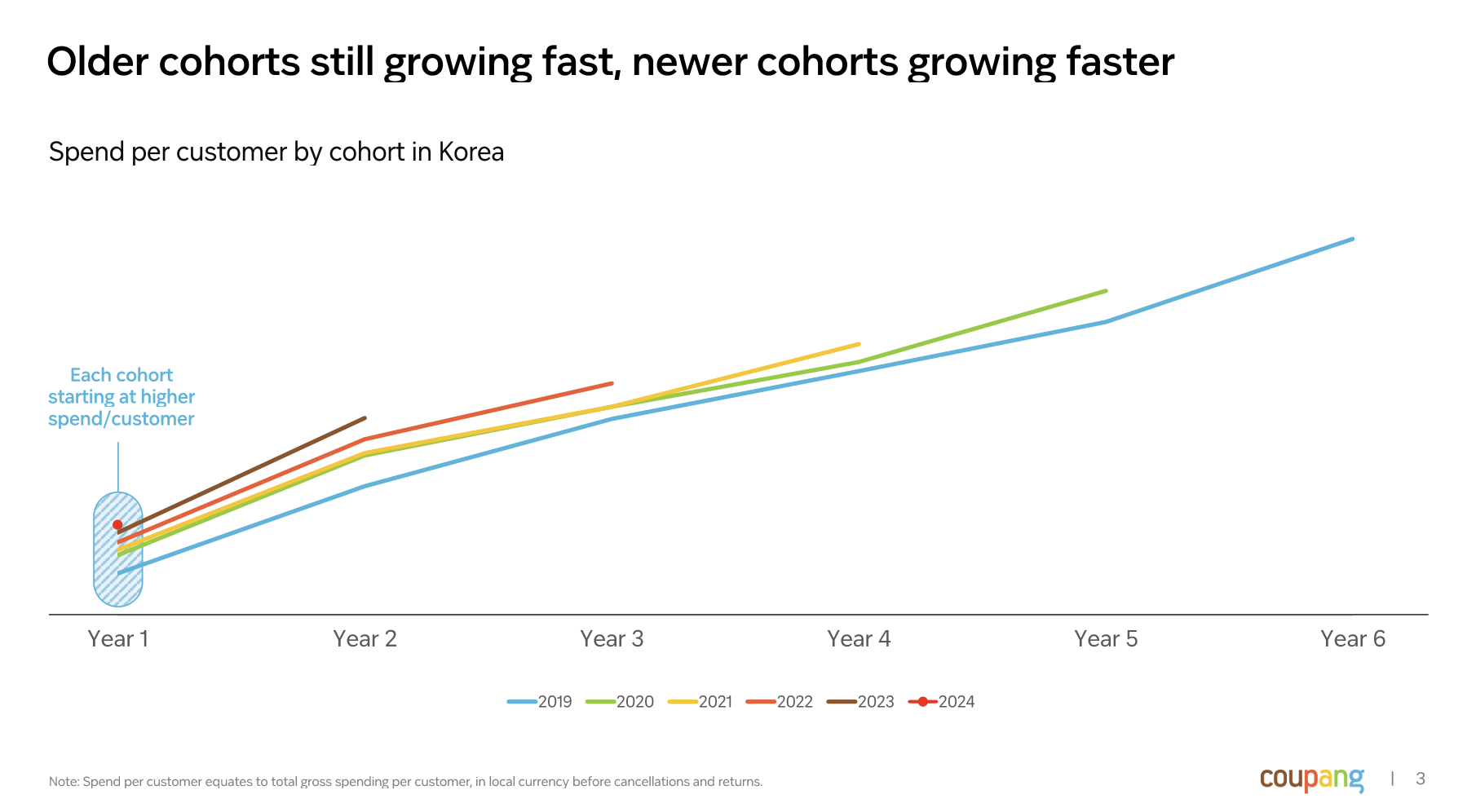
That's exactly what you want to see.
You want to see that customers aren't leaving, they don't need coupons to stay on the platform.
In addition to that, you could look at something like incremental gross profits versus S&M.
Look for how much for a dollar of marketing, how much gross profits are increasing.
The qualitative frameworks and really just understanding a business thoroughly is just kind of the best advice I have for you, because when you really understand what the company's value prop is and what the consumer hierarchy of preferences are, and you could understand how well those match, that is just going to be the best way for you to have comfort in an investment.
Jeff Bezos’s thesis for Amazon was that in 20 years from now people are still going to want faster shipping, better pricing, more selection.
That was his thesis, and it could just give you comfort that is what they're doing and that is what they're going to go out and build, because if a company is really good at fulfilling consumer preferences, the byproduct of that, it's going to be retention.
You're going to be able to retain your users if you're fulfilling all of their preferences or going above and beyond.
So for the companies you're invested in, don't just think about what the company offers, think about what the customers want, what preferences are really being fulfilled for them.
You'll also see that can open up a different competitive landscape than you thought prior.
It really can lead to a lot of interesting and idiosyncratic analysis and give you that sort of variant perspective that can allow you to see things differently than the market sees them.
For more on the Consumer Hierarchy of Preferences and how it can be a warning for Duolingo, check out this video below.
Nothing in this newsletter is investment advice nor should be construed as such. Contributors to the newsletter may own securities discussed. Furthermore, accounts contributors advise on may also have positions in companies discussed. Please see our full disclaimers here.
