ASML Stock Breakdown: The Irreplaceable Chip Monopoly

Get smarter on investing, business, and personal finance in 5 minutes.
Stock Breakdown

Many investors have heard about ASML’s monopoly.
They are the only company in the world that makes the advanced “EUV lithography” machines capable of “printing” the most advanced chips.
Not the best. Not the cheapest.
The only one.
Every iPhone chip. Every Nvidia AI accelerator. Every leading-edge processor on the planet.
None of them can be made without an ASML machine.
This EUV machine took over 20 years and €6 billion to develop.
Nikon and Canon looked at the same technology…
And gave up.
Today, ASML has 100% of the EUV market and ~94% of all lithography.
They sell these machines for over €200 million each.
And the next generation goes for €350 million.
Unsurprisingly, the financials are stunning.
€32.7 billion in revenue last year.
A 29% net profit margin.
And revenue visibility far into the future.
It looks like the perfect monopoly…
But they only actually make 15% of the parts in their machines—85% is outsourced.
But only half of their business is the leading edge EUV machines.
The other half is from selling older DUV machines—where they still have competition from Nikon and Canon.
But the real question is what comes after EUV?
ASML's whole empire is built on being one generation ahead.
But each generation is getting exponentially harder and more expensive to build.
And there are startups out there betting that the next leap won't come from EUV at all…
But from a completely different approach using X-rays and particle accelerators—one that could circumvent ASML entirely.
Then there's China.
ASML's single largest market for years.
Now being walled off piece by piece by export controls.
Even if ASML has a monopoly, investors may be surprised to learn that revenue growth can be rather lumpy.
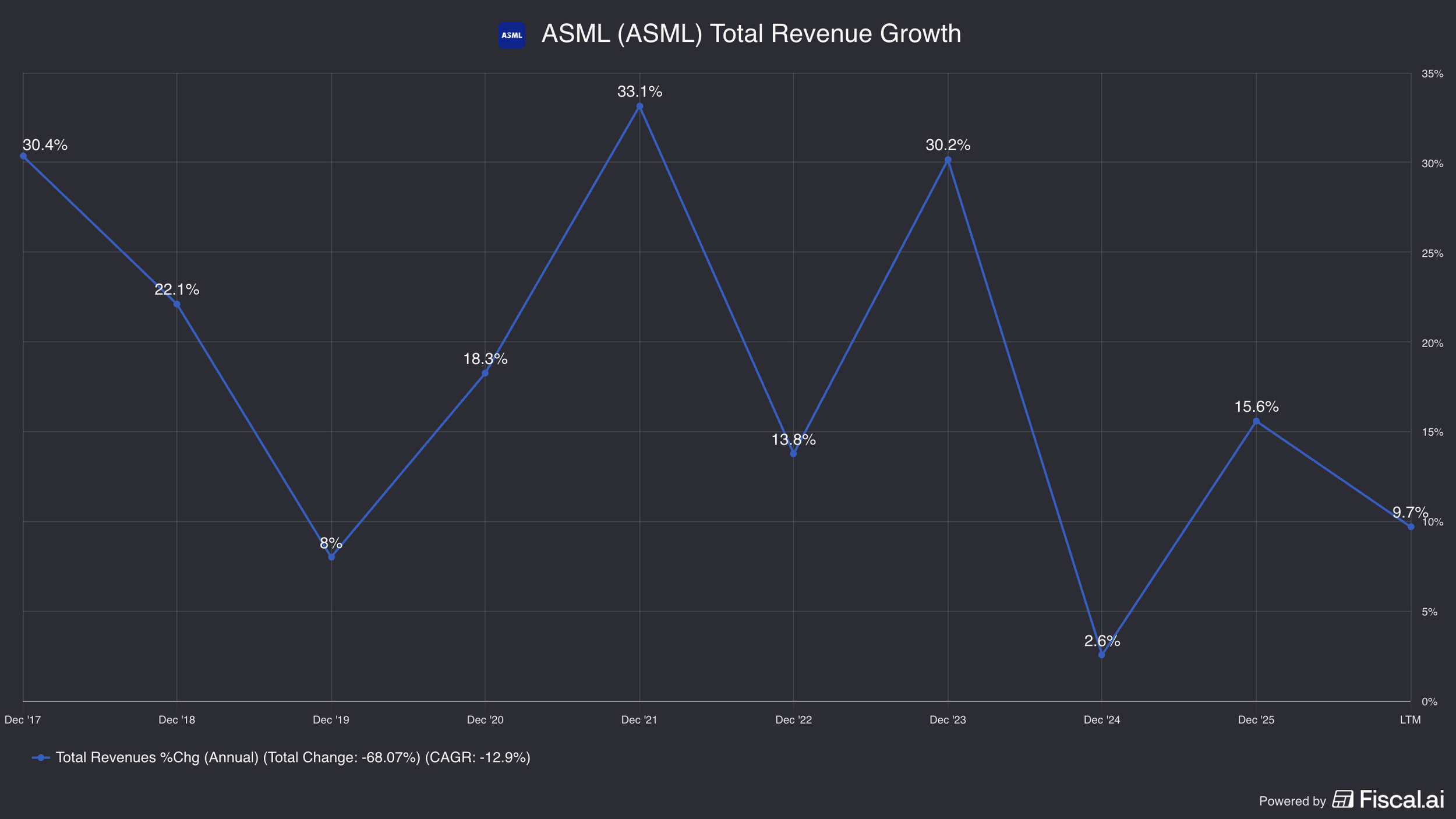
LTM revenue growth fell to just 10% from 30% in 2023.
And at 44x 2026 estimates, are they priced to perfection?
Or does the semiconductor boom, with memory companies just starting to adapt to EUV technology, mean growth can accelerate?
And what really is EUV anyway?
We cover all of this and more in this Five Minute Money.
Let us first start with an overview of the business.
Business.
ASML generated €32.7 billion in revenue in 2025.
ASML reports two revenue segments:
1) Net system sales (the machines + metrology tools) — €24.5 billion
2) Net service & field option sales (service + upgrades) — €8.2 billion
They really sell three things though :
1) The machines that print the chips (DUV and EUV)
2) The metrology tools that measure and inspect the printing
3) Service and upgrades on the machines they've already sold
The first two are housed in their Net System Sales.
Net System Sales.
This segment generated €24.5 billion in 2025 or about 75% of revenue.
The “system” they are referring to is one of their machines.
They currently sell two machines: EUV and DUV.
The leading edge EUV machine is only half of this business.
The other half is older DUV machines—where ASML actually has competition.
Let's take them one at a time.
EUV.
This is the crown jewel.
These are the machines no one else on earth can build.
And they don’t build very many—only 48 last year.
ASML sold €11.6 billion of them last year, +39% y/y.
EUV stands for "extreme ultraviolet."
To better understand why ASML’s technology is so impressive, we have to say a bit about the semiconductor process.
1) It starts with a silicon wafer (which is highly refined sand) that is about 8 sheets of paper thick and the size of a diner plate
2) Next is deposition—this is where thin material is laid down across the wafer
3) Then comes coating with a photo resistant light sensitive chemical
4) Now comes lithography—this is where ASML comes in. Their machines shine light through a mask that patterns the coated wafers
5) Then comes developing where a chemical washes away the part that were changed by light. This leaves behind a photo resistant stencil.
6) Next up is etching where chemicals remove the exposed materials that are not protected by the photo resistant.
7) Now comes doping which blasts specific regions with ions to change the electrical properties of the silicon. This is what creates the actual transistors (on/off switches)
8) Last is stripping & cleaning which washes off the remaining resistant
9) Then you repeat this cycle 50-100 times on a single wafer.
Each wafer can make between 60 chips at the low end (for large GPUs like Nvidia’s H100 for example) or a few thousand for small chips (like memory dies, which could be DRAM or NAND).
Not all of these chips work though.
There is an all important metric called yield, which is the % of chips that actually work.
A bad yield may be 50% (but even lower is common why trying out a new machine).
A good yield is 90%+
Improving yields takes a lot of trial and error.
ASML is a key enabler in making the chips smaller. Their EUV machines allow chipmakers to print with light at a 13.5-nanometer wavelength—more than 10x shorter than the older technology—and the shorter the wavelength, the smaller the features you can print.
Smaller features mean more transistors per chip, which means more computing power.
In order to print even smaller features they released “High NA” EUV.
NA stands for numerical aperture. This is basically how wide the lens/ mirror system is.
With High NA EUV they use bigger mirrors that allow them focuses the light tighter.
This lets High-NA print even smaller features—down to ~8 nanometers versus ~13 for regular EUV—though it comes at a steep price: these machines cost ~€350 million each, much more than a regular EUV tool.
High NA is still in early ramp up and the majority of their €11.6 billion in EUV revenues is from regular EUV.
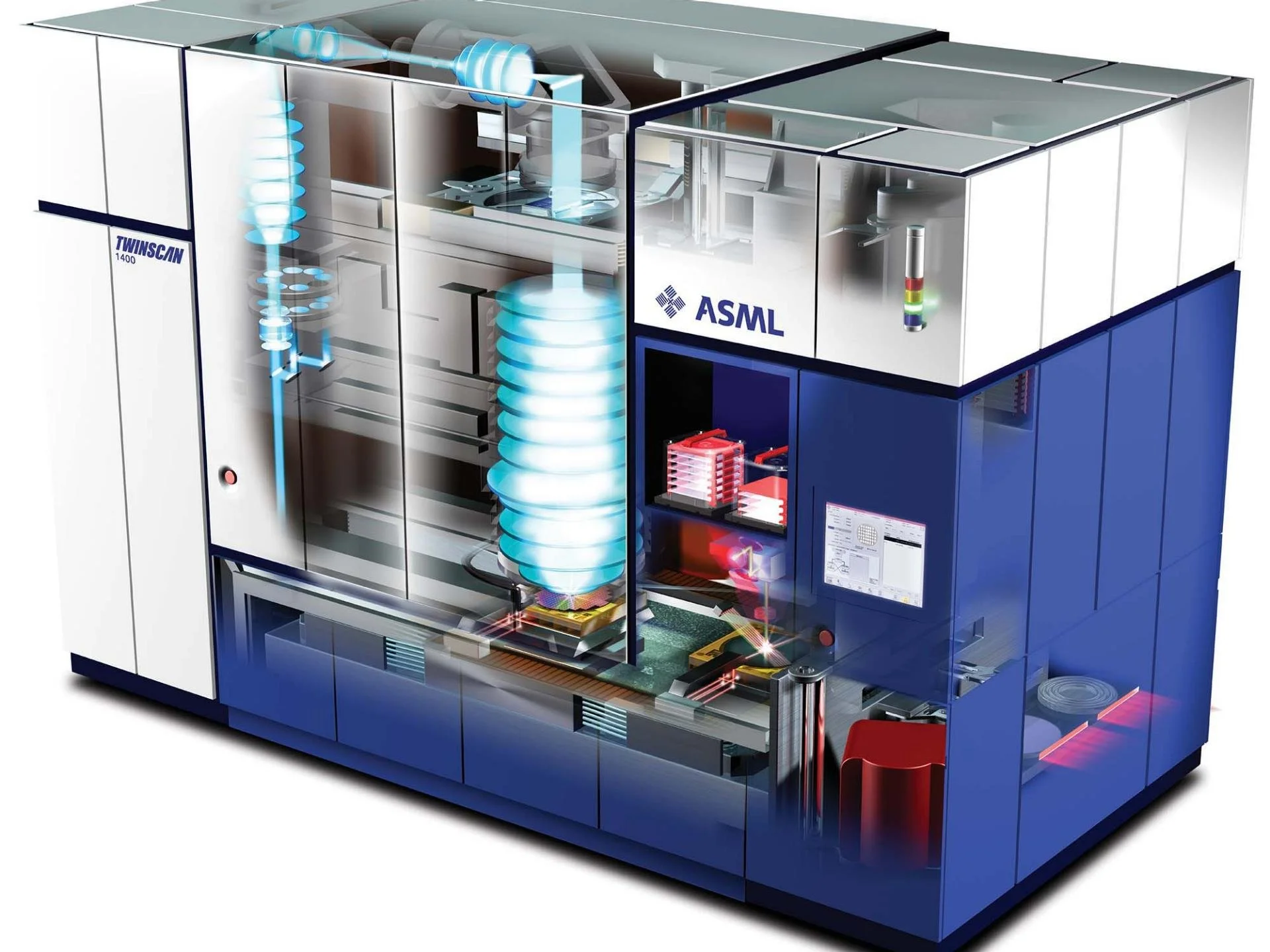
The older machines are DUV, which use a longer light wavelength (193 to 365nm vs EUV at 13.5nm).
DUV.
DUV is actually a slightly bigger piece of the machine business—€12 billion last year.
DUV stands for "deep ultraviolet”.
It's the older, cheaper technology that uses a longer wavelength of light. It can't print the most advanced chips, but it makes the vast majority of all the other chips in the world—the ones in your car, your microwave, your power adapter.
DUV is still a great business.
But unlike EUV…
It is not a monopoly.
This is where Nikon and Canon still compete.
Although both are a bit of paper tigers…
ASML is estimated to garner ~90% market share.
Why?
There are multiple iterations of DUV, and the more advanced the tool gets, the higher ASML's market share. The reason comes down to real world experience and the learnings that generates to improve yields.
ASML has sold far more of these machines than Nikon or Canon, so they have a much larger installed base running in real fabs. Every machine in the field generates data on what goes wrong and how to fix it, which ASML feeds back into the next iteration.
That continuous loop makes their machines more precise and reliable, so they print a higher percentage of working chips per wafer. Chipmakers care about almost nothing more than that, so they keep buying ASML. The advantage compounds: more machines sold means more data, which means better machines, which means more machines sold.
So despite legacy competition in DUV, peers really can’t catch up to ASML, even with legacy technology.
Metrology & Inspection.
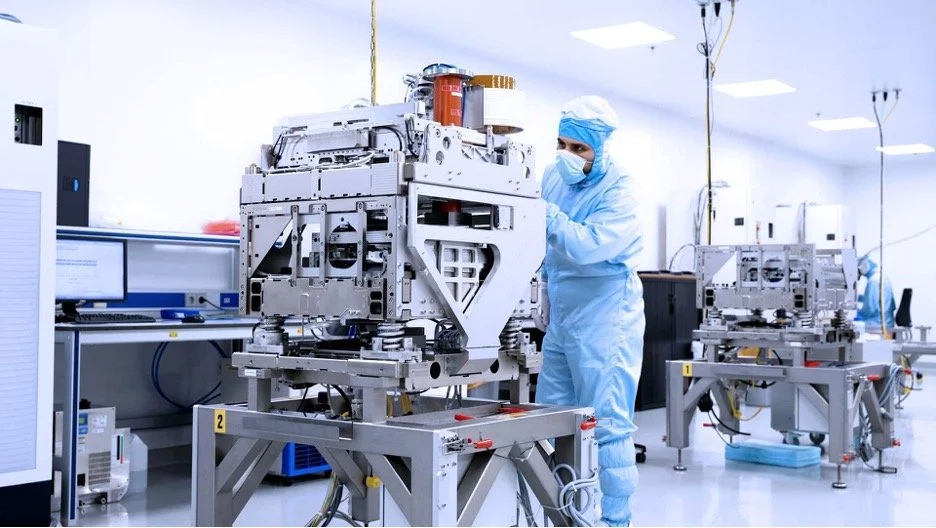
Tucked inside system sales is a smaller piece: metrology.
Metrology is the measuring step. After you print a pattern, you need to check it for tiny defects—because at these sizes, a flaw you can't even see can ruin the entire chip.
ASML sells the tools (under names like YieldStar and e-beam) that measure and inspect the wafers.
This business generated €825 million in revenues, growing 28% y/y.
Net Service & Field Option Sales.
This is also called "Installed Base Management."
It brought in €8.2 billion last year, growing 26%—about 25% of revenue.
ASML has thousands of machines already installed in fabs around the world.
A "fab" is a chip factory.
And those machines need two things:
Service—an EUV machine is one of the most complex objects humans have ever built, and it requires constant maintenance to keep running.
Upgrades ("field options")—ASML can go back to a machine it already sold and boost its performance (more wafers per hour, better precision) for a fee.
Why does this matter so much?
Because it is recurring, high-margin revenue.
A customer who spent €200 million on a machine is going to keep paying ASML for years just to keep it running and improving.
It also smooths out the business.
Selling machines is lumpy and cyclical—customers binge in good years and pause in bad ones.
But service revenue keeps coming regardless.
And it grows automatically as the installed base of machines gets bigger every single year.
Who are customers?
Almost no one…
Only five companies on earth make leading-edge chips that require ASMLs machines: TSMC, Samsung, Intel, SK Hynix, and Micron.
TSMC alone is estimated at ~31% of ASML's revenue. Samsung is roughly another 20%.
That's a level of customer concentration that would terrify most investors…
But customer concentration only matters when there are alternatives.
These customers literally cannot make their products without ASML—so the dependency runs both ways.
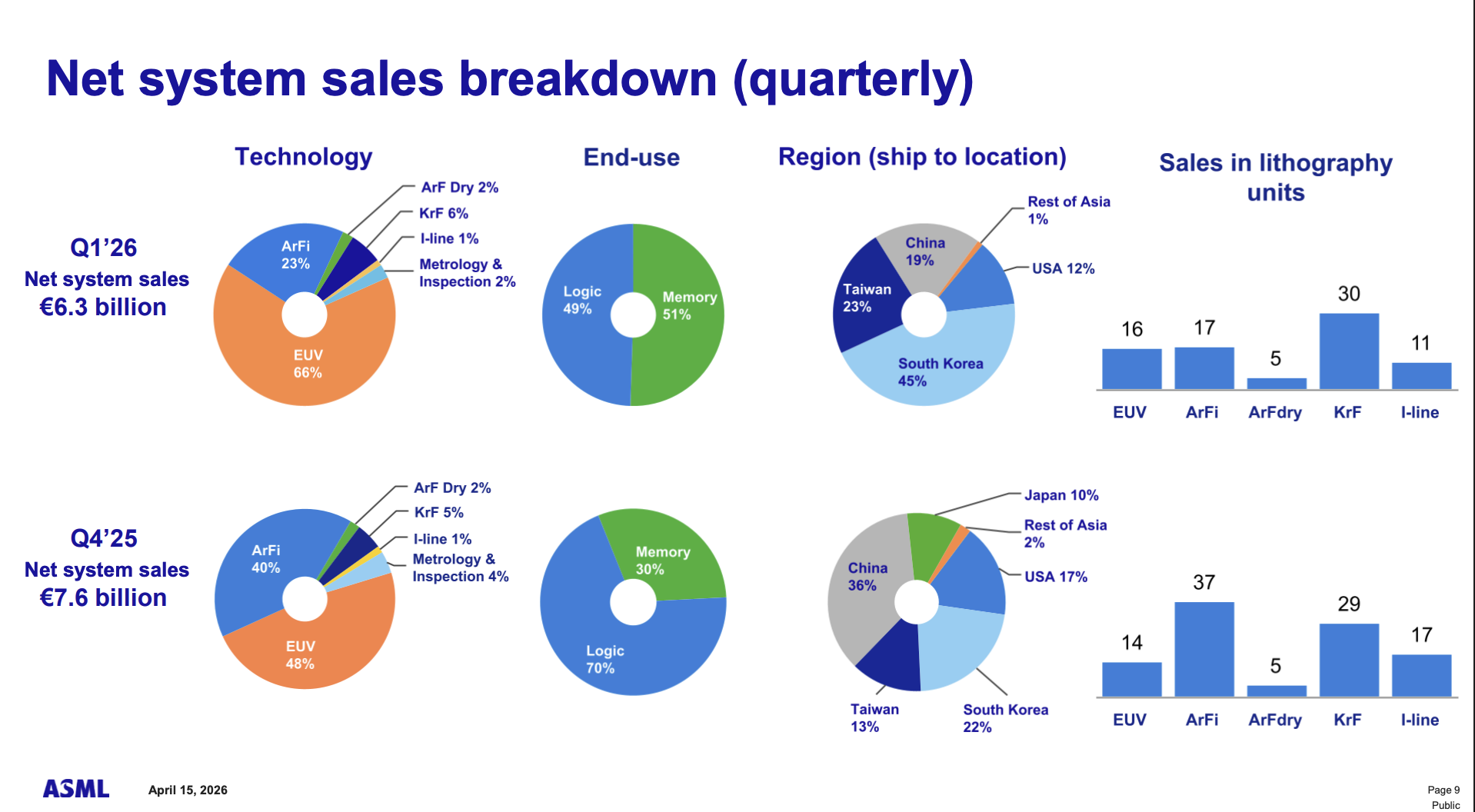
By end market, ASML's machines split between Logic (~66%) and Memory (~34%).
But that could be shifting. In 1Q26 memory was 51% of sales.
Competition & 4 Threats.
So if ASML has a monopoly in EUV and ~90% of DUV…
Who exactly is going to take this business?
In the near term…
No one.
Nikon and Canon have abandoned even trying in leading edge.
The real threats come from start-ups that are making bold bets on new technology that has low odds of working out.
ASML's entire monopoly position rests on being one generation ahead.
So the nightmare scenario isn't a competitor building a better EUV machine…
It's someone figuring out how to without EUV.
We split up their risks into 4 buckets.
1) A start-up figures out a better way to do a key part of the lithography process.
2) An entirely new technological paradigm.
3) China
4) New machines aren’t that needed because old machines are still more economic.
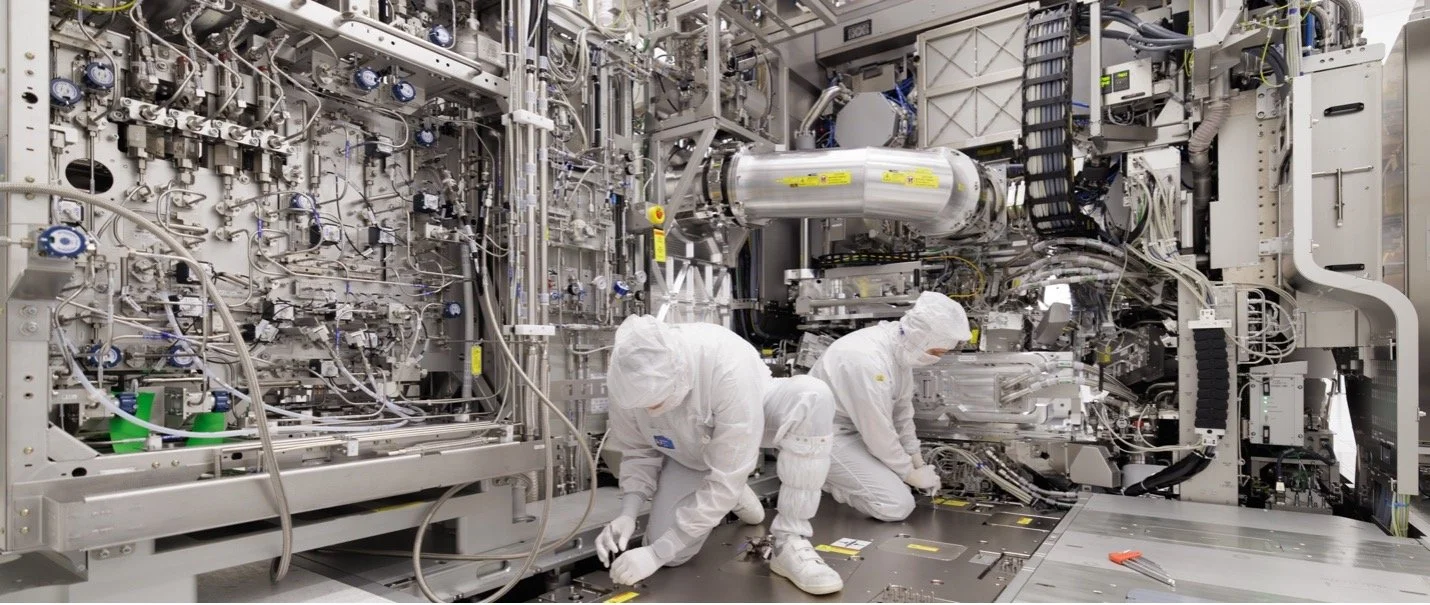
The first risk is best exemplified by xLight.
This is a start-up that is trying to use particle accelerates to replace ASML’s light source in their machines.
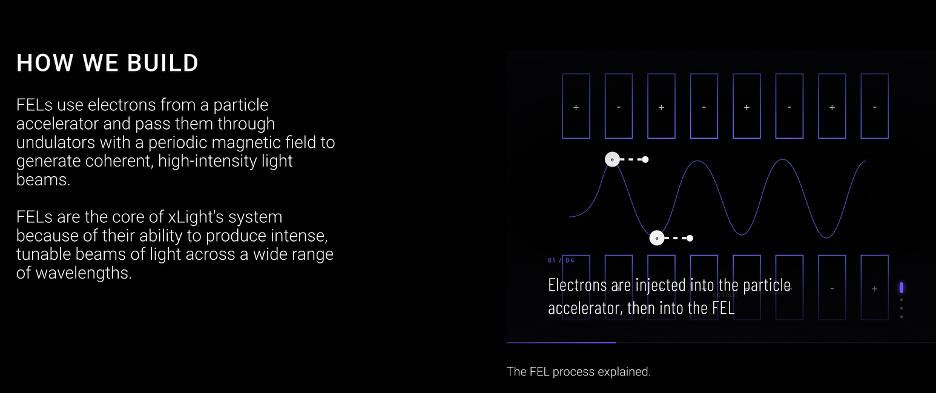
EUV's most finicky, expensive part is the light source—ASML vaporizes minuscule drops of molten tin 50,000 times a second just to generate the light.
xLight wants to replace that with a particle accelerator that produces far more EUV light, far more efficiently.
The claim is that it could cut the cost of a finished wafer by up to 50%.
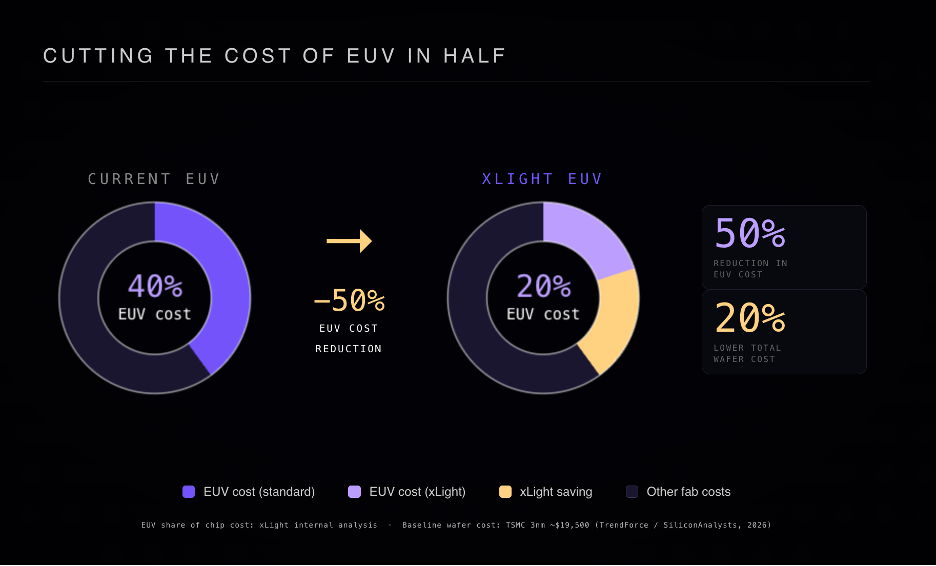
xLight though isn’t trying to replace ASML—an EUV machine system will has thousands of parts that took decades to make work together…
They are just trying to replace their light source.
However, if they succeed they are effectively replacing one of the most technologically advanced aspects of the machines—which will certainly command a premium price.
Or ASML could be forced to acquire them at a premium. Perhaps even a more ambitious competitor (or country trying to build up their semi conductor manufacturing industry) acquires them to start a ASML competitor.
Ex-Intel CEO Pat Gensler is the Executive Chairman and they have already received CHIPS act funding, showing US interest in making the project work.
Still though, they must make the technology work because after fabs install High NA EUV, it will be years before they want to replace those machines—and the High NA EUV machines are already starting to ship. However, TSMC is waiting until 2029 or 2030 to start mass deployment of High NA EUV, which gives xLight a bit of a window.
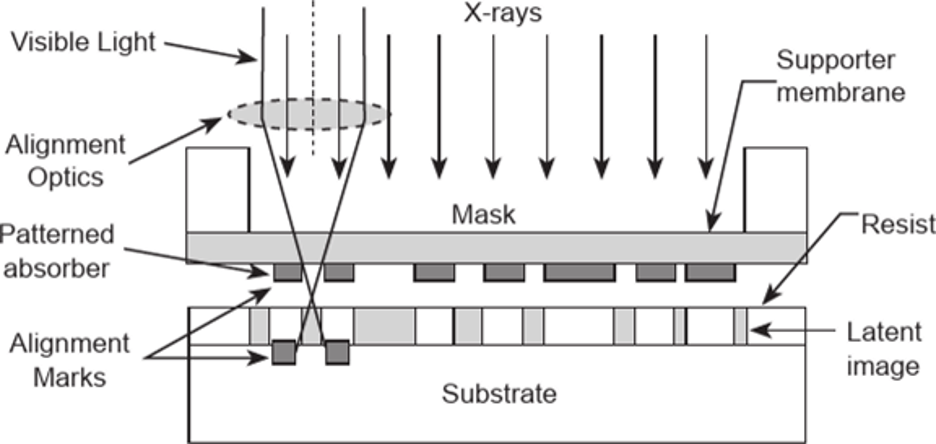
The second risk is new technological paradigms like X-Ray.
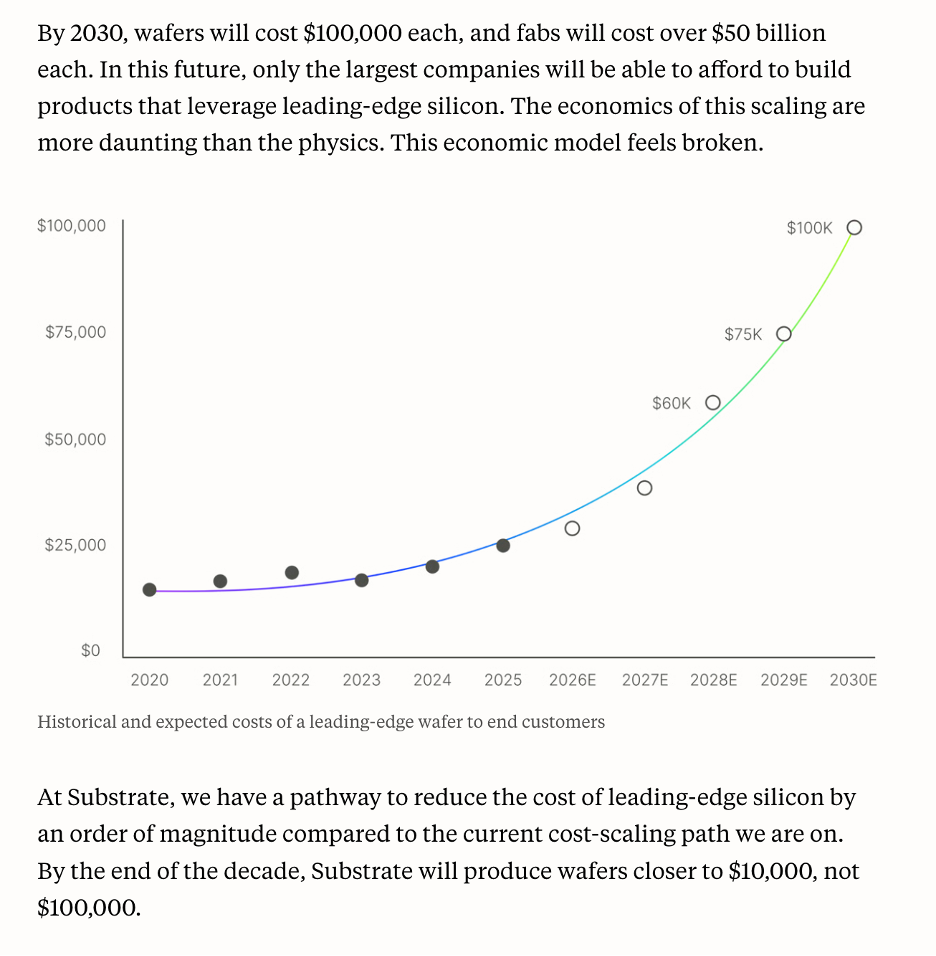
Start-up Substrate is the leader here.
Where xLight wants to improve ASML's machines, Substrate wants to replace them entirely.
This is a secretive San Francisco startup that is partially funded by Founders Fund.
Instead of Ultraviolet light, they want to use x-rays, which are a shorter light wavelength.
This could allow smaller feature drawing on the chips and thus more transistors.
Similar to xLight, they want to use a particle accelerator as a source of light to power the X-ray lithography.
If successful, they will build an entire leading-edge fab, which could cost tens of billions of dollars.
And their expectation is to drastically lower the cost per wafer by 90%.
The problem?
X-Rays go through objects… that’s why we use them to see what is inside things.
This is a hard problem to solve.
But even if they do solve it, they still need to get massive funding to build out a fab.
Then they will need to prove that they can run it cost effectively, which typically doesn’t happen until you get a lot of volume and have had years to trouble shoot.
Lastly, X-Ray lithography has been tried in the past and failed.
So that’s all to say, this is a true moon shot.
However, there was a time when EUV was also thought to be impossible to solve.
Doubting human ingenuity has generally been a losing game on a long enough time frame.
The third risk is China.
This risk really has several risks embedded in it: 1) China as a market, 2) China as a rare earth’s meta supplier, and 3) China as a competitor.
For years, China was ASML's single largest market—as much as ~36% of system sales at the peak.
Here's the catch: EUV was never allowed to be sold to China.
So every Euro of that China revenue came from the older DUV machines.
And now, piece by piece, those are being walled off too.
Under heavy U.S. pressure, the Dutch government has steadily tightened which DUV machines ASML can ship to China without a license.
First the most advanced immersion tools…
Then more.
The result: China is "normalizing" down toward ~20% of revenue, and ASML expects it to keep falling.
In just one quarter, system sales to China dropped from 36% to 19%.
That's a huge chunk of demand being switched off—not by the market, but by a government.
But it gets worse.
There's a proposed U.S. law called the MATCH Act.
It would go after not just new machine sales…
But the high-margin service and upgrade revenue on the machines already sitting in Chinese fabs.
Remember that lovely, recurring Installed Base Management business?
A slice of it lives in China.
And the MATCH Act would put that slice at risk too.
Next risk?
China controls most of the world's supply of rare earth elements—materials the entire chip industry depends on.
So if Beijing wanted to retaliate, it has leverage of its own.
A lot of these rare earth materials are important inputs in creating an ASML machine and running it.
The last risk here is that they eventually become a competitor.
China is locked out of EUV. So they're doing the only thing they can—pouring state money into building their own lithography industry from scratch.
The national champion is SMEE (Shanghai Micro Electronics Equipment).
Then there are Huawei-linked efforts like SiCarrier and Yuliangsheng, some staffed with ex-Huawei engineers, reportedly testing domestic DUV tools.
This is an extremely hard thing to do because it isn’t just the ASML knowhow they need to copy, but the entire web of specialized suppliers too—many of whom are barred from selling to China.
While they are probably decades or more behind because they have to start from scratch, success here could me a totally parallel semiconductor ecosystem that can be competitive to ASML.
Not only would that mean China is a lost market, but that they could sell those machines to other markets.
While this is a risk only on a decade plus timeframe, the market could decide to look out that far if China starts to make some material success.
The fourth risk is the most technical, and probably the weakest—but it's worth understanding.
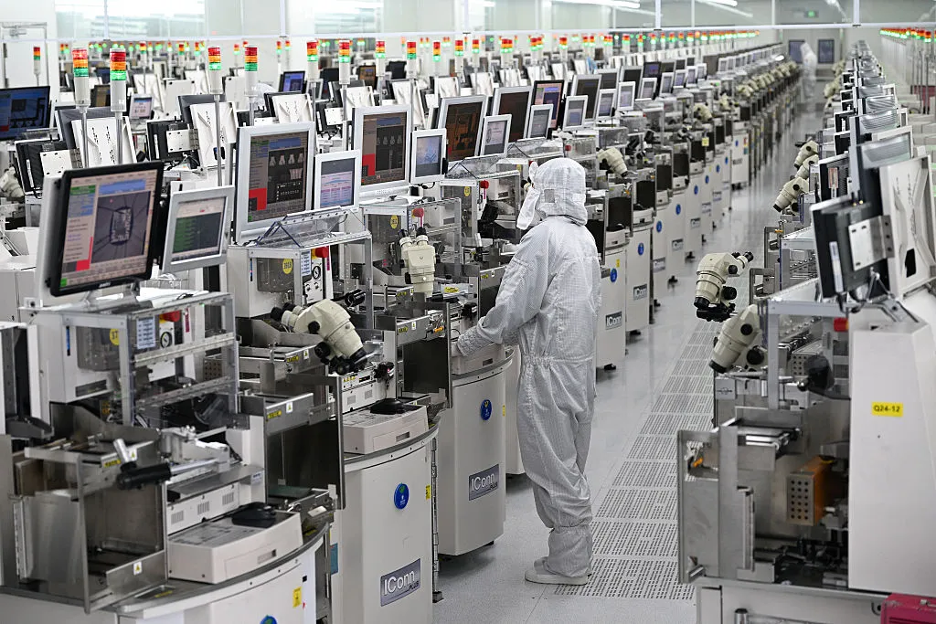
The fourth risk is that new machines aren’t needed because old machines are still more economical.
It shows up in two forms.
First is chiplets.
For decades, the industry made chips one way—cram everything onto a single piece of silicon, built on the most advanced node possible.
A "node" is basically the generation of manufacturing technology—smaller number, more advanced. Think 3nm, then 2nm, and so on.
But there's another approach gaining ground: chiplets.
Instead of one giant chip, you break the design into smaller pieces and stitch them back together with advanced packaging.
Why does this threaten ASML?
Because not every piece needs the bleeding edge.
You might build the high-performance core on a cutting-edge node… but the surrounding pieces on older, cheaper machines.
If chipmakers need less leading-edge silicon per product, they may buy fewer of ASML's most expensive tools.
Second: sweating the old machines more.
ASML's growth depends on customers constantly climbing the roadmap—buying the newest, priciest tools to make ever-smaller chips.
But what if they slow down?
What if "good enough" is good enough, and fabs keep running older nodes longer instead of upgrading?
We're actually seeing a version of this with High-NA. TSMC—ASML's biggest customer—is in no rush, and, as mentioned, isn't planning mass High-NA deployment until ~2029-2030.
That's the downside risk.
However, Chiplets aren't new. AMD pioneered them years ago—and EUV demand has only exploded since.
The reason is simple: the high-performance pieces still need the most advanced nodes. AI accelerators are the most chiplet-heavy designs on earth, and they're driving record EUV orders, not fewer.
And chiplets need something else: advanced packaging.
That's a growing market where ASML is expanding (remember the metrology business, and their new 3D-integration tools).
As for "sweating old machines"—every machine ASML has ever sold still needs servicing and upgrades. That's the Installed Base Management business, and it grows whether or not customers buy new tools.
And the biggest counterpoint of all: AI.
The entire AI boom is a bet on more compute, on more advanced chips, made on more advanced nodes.
Even DRAM memory—which historically avoided EUV—is now adopting it to keep up.
In other words: the very force that might let some chips use older tools (chiplets) is dwarfed by the force demanding the newest ones (AI).
One final “bonus”risk could be that a supplier is a bottleneck or raises prices on ASML. About 85% of the components in their machines are outsourced to specialized suppliers and often their isn’t an alternative.
Zeiss, for instance, is the sole provider of their lenses and mirrors for every ASML machine. In ASML’s disclosure they note that they would not be able to conduct business without them.
They have historically tried to acquire particularly critical aspects of their machines, but there still is a risk that component prices are jacked up or some other issues at a supplier results in machine delays. (They took a 25% stake in Zeiss).
As we see, none of the risks are likely to kill ASML, but they could way a bit on growth. Having said that, with chip demand exploding, it doesn’t seem like this will be a near term issue.
To see what investors need to happen in order to make a return, let us turn to our valuation.
Valuation.
At today’s market price of $1,700, they have a market value of $650 billion and they have about $5.6 billion in net cash. In Euros (which is what they report in) that is about a €560bn
With around €10 billion in earnings, that is a 56x trailing multiple—certainly on the higher end.
For full year 2026 they expect net sales between €36 and 40 billion, representing between 10-22% growth.

At the high end, that is around €11.5bn in earnings or a 48x 2026 multiple.
Still rather high.
Over the next few years they see Advanced Logic Lithography spending to be a 10-20% CAGR and DRAM to be a 15-25% CAGR.
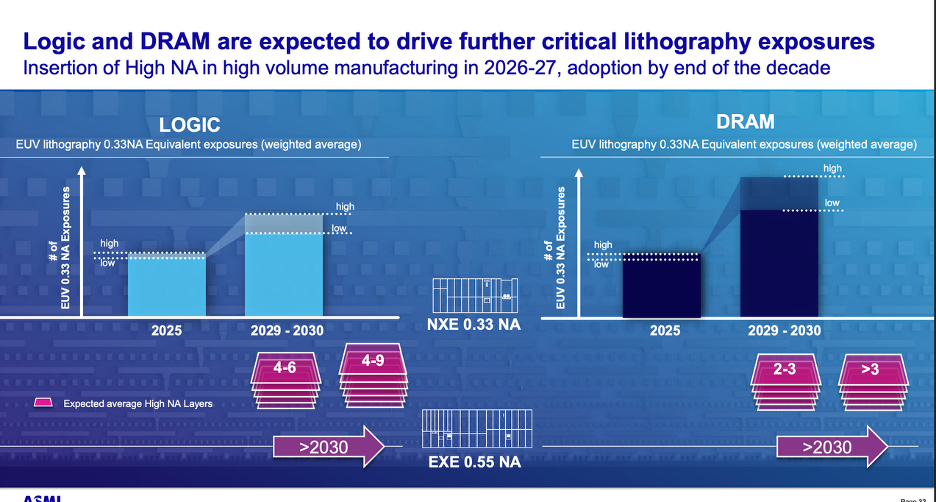
This translates to 2030 revenues of €44 to 60bn, with gross margins expanding from 53% to 56-60%. If that flows to the bottom line, operating margins should expand from 35% to 38-42%.
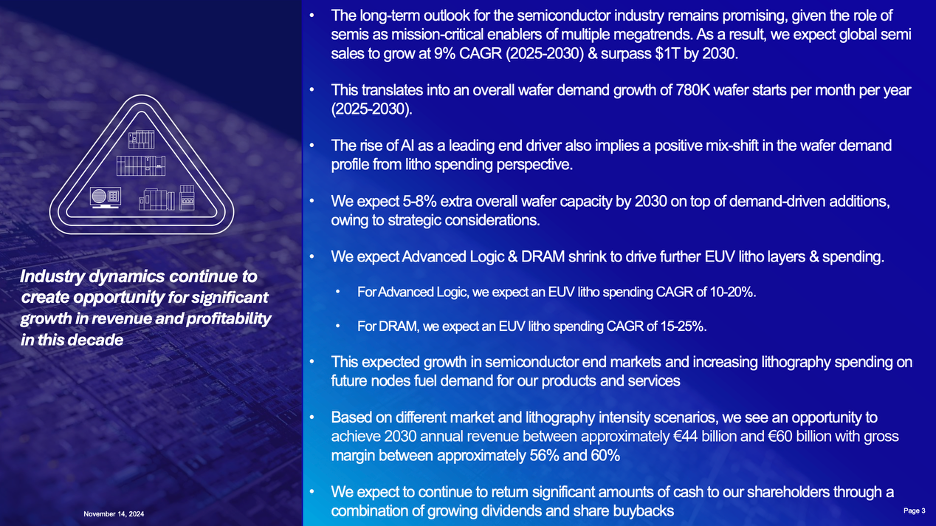
The range of earnings for 2030 will then be €13.8 to €21 billion—a pretty wide range.
This implies 2030 multiples of 41x at the low end of earnings to 27x at the high end.
At that point though High EUV will still just be beginning to ramp up. They also will have a larger install base of machines to service.
A conservative assumption is that they will grow revenues a high single digit with earnings growth in the low double digits from operating leverage.
A fair multiple could be around 30x, suggestion only 11% upside from them hitting the high end of their estimates—however we need to add back the cash they will generate over the next 4 years.
They high a very high cash conversion ratio with about ~90% of LTM earnings converting to free cash flow.
This has been returned to shareholders through a mix of share buybacks and dividends.
In 2025 they repurchased €5.9bn in stock and paid out €2.5bn in dividends.
At the high end of their earnings guidance, they could generate around €75bn in free cash flow through 2030. That could add another 14% to shareholders return for upside of around 25%.
The real upside though comes if they can keep growing revenues at a higher rate and keep a premium multiple—perhaps of 40x. While a conservative investor would not want to assume that, that could be an annualized return of 11%. This is a more aggressive assumption though.
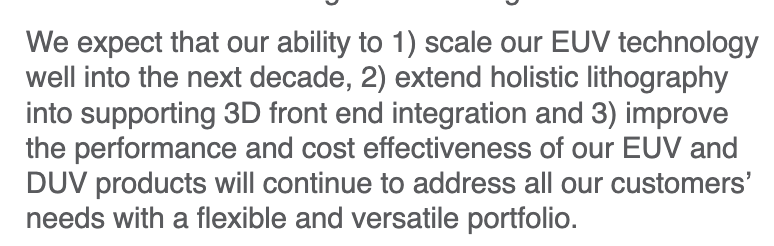
Still though, because of their extremely strong competitive position, some investors will think a premium multiple is warranted. Then again, this was a business that traded at closer to 27x forward earnings just a year ago.
It is not impossible though, especially if the next gen machines—Hyper NA EUV—which they are working on now give more improvements at a cost effective price.
Some investors, such as myself, might be wondering why they aren’t more aggressive on raising prices if they are so dominant.
There is a bit of history behind that and an economic reason why they are somewhat limited in how much price they can take.
ASML is a very collaborative business and works closely with TSMC and other players when installing their machines and getting the yields up. Several partners—Intel, TSMC, and Samsung, also directly helped fund their R&D from 2012 to 2017 when EUV was far from a sure thing.
They also directly invested in the business, taking equity stakes. Even though most of these players have since sold their equity stakes, this has created a sense of not wanting to price gouge the partners that created their success.
The more direct economic reason though is that foundries like TSMC will simply use older machines more rather than buy newer High NA EUV machines. Even today TSMC is pushing the roll out of High NA EUV machines, preferring to just use more regular NA EUV machines. It takes longer to create the chips, but is more cost effective.
If ASML pushed through higher price hikes (the new High NA EUV machines are already up to twice as much as the regular EUV machines), it could further push out the adoption of High NA EUV. ASML needs to keep selling machines because their revenues are very dependent on volume growth—hence the wide range of 2030 earnings estimates. A delay would also mean a small install base to collect maintenance income from.
This is the key trade off they have to make. If they push price too much, the upgrade cycle could slow (similar to fears with Apple iPhone consumers pushing upgrades, but the difference here is that the raw economics dictate upgrades).
It is important to remember that ASML has historically had lumpy revenue growth. While they haven’t contracted revenues since 2012, growth in 2024 was just 2%.
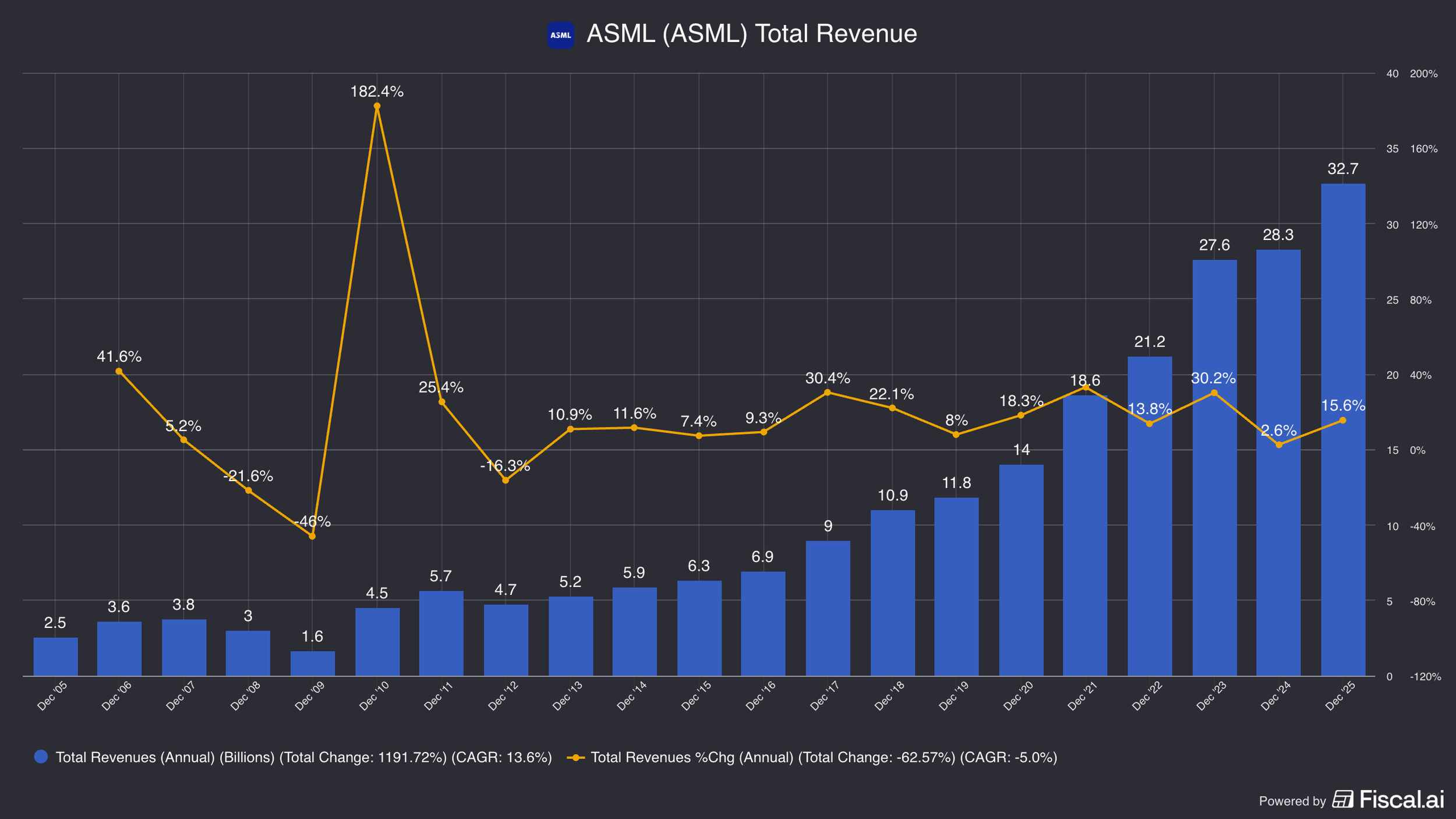
This is because they still need to sell massive machines to generate revenues.
In 2025, the last time the stock sold off over 30%, it was because they expressed uncertainty over the following years growth. Since then Intel, who has been helped by the U.S. government and other semiconductor players and Samsung who took on more orders to expand capacity, has helped boost them. This just shows though how a couple companies capex decisions can really impact their earnings.
On the other hand, a bull might argue that EUV intensity is increasing, there is a new demand pool from memory, this is a margin accretive mix-shift, and service revenues will continue to increase…
However, an investor needs to decide how much of that is already reflected in our numbers and multiple assumptions.
And no doubt the demand environment looks strong for many years for them given the capital flowing into the semiconductor industry, but they could hit a slump if we are looking out past 2030.
Then again some investors will have confidence in the long-term multi-decade trajectory of this business, the importance of semiconductors, and their monopoly position within it.
For more on ASML, check out this video below.
Nothing in this newsletter is investment advice nor should be construed as such. Contributors to the newsletter may own securities discussed. Furthermore, accounts contributors advise on may also have positions in companies discussed. Please see our full disclaimers here.
