Have SpaceX Equity? Read This

Get smarter on investing, business, and personal finance in 5 minutes.
This newsletter is adapted from a recent video Drew Cohen did on SpaceX Employee RSUs
This newsletter is aimed at a niche audience, but much of what’s covered applies broadly to anyone who has recently acquired significant wealth from a single source.
If you’re a SpaceX employee holding a substantial equity stake, this is especially relevant to you.
The discussion breaks into two distinct parts: why to sell and when to sell.
It’s important to treat these separately, as conflating them leads to muddled thinking.
Let’s begin with the 3 reasons why you should consider selling some.
Why Sell Your SpaceX Stock.
Reason 1: Secure Your Financial Freedom.
Naval Ravikant defines retirement simply: the day you stop trading tomorrow for today.

Naval Ravikant, Founder of AngelList
When every day is spent doing what you want to do, that’s retirement, regardless of age.
For many SpaceX employees, particularly those who’ve been there eight years or more and may have accumulated upwards of $18 million in stock, that point may already be here.
The question to ask yourself is: what can this money do for my life, and what would it mean to lose it?
There’s a common tendency to conflate investment logic with personal financial logic.
You may genuinely believe SpaceX has a bright future, and you’re probably right.
But if you’ve already met every financial goal you’ve had (owning a home, supporting a family, funding college tuitions, a second property), holding on for more upside means risking all of that for gains that won’t materially change your life, while losses very well could.
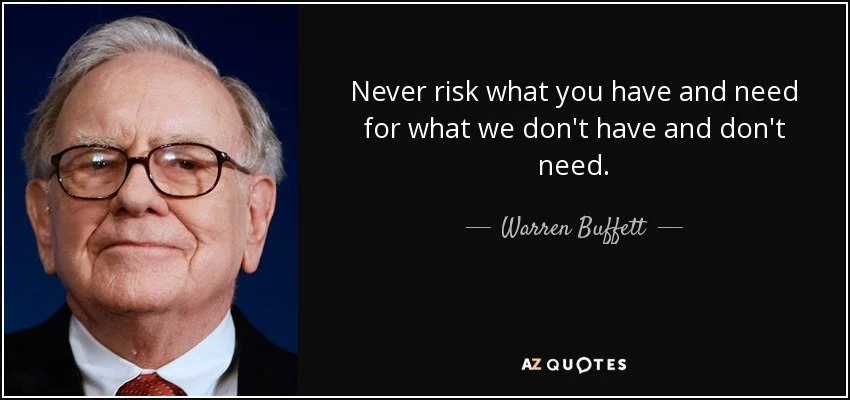
Warren Buffett has a maxim where he says, “Never risk what you have and need for what you don’t have and don’t need.”
This doesn’t mean selling everything.
You can retain SpaceX stock.
But if selling even a portion, say $5 million, would secure your financial future, that’s worth doing regardless of how optimistic you are about the company’s prospects.
Reason 2: Diversification.
The purpose of diversification is to set yourself up for success across the widest possible range of futures.
Think of it this way: you want a portfolio that works well in 995 out of 1,000 possible scenarios, the remaining five being genuine catastrophes no strategy can protect against.
Believing SpaceX will continue to do great things is entirely compatible with choosing to diversify.
There are two separate issues at play:
1. Timing risk: even if SpaceX achieves everything you expect, the stock price may already reflect those expectations, meaning it could be flat or down for years even as the business succeeds.
2. Concentration risk: if you still work at SpaceX, your income, future raises, and additional equity awards are all tied to the company’s performance.
Having both your assets and your income dependent on a single company’s success is significant exposure.
It’s also worth distinguishing between the business of SpaceX and the investment in SpaceX.
Internally, you may have high confidence in specific operational milestones.
But the current valuation already assumes many years of exceptional growth.
For the stock to outperform, SpaceX has to beat those expectations, a high bar by definition.
Reason 3: Tax Implications (and Charitable Giving).
SpaceX RSUs are single-trigger, meaning they vest on a time schedule alone, with no second condition tied to a liquidity event.
As a result, most employees have already paid ordinary income tax on vested shares, at the stock price at the time of vesting.
One reframe worth considering is that, receiving RSUs and paying income tax on them is functionally identical to receiving cash, paying tax on it, and buying the stock with what’s left.
If you’d been given cash compensation, how much SpaceX stock would you have actually purchased?
That gap between the answer and your current holdings is worth reflecting on.
On taxes and the IPO: the public listing itself isn’t a new tax event.
But it does create the ability to sell shares and fund any outstanding tax liabilities.
This matters because your tax obligation on recently vested RSUs is fixed at the vesting price.
If the stock drops 30% after vesting, you still owe taxes based on the higher price.
As soon as you have liquidity, make sure your tax liabilities are fully funded.
Don’t leave yourself in a position where a price decline forces you to raise cash to cover a tax bill.
If you plan to donate to charity, the IPO window is a particularly good time.
Donate the shares with the lowest cost basis, your oldest and most appreciated shares.
By giving stock directly rather than cash, neither you nor the charity pays capital gains tax on the embedded gain.
When to Sell Your SpaceX Stock.
Understanding the Typical IPO Pattern.
IPOs are generally structured to produce a first-day price increase.
Underwriters manage share supply to create excess demand, which drives an opening pop.
That initial enthusiasm tends to attract additional investors, creating momentum in the first weeks.
The typical pattern that occurs is the stock rises on day one, stays relatively strong for the first month or so, then softens.
The six-month mark often represents a low point, as employee lockups expire and more supply hits the market.
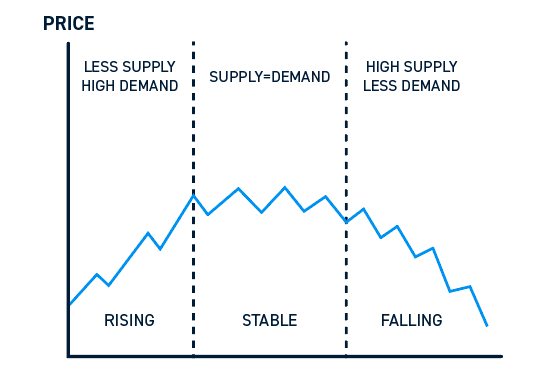
This isn’t a law, but it’s an observed pattern worth understanding.
SpaceX’s Unique IPO Structure.
The SpaceX IPO differs from a typical listing in a few notable ways.
Only about 4.5% of total shares will trade freely, well below the roughly 10% typical for large IPOs.
The dollar volume of trading will still be substantial given the overall market cap, but the percentage is unusually small.
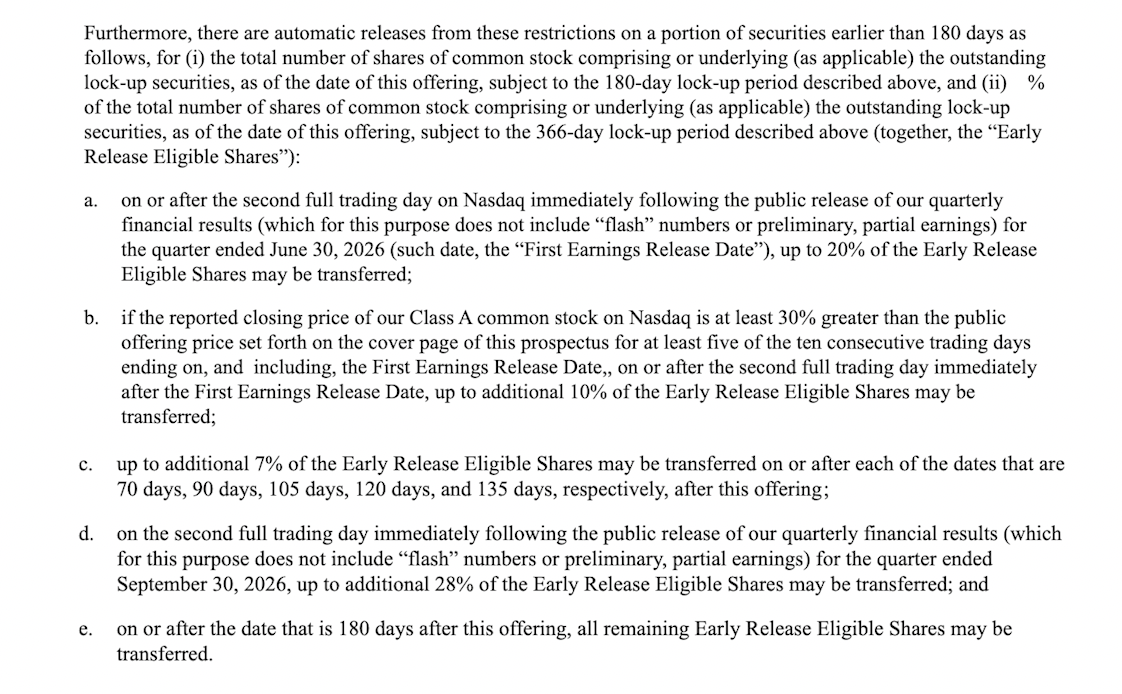
Rather than a traditional single 180-day lockup, SpaceX has implemented a staggered release schedule that gives employees access to liquidity sooner.
The Employee Lockup Schedule (from the SpaceX Prospectus).
• After 2Q earnings report (August): 20% of employee shares eligible to sell
• Days 70, 90, 105, 120, and 135 post-IPO: 7% of shares eligible to sell at each interval
• After 3Q earnings report: 28% of shares eligible to sell
• Day 180 post-IPO: all remaining shares eligible to sell
Sell as Soon as You Can.
If you’ve decided to sell enough stock to secure your financial foundation, then you may want to consider selling as soon as the lockup permits.
Don’t wait for a higher price.
If the stock already offers you the ability to accomplish your financial goals, take it.
Waiting introduces risk: that the price drops, that the window you’re hoping for doesn’t materialize, that you find yourself without the base of security you’d built toward.
Lock in the foundation, diversify those proceeds, and let whatever SpaceX stock you choose to retain be upside, not a requirement.
If you still work at SpaceX, you retain substantial exposure anyway.
Future raises, new stock grants, and continued employment are all tied to the company’s success.
You don’t need to own every share you’ve ever earned to participate in that upside.

Do Your Financial Planning First.
Before deciding how much to sell, build a financial plan.
A proper plan accounts for lifetime expenses, projected income (or its absence), career transitions, charitable goals, and tax implications.
It’s what tells you exactly how much you actually need to sell and how to deploy those proceeds.
Make sure you work with a fiduciary.
A fiduciary is legally required to act in your best interest.

Not all financial advisors meet this standard, and the distinction matters significantly when you’re making decisions of this magnitude.
Ask explicitly before engaging anyone.
Build a plan that holds up across scenarios.
As Warren Buffett said, “Never risk what you have and need for what you don’t have and don’t need?
For more on SpaceX RSUs, check out this video below.
Nothing in this newsletter is investment advice nor should be construed as such. Contributors to the newsletter may own securities discussed. Furthermore, accounts contributors advise on may also have positions in companies discussed. Please see our full disclaimers here.
