Constellation Software Update: Broken Business or Rare Sale?

Get smarter on investing, business, and personal finance in 5 minutes.
Business Update

For the first time in eight years, Constellation Software had an earnings call.
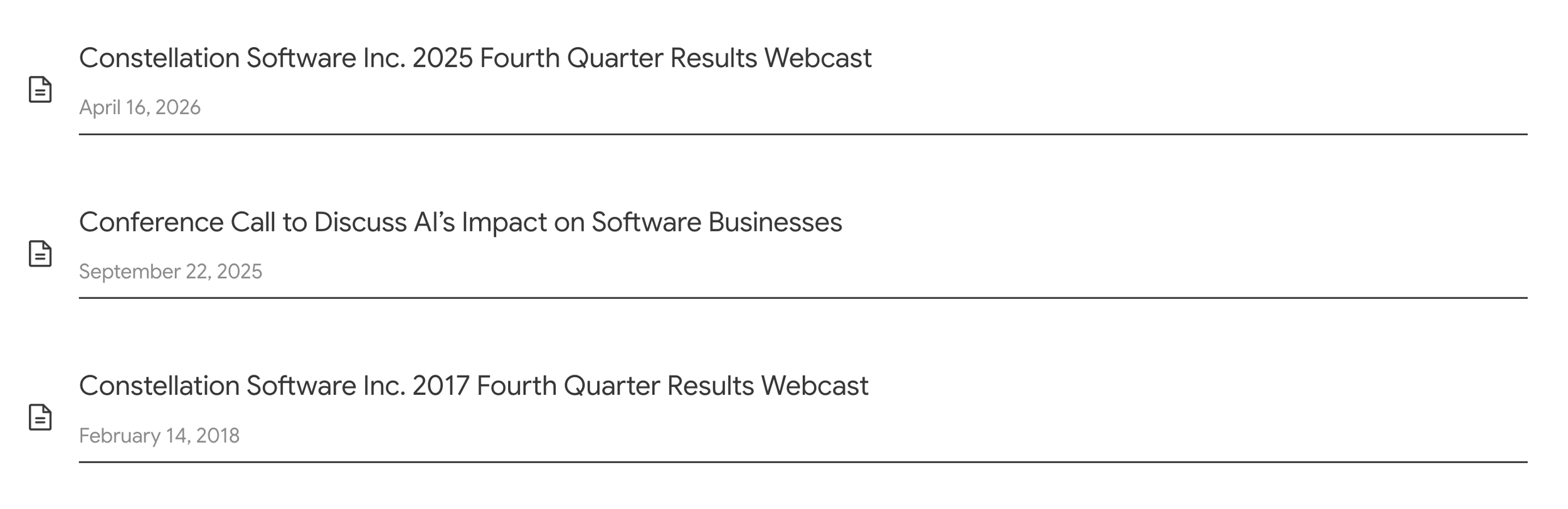
This is a business that made a reputation of not communicating to investors because they had nothing to communicate.
Nothing would change quarter to quarter, and they signaled that by not saying anything.
Does this earnings call, all of a sudden, signal that maybe things at Constellation Software have changed?
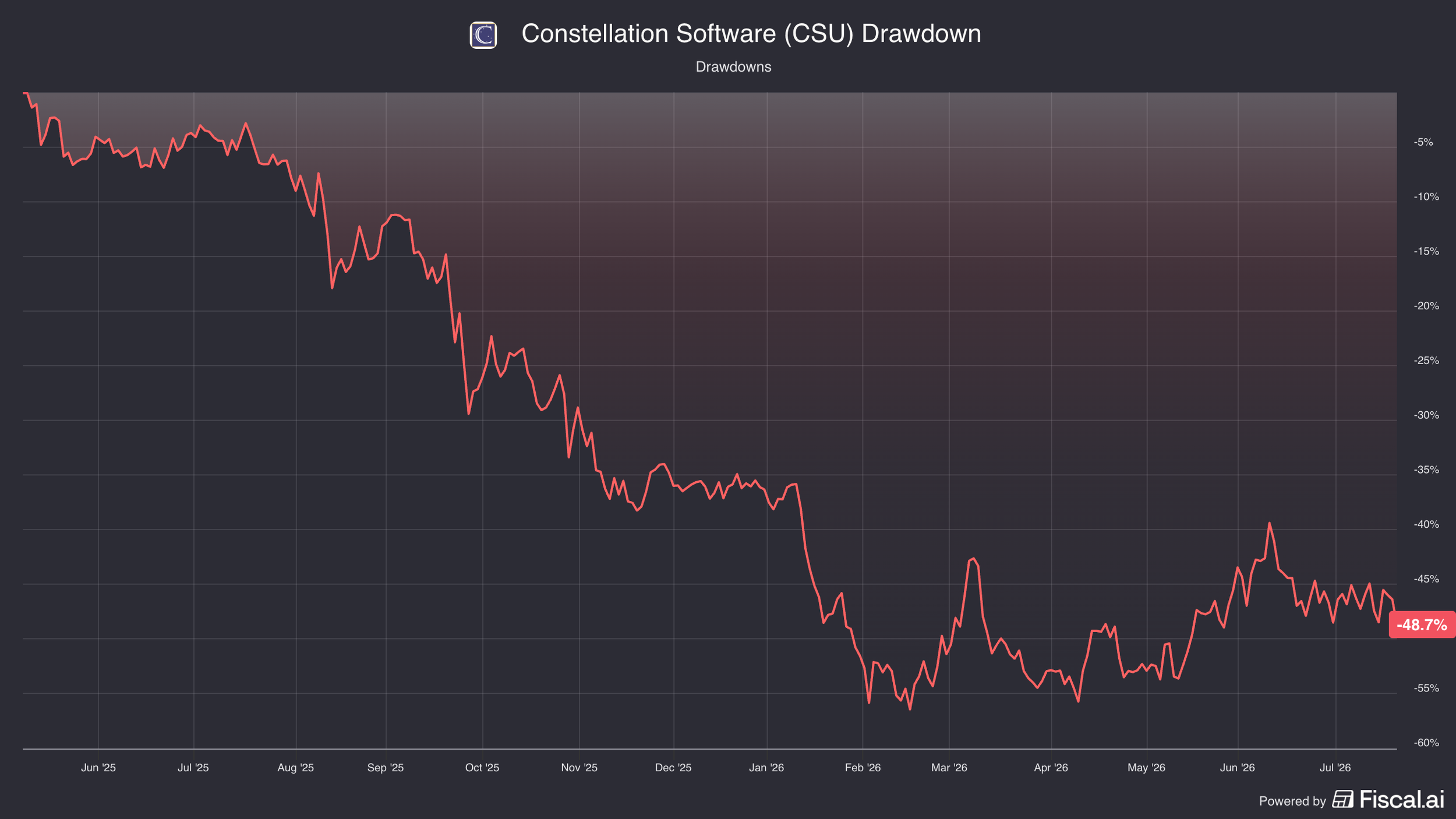
The stock is down roughly 50% from its highs, and is AI going to kill the company?
In this newsletter, we're going to give an update on Constellation Software, but if you haven't seen it already, I did a deep dive on them back in January, and everything in that newsletter still holds.
Why Constellation Broke Its Silence.
So what's changed since then?
Honestly, not much, and I took them having an earnings call very differently than some investors in the market.
Constellation Software's founder and president for the past almost three decades was Mark Leonard, and he just stepped down last year.
The timing did seem a little suspicious, because when he originally stepped down, there wasn't a clear reason why, and they very quickly had a special call right afterward just to talk about AI.
A not unfair interpretation at the time was, “Is he leaving because he felt he was not equipped to handle this AI transition?”
As it turned out, he actually had cancer, and that was the reason he was stepping away, and it seemed like he wanted one last communication before doing so, especially because AI was such a hot topic.
On that AI call, in a classic Constellation Software way of thinking, they really didn't quell any investor fears whatsoever, because they were very open and honest that they don't actually know how AI is going to develop.
They would say things like, “we think we're going to be fine and think it's going to make our business better, but we don't actually know, because we don't know how any of this is going to unfold.”
Investors didn't like those answers that much, but that's very honest.
Now, with the last earnings call and the last AGM, we have a little more data, because they've talked about how they're actually using AI today in their business.
When Mark Leonard stepped down, Mark Miller took over as president.

He's been there since the mid-90s, but he's never really earned the same right as Mark Leonard yet to just be totally quiet.
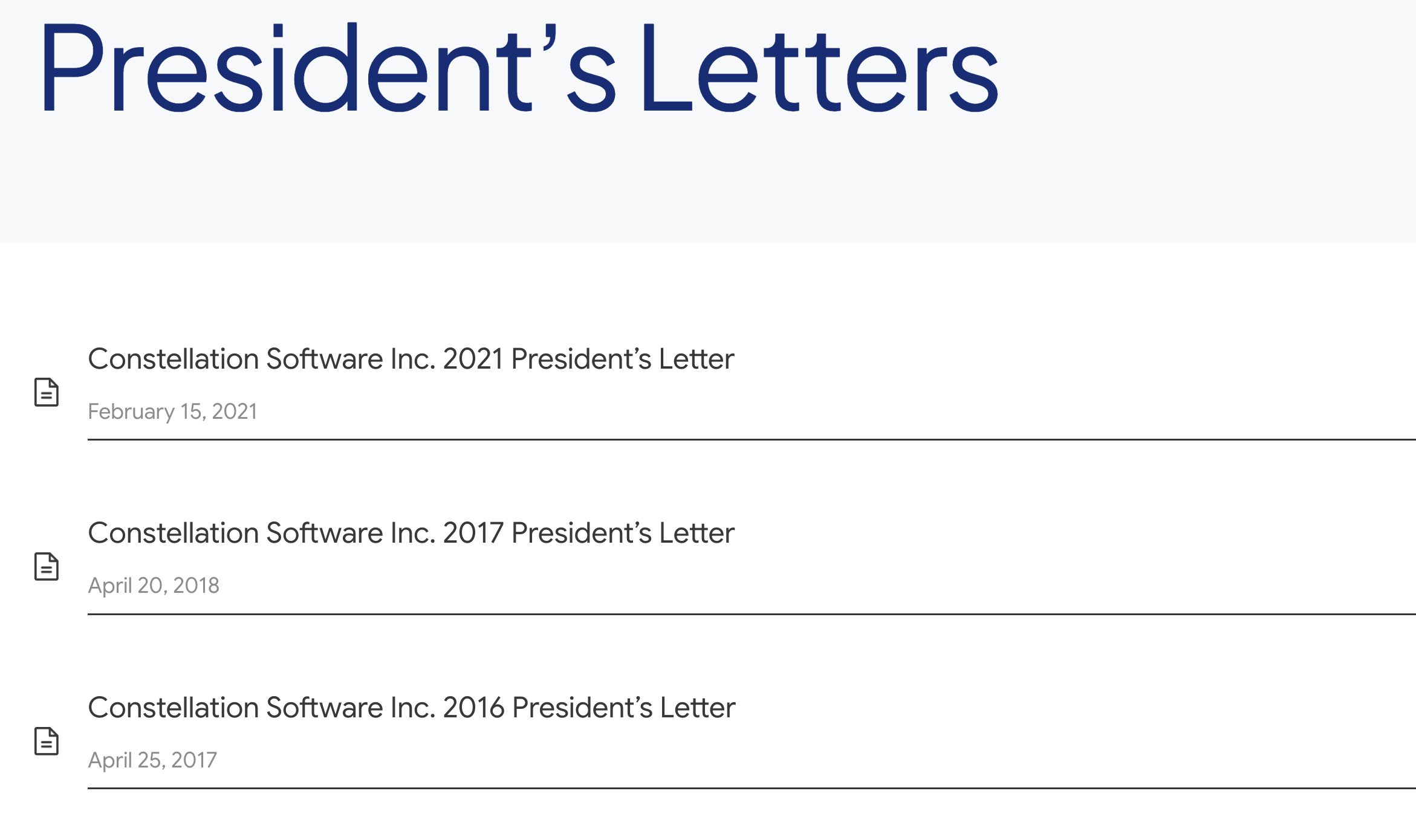
I believe the thinking is that with a new president, you want to actually hear him say some things, because Mark Leonard had decades of writing letters, and investors understood how he thought.
Investors now want to understand how Mark Miller thinks, and whether it's any different meaningfully.
I think that's one of the main reasons they decided to do an earnings call, and they might do them for some period of time.
Mark Leonard stopped doing them back in 2017 because he felt he'd said everything he needed to say, and whatever he was saying was just helping competitors out.
Right now, it seems like their priority is communicating more to investors, so that's why they restarted them.

How They're Actually Using AI.
In terms of what we've actually learned from these calls in the past several months, we get a little information, but it's unsurprisingly not going to be thesis-changing.
We have validation on how they're using AI in many of their businesses, and of course, these are software businesses, so it would be a little silly to totally ignore the advent of AI.
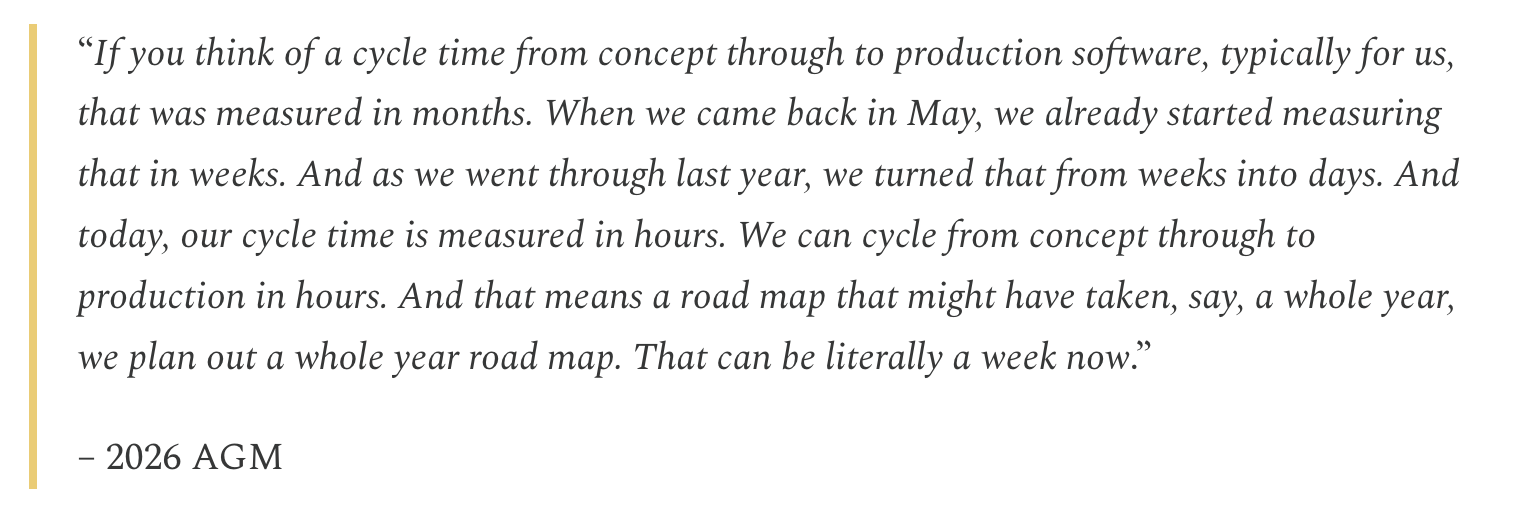
The most meaningful thing they've talked about is how it's allowed them to increase how many features they're rolling out to customers, and at a much quicker rate.
They said stuff used to be mapped in months or weeks, and now it's come down sometimes to as short as hours for planning out some of these developments.
The thesis here is that Constellation Software owns over 1,000 of these vertical market software companies.
These are small businesses that serve very small markets, some maybe only having a couple dozen customers.
The function of their software is usually something like an ERP or a CRM, mission-critical software that the business runs off of.
When you're adding AI to the equation, the question really is, how does this improve the product from the customer's perspective, because I think investors often mistake a benefit to the business with a benefit to the customer.
If you tried to compete against Constellation Software today, and went to one of their customers and said, “I made the exact same product you've been using for ten years, except I made this one in four hours, want to use it, I'll charge you the same,” that customer is going to say no, that there's no benefit to using it.
Even if you could charge a lot lower of a price because it was easier to make, the customer would still say no, at least according to the commentary at the AGM.
Why Customers Actually Leave.
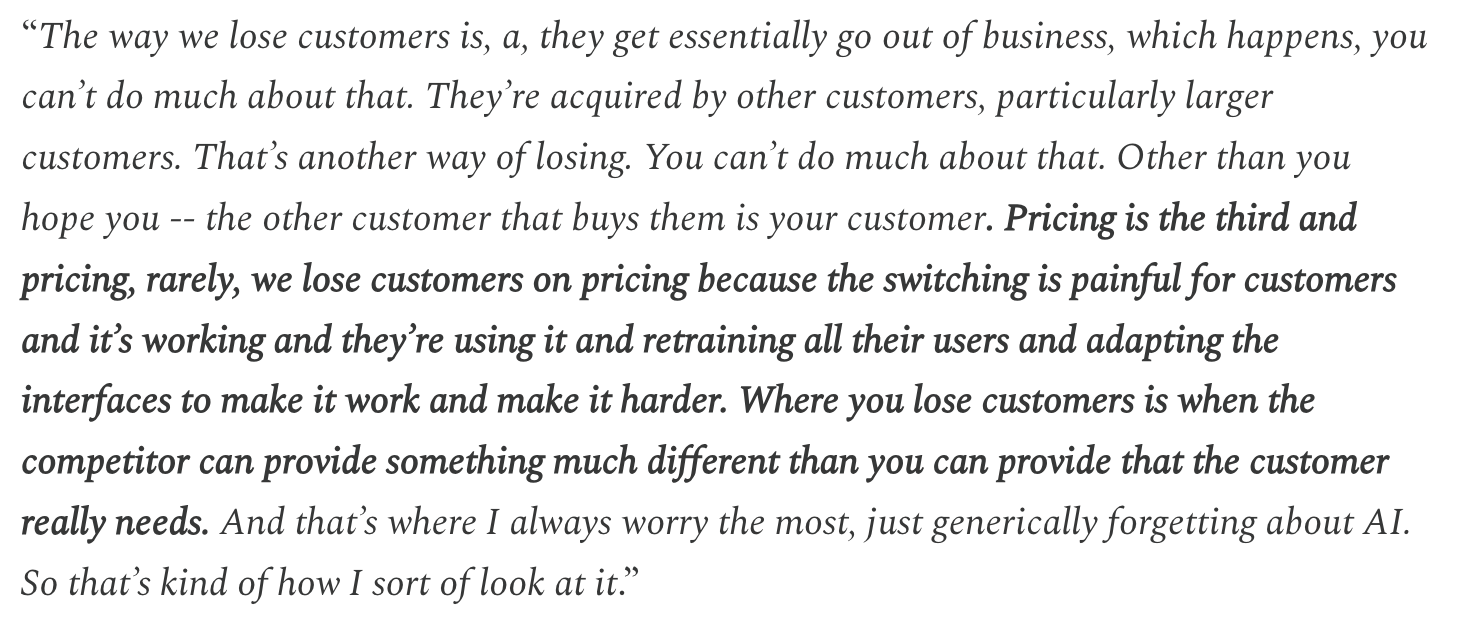
They said there are three general reasons a customer can leave.
The first and most common one is that they go out of business.
The second is that they get acquired.
The third, which they said was extremely rare, was pricing.
They very rarely lose customers on pricing.
Instead, they might lose them because of better features, a different product that better serves a customer need.
This makes sense, because if a piece of software is running your entire business and it's a relatively low portion of your overall cost, it's a total pain to rip it out and replace it.
You have to retrain all your employees, and the new software may not work as well or integrate as easily, which is why people rarely leave for pricing.
But if there's a new product that better serves customer needs and does something the old product doesn't, that could be a reason to leave.
Mark Miller makes the point that this is not AI specific, it has always been the case with any competition, that if a competitor does something better than what you're able to do for a customer whose needs aren't being met, that is when you lose customers.
AI is just a new vector where product innovation could allow a competitor to do something better, and their response is adapting AI as much as possible where it makes sense and where customers are willing to pay for it.
It's important to remember the organizational structure of Constellation Software, because this is not a top-down organization.
There's no one person mandating a direction to follow.
Instead, there's significant autonomy across the operating groups and business units, which are allowed to run their own experiments with AI to try to grow and improve the business, and they're incentivized as such.
Mark Leonard always created a culture of empowering lower-level decision makers, because he felt they were in the best position to know what to do, both for M&A strategy and for growth and innovation.
Over a decade back, they ran experiments to see whether capital was better spent organically on R&D or on acquisitions, and found that acquisitions had a better return on investment.
They would prefer more organic growth, but it was harder and more expensive to do than acquiring businesses.
There's always been an ongoing desire at Constellation Software to invigorate organic growth, and one of the reasons for the Topicus acquisition was that they thought they could learn things from owning it that could help increase Constellation's own growth rate, since Topicus was growing faster.
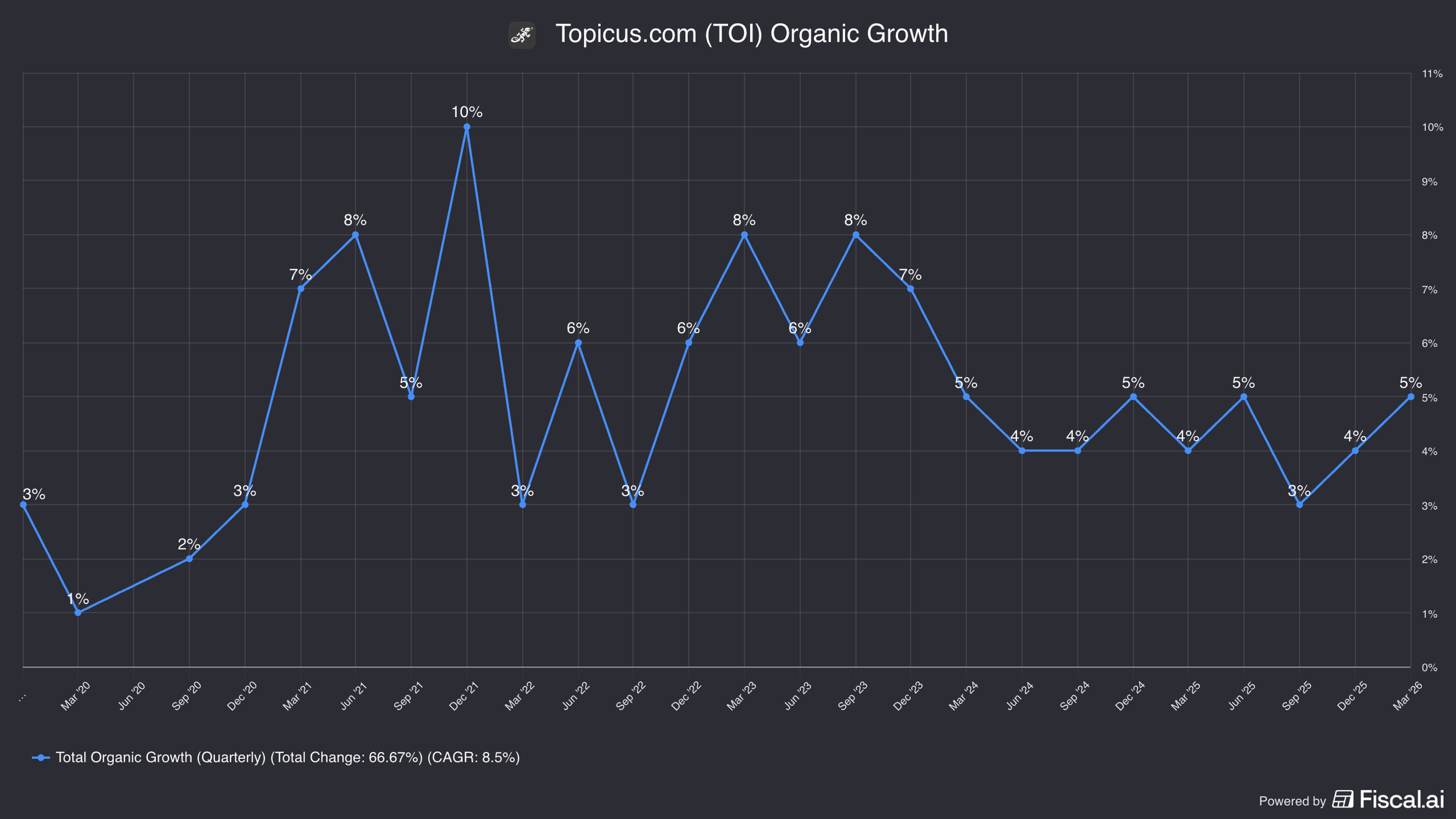
AI is a new thing that could give them a real reason to reinvigorate growth through new products, cross-selling, and upselling existing customers, but that hasn't quite happened yet.
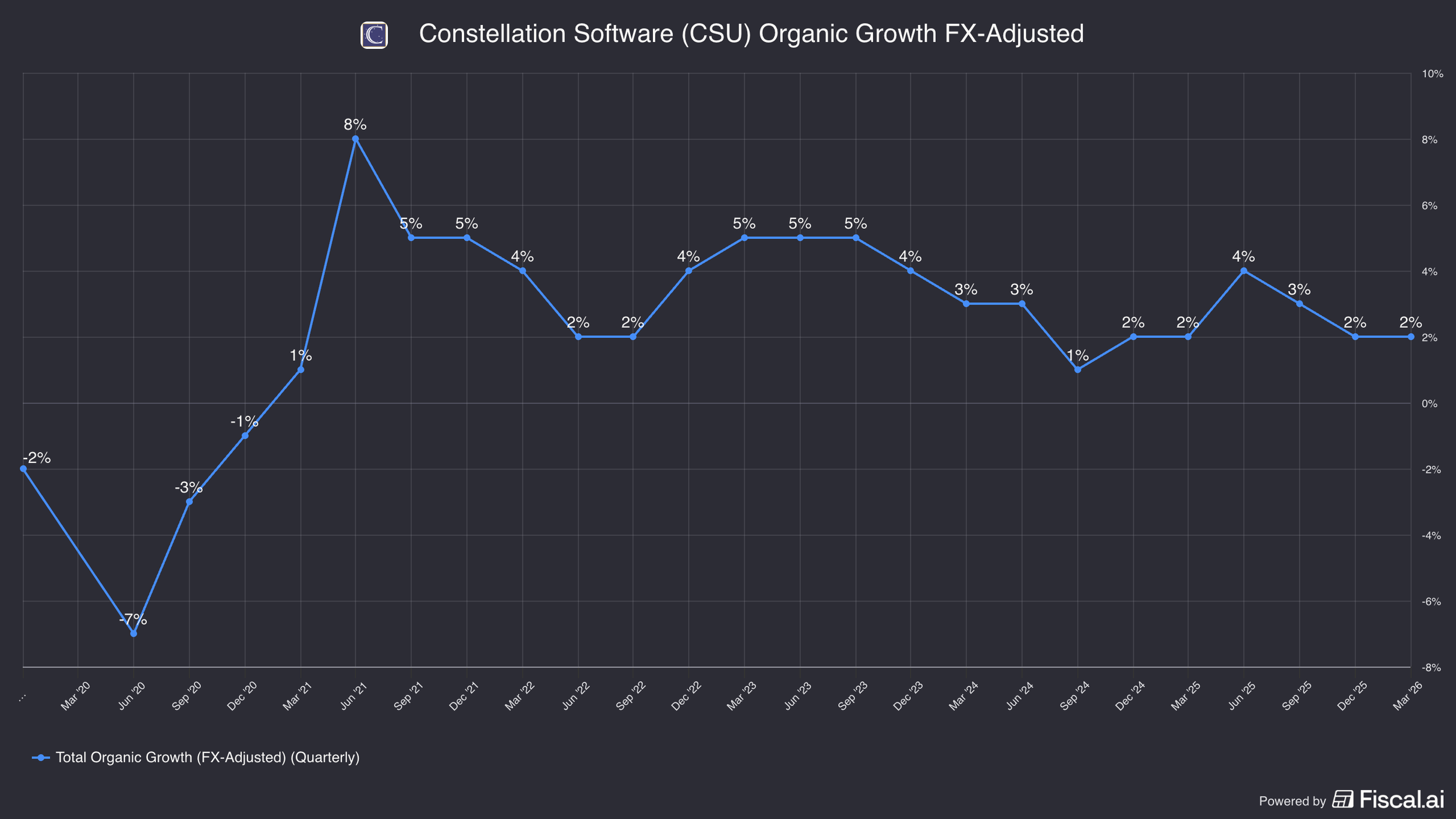
Last quarter, total organic revenue growth was just two percent, which is basically average for Constellation Software, since most of the businesses they own serve small end markets that aren't growing much, with churn from businesses going out of business offset somewhat by price increases and new features.
Whether AI can unlock new growth, I'd imagine it can, though whether the AI model companies end up taking a good chunk of those economics isn't clear.
My base case is that a software company providing the mission-critical software is best positioned to become the platform that delivers AI to a customer, the way ServiceNow wants to be that player for enterprises, or Salesforce.
Within these small businesses, that's Constellation Software, since it's really the main mission-critical product running the business.
You need the system of record and all the data to do anything with AI, with proper governance, privacy protections, and auditing trails, making sure it doesn't randomly delete data.
Constellation Software would be in the best position to deliver AI to business owners who aren't going to be that savvy about figuring out new ways to use AI themselves.
It's going to be Constellation pushing these ideas to them, and they'll adopt them if it makes sense.
We haven't yet seen a reinvigoration of organic growth, though that could come in a few quarters.
My base case is probably that growth stays where it is, since that's conservative.
Growth Through Acquisition, Not Organic Growth.
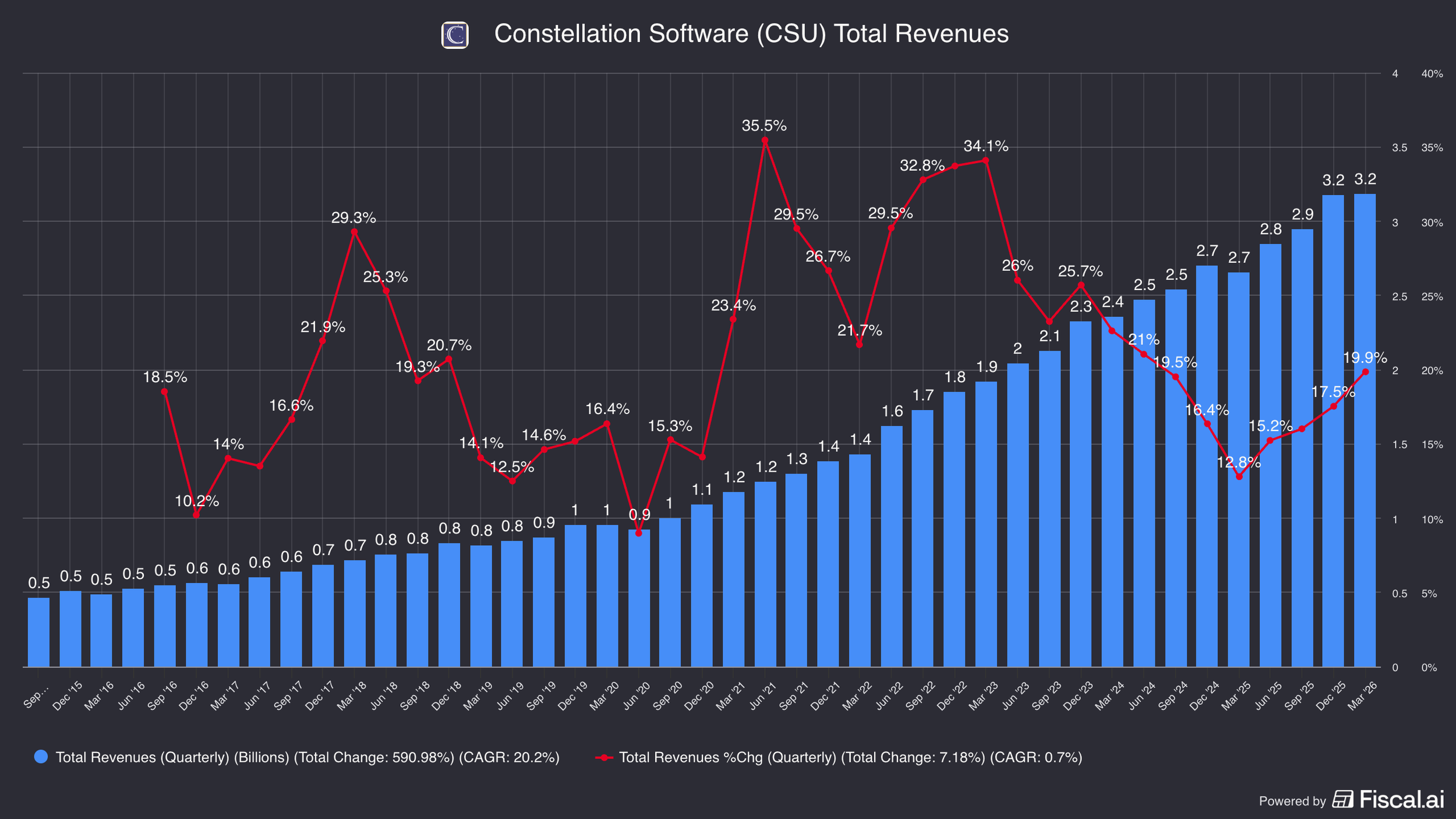
Total revenues did grow 20%, all from acquisitions basically, 2% organic versus 20% total, so the model is still working, buying a lot of existing cash flow streams with their excess capital.
The best way to look at Constellation Software, in my opinion, is a metric Mark Leonard created called FCFA2S, free cash flow available to shareholders.
It's a free cash flow calculation with adjustments to pull out the cash flows that aren't owned by Constellation Software, since the cash flow statement consolidates revenue from businesses they may not fully own, so they back out those minority interests.
I make one additional adjustment, backing out what's called the IRGA liability, a liability created because Constellation will have to buy about a third stake in Topicus at some point in the future.
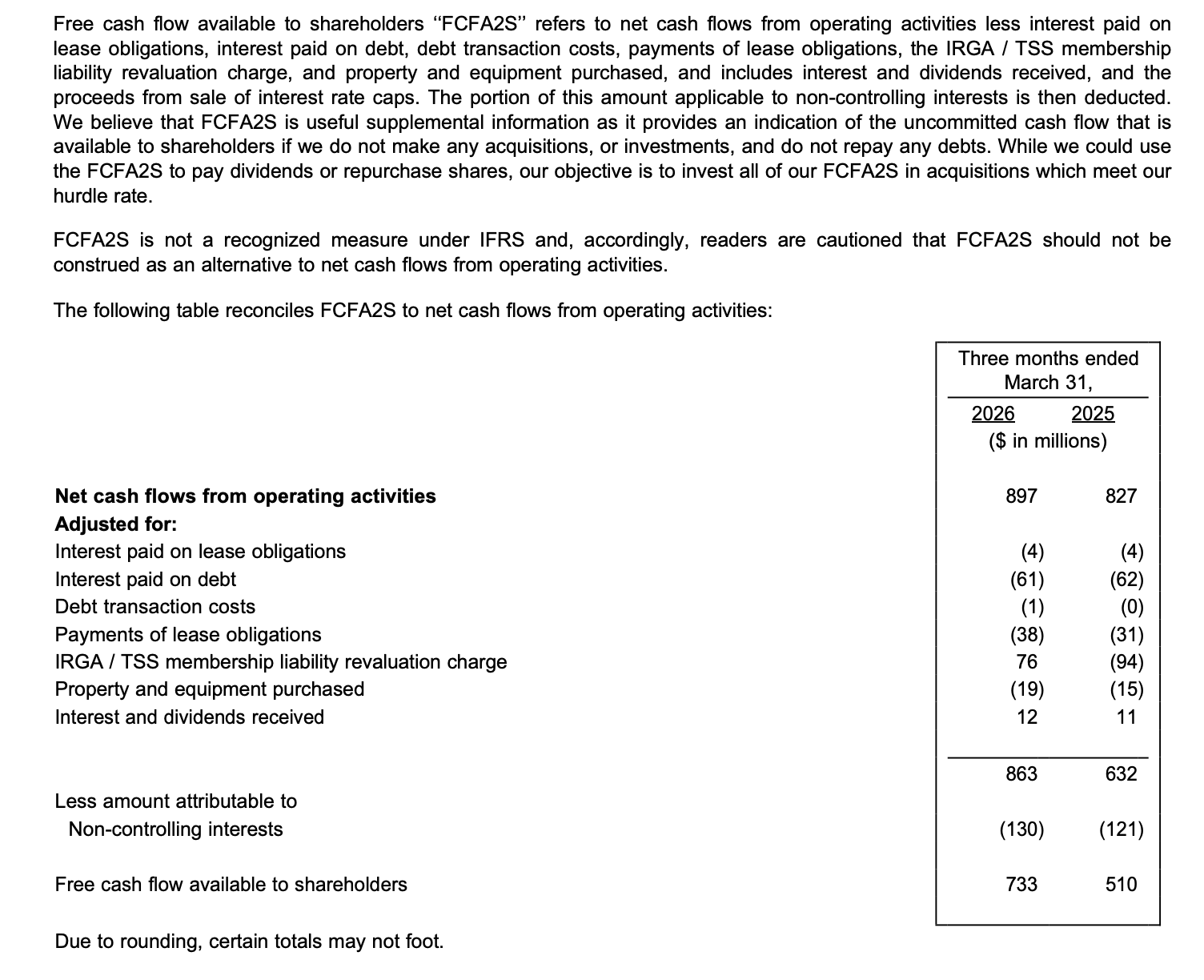
That number is basically the value of the stake they'll ultimately purchase, an investment, but a one-time one.
When trying to get a free cash flow number, we're trying to understand normalized earnings, how much the business can earn year in and year out, and since they'll only buy that Topicus stake once, it doesn't make sense to treat it as an ongoing cost reducing free cash flow.
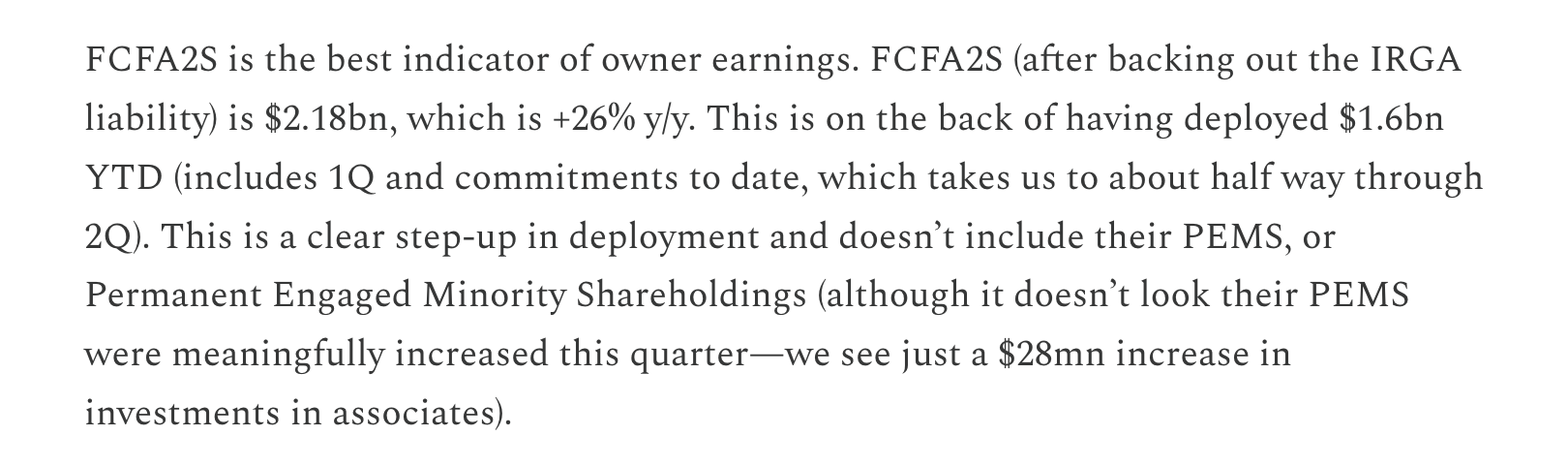
If we do that adjustment, FCFA2S is $2.2bn, and that is up 26% y/y.
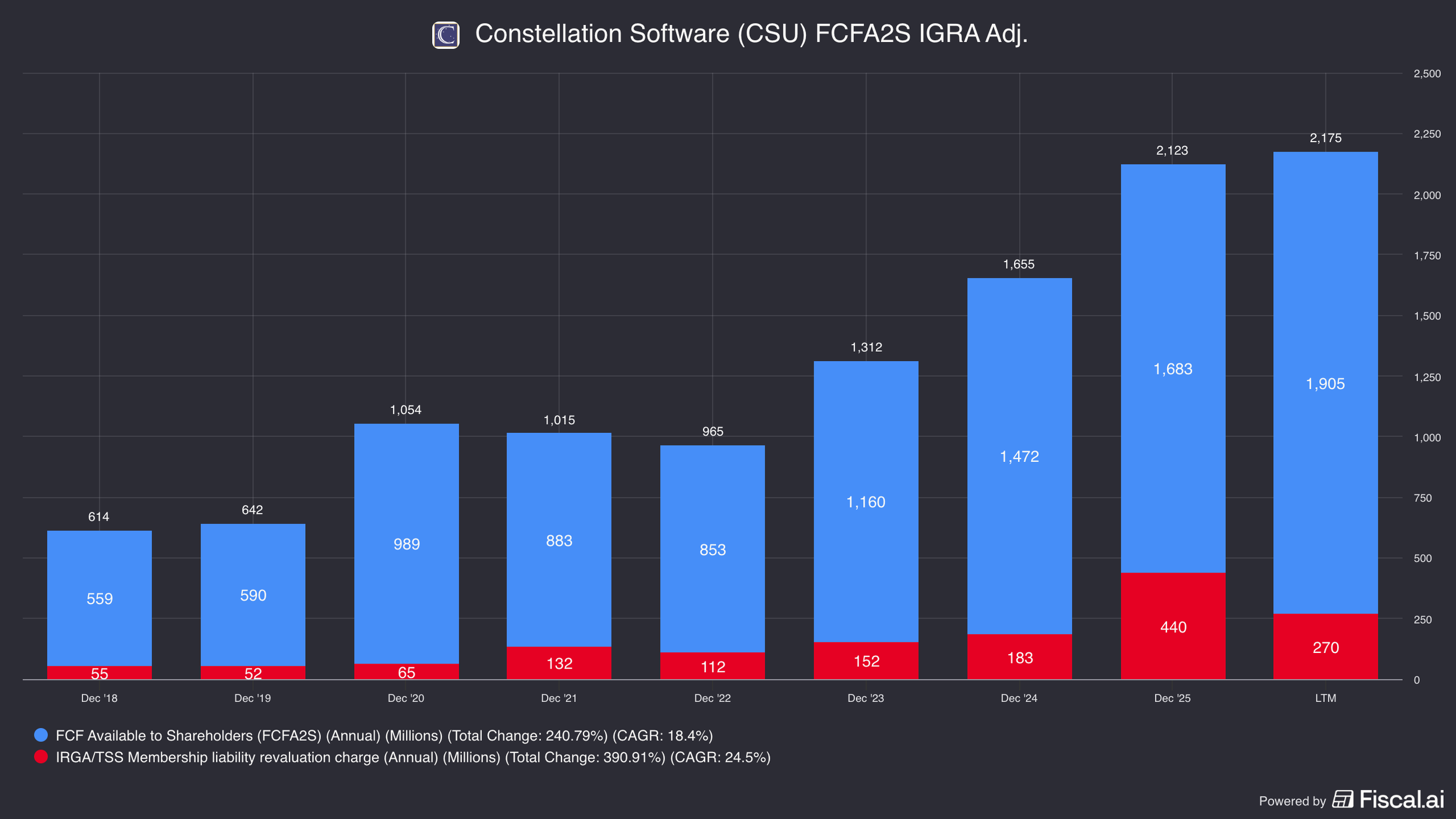
So free cash flow is growing even more than revenue, which shows the Constellation business model, it's not driven by organic growth, it's driven primarily by acquisitions of businesses already producing a lot of cash, which fall straight to the bottom line once acquired.
If we rewind back a few years, the biggest bear case against Constellation Software wouldn't be AI, it would be can they deploy enough capital, since historically they've deployed capital at 20% plus rates of return, a very high rate and a hard thing to keep doing as the amounts of money involved multiply into the billions.
YTD they have already deployed $1.6bn, and that is relative to LTM cash flows of $2.2bn, so there's a very good chance they're at or above 100% of free cash flow deployed.
The way you get it even higher is by taking on a little debt, which historically they haven't wanted to do, but when they do, it's at the company level, ring-fenced to just that one investment instead of the entire business, a safer way to take on debt.
A lot of capital has been deployed, so that bear case doesn't seem to have much credence these days.
Some might think SaaS stocks being down gives them a lot of opportunity, and it's given them a little, but not that much, since public market software valuations are still much higher than what they purchase businesses at, roughly one to one and a half times revenue, or four to five times cash flow.
They rolled out a relatively new strategy in the last couple quarters called PEMS, Permanently Engaged Minority Shareholder, taking a public stake in a business and keeping it as a passive investment, except engaging the company if they're willing to talk, sharing learnings and ways to improve.
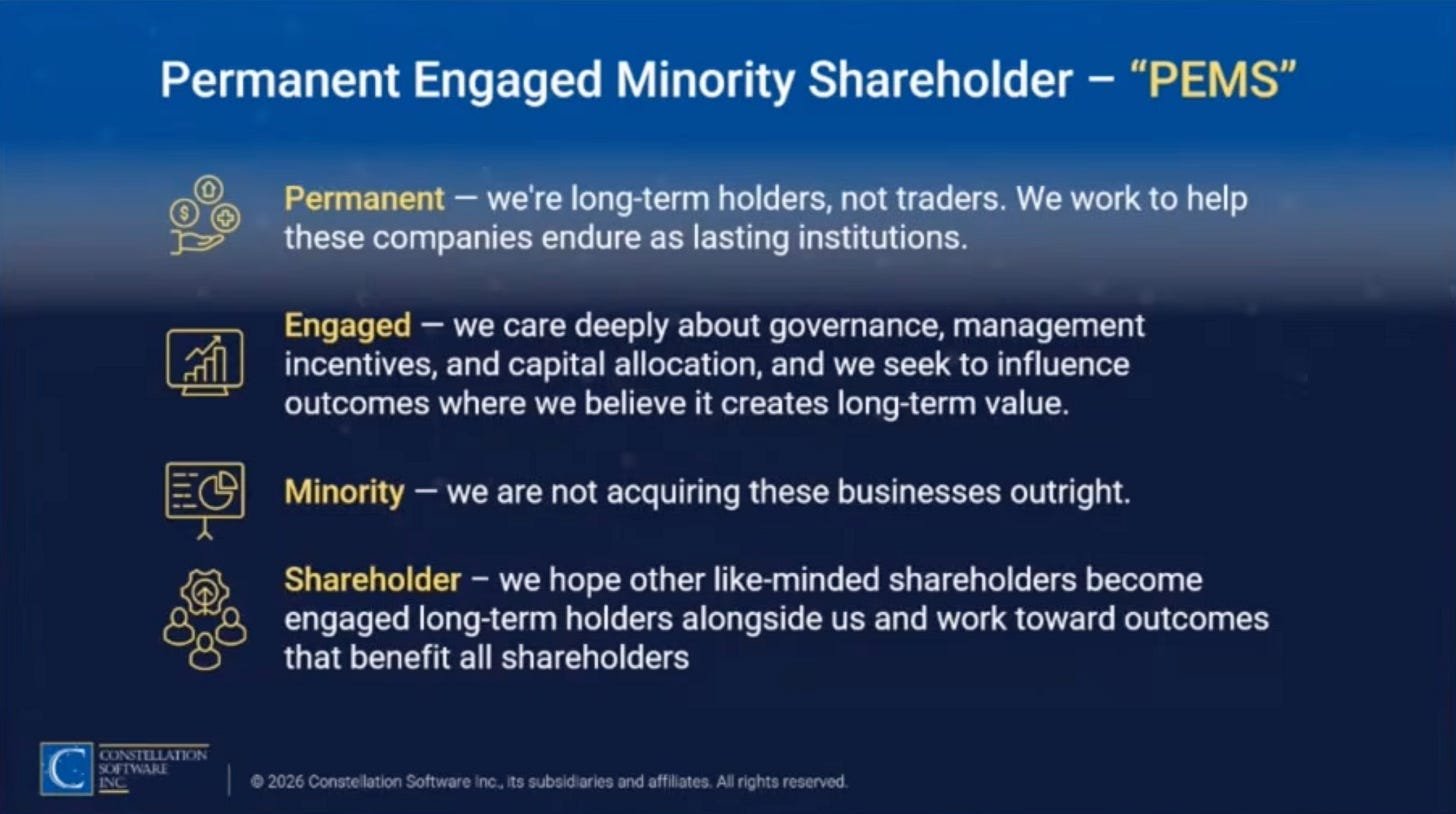
That wasn't much last quarter, only about $28mn, but it's another way they're continuing to deploy more capital, and it bodes well for their ability to keep finding investments.
6 AI Risks for Constellation Software.
The real risk people are still worried about is AI.
I had a video a while back on 6 key risks from AI for software businesses generally, and here's how they apply to Constellation.
AI Risk #1: Changes to the Pricing Model.
I don't think this one is that formidable for Constellation Software.
They might have to move in some cases from a seat-based model to a total business pricing model, but I don't see that as disruptive versus businesses where the seats being lost fall on individual creators or entrepreneurs rather than an entire business.
As long as the whole business is still getting a lot of value from the software and still needs it, they'll figure out how to price it, since no enterprise expects to pay less next year just because it's using fewer seats while getting more value from AI features.
It's a different question if losing seats also comes with lower productivity, the way individual creators using Adobe might churn permanently if they're no longer in that job.
That's more a concern with end markets shrinking than with the pricing model itself, but the two go together.
I think whoever is most insulated is a business using the software rather than an individual, though it'll go case by case.
Short story, I don't think it's a big deal for Constellation Software.
AI Risk #2: Competition from In-House AI Software.
I think this is really not a risk for Constellation Software, because their typical customer isn't that tech savvy.
I don't see them vibe coding their own software, and the software being replaced is mission critical, so if something goes wrong with it, their business literally breaks.
I don't think that's very likely.
AI Risk #3: Competition from Incumbents.
You could get competition from incumbents, but there aren't really a lot of incumbents in a lot of the markets they operate in.
What are you going to do to provide a new benefit to the customer, since simply existing isn't good enough?
If you can do a new feature, Constellation is going to copy it.
One of Constellation's four business segments is called Professional Services, basically forward deployed engineers who've been doing this for decades, going into a business to help set up and customize software however the customer wants.
With AI, this just makes that easier and even more of a value add.
AI Risk #4: AI-Native Startups.
I think this is the least likely area for an AI startup to really focus on, because there are all these small markets, and the hard part of getting into them was never the software, which was already fairly easy to make even before AI.
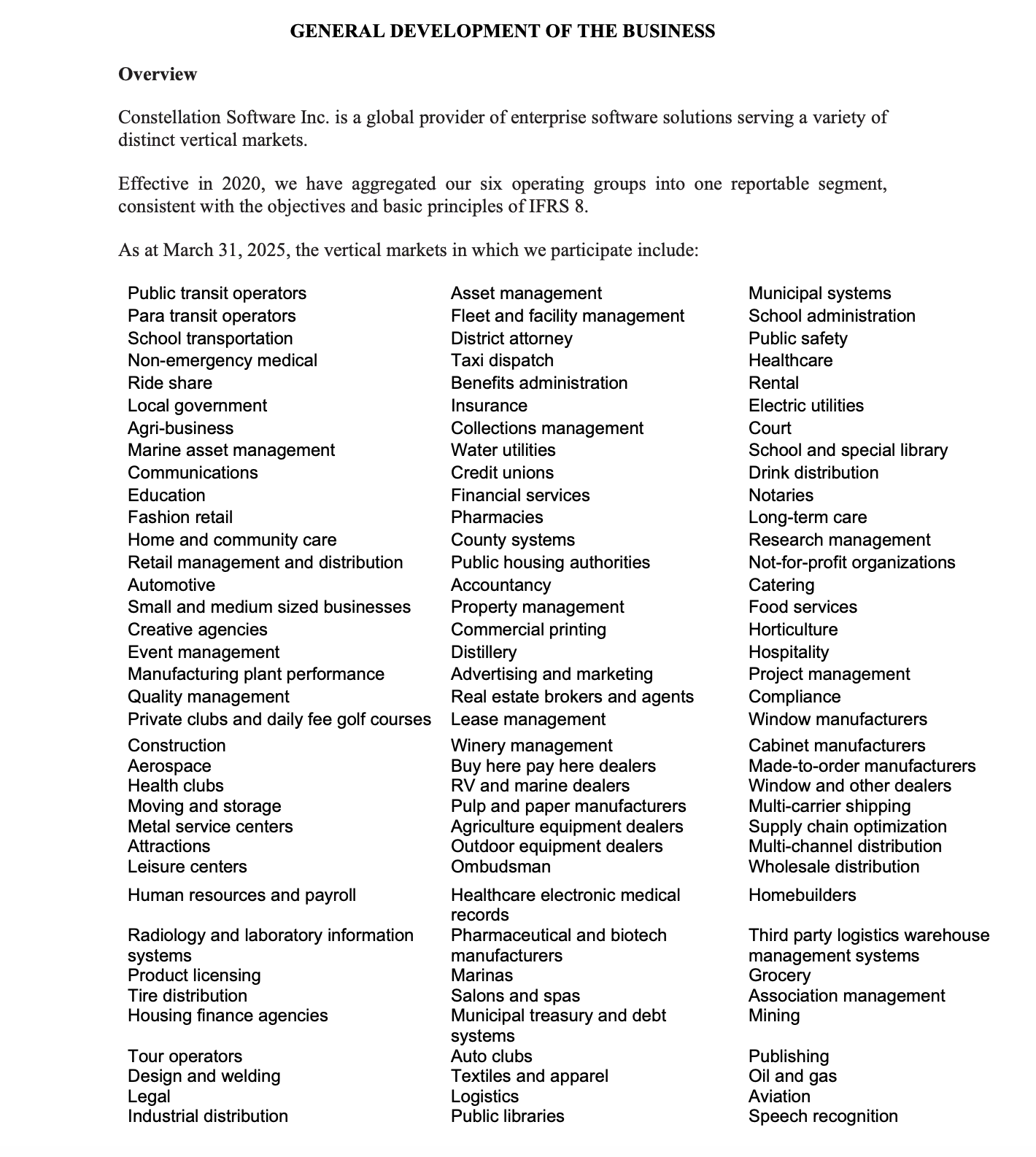
The hard part is distribution, getting a sales force to find all of these small businesses and convince them, which is a long sales cycle.
If you're picking an area to disrupt, you're not going to go after something like graveyard software, which is a business Constellation owns.
It just doesn't seem the most likely place for a lot of talent to focus, and even if they do, it's still not easy to replace an existing provider.
AI Risk #5: Token and Model Provider Risk.
Then there's token risk, the idea that the AI models provide the most value and keep charging more for that, capturing more of the economics.
I don't think this is going to be that big of a risk, especially for Constellation Software.
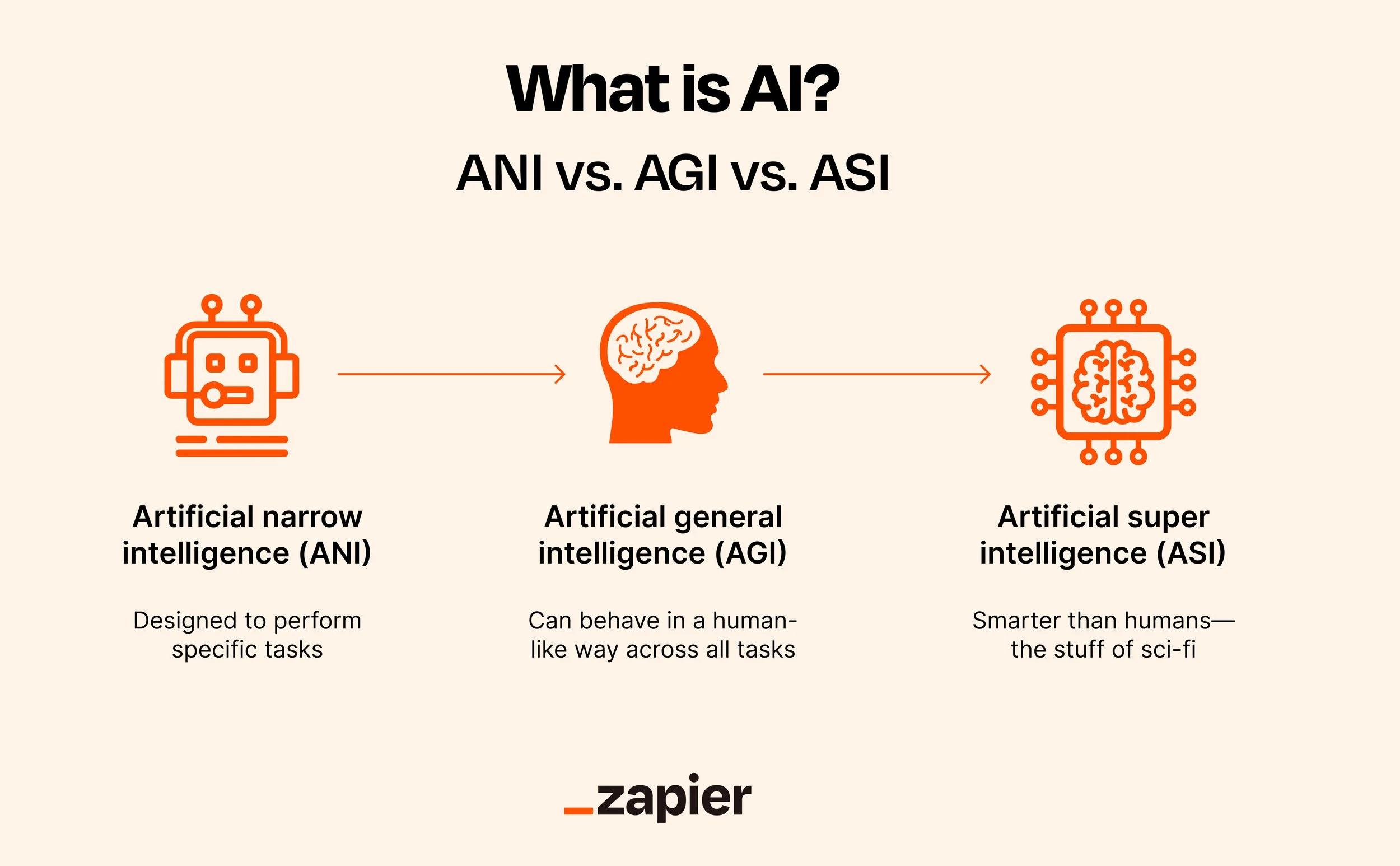
AI Risk #6: Existential AI Risk (AGI/Superintelligence).
The last one is the existential risk that AI gets so good it can do everything for the business.
If we get that, a lot of businesses are going to be in trouble, and I just don't believe that's a base case either, though you can take your own opinion on that.
Valuation.
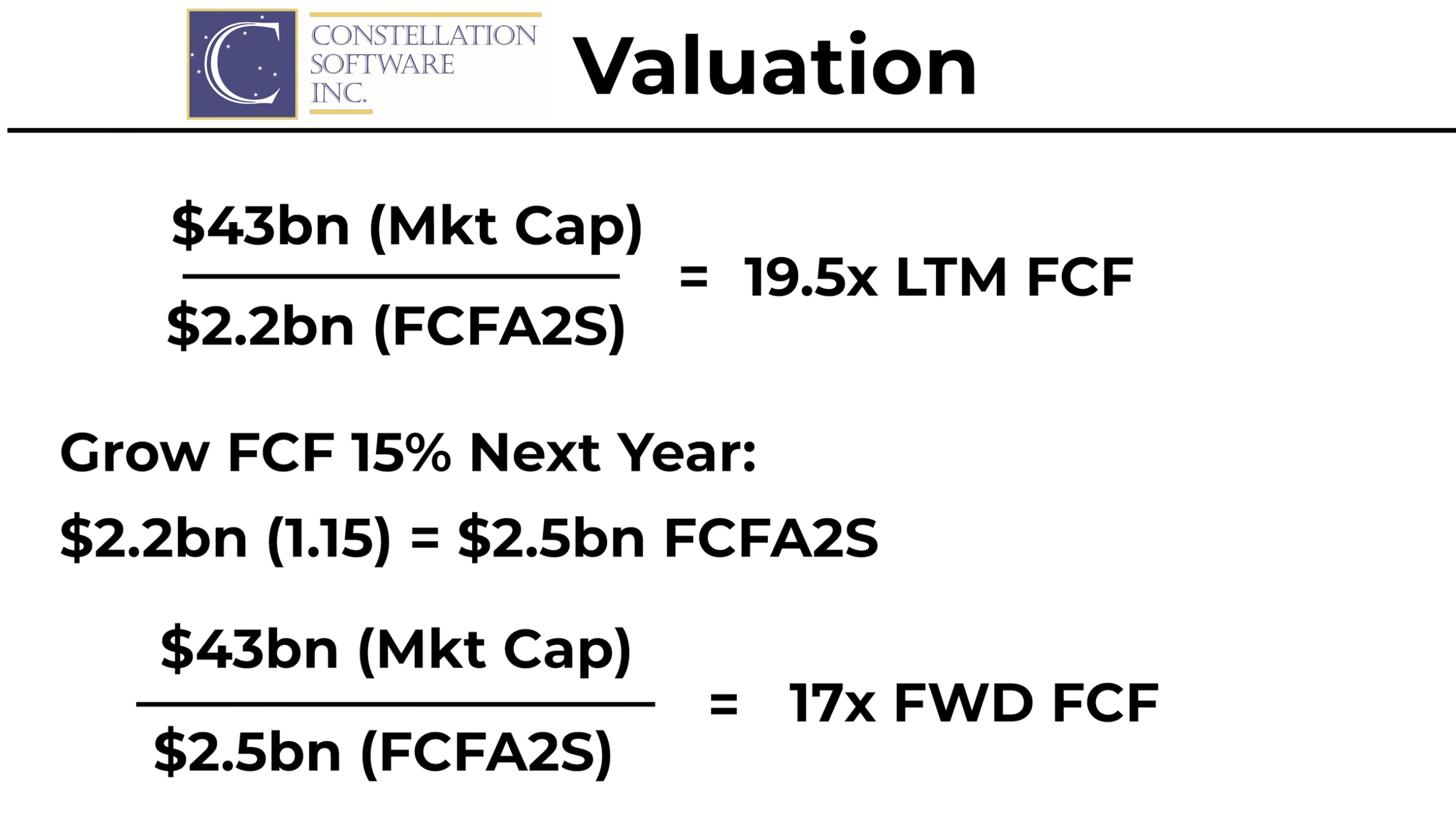
With $2.2bn in free cash flow, at a $2,000 stock price for the US ADR, that is a multiple of 19.5x trailing free cash flow.
If we think they only grow free cash flow 15% next year, that's a 17x multiple on next year's free cash flow, for a business that's been growing free cash flow in the mid-teens to low twenties percent for many years, and in my opinion is pretty well insulated competitively and pretty well run.
An individual investor has to make their own opinion on whether they want to accept this potential AI risk, because even though I may not think it's the most formidable, that doesn't mean I'm correct.
Maybe AI does continue to get so much better that it becomes super easy to make software, and other businesses beat Constellation down on price and win customers in these areas.
Not impossible.
That'll be a decision for you to make.
For more on Constellation Software, check out this video below.
Nothing in this newsletter is investment advice nor should be construed as such. Contributors to the newsletter may own securities discussed. Furthermore, accounts contributors advise on may also have positions in companies discussed. Please see our full disclaimers here.
