Lump Sum vs Dollar Cost Averaging

Get smarter on investing, business, and personal finance in 5 minutes.
This newsletter is an adaptation from my recent YouTube video on Dollar Cost Averaging vs Lump Sum Investing?
If you had $250,000 to invest today, what would you do with it?
Would you put it all in the stock market today?
Or would it be more prudent to break it off into smaller pieces and invest it over six months or maybe even a year?
The tricky thing is that we know two things about the stock market.
The first thing we know is that it tends to go up over time.
The second thing we know, though, is that at any point, it can go down.
In fact, a 10% or 20% correction has happened many, many times in history, and investors would really hate to put all of their money in the market just to see it instantly go down by a significant amount.
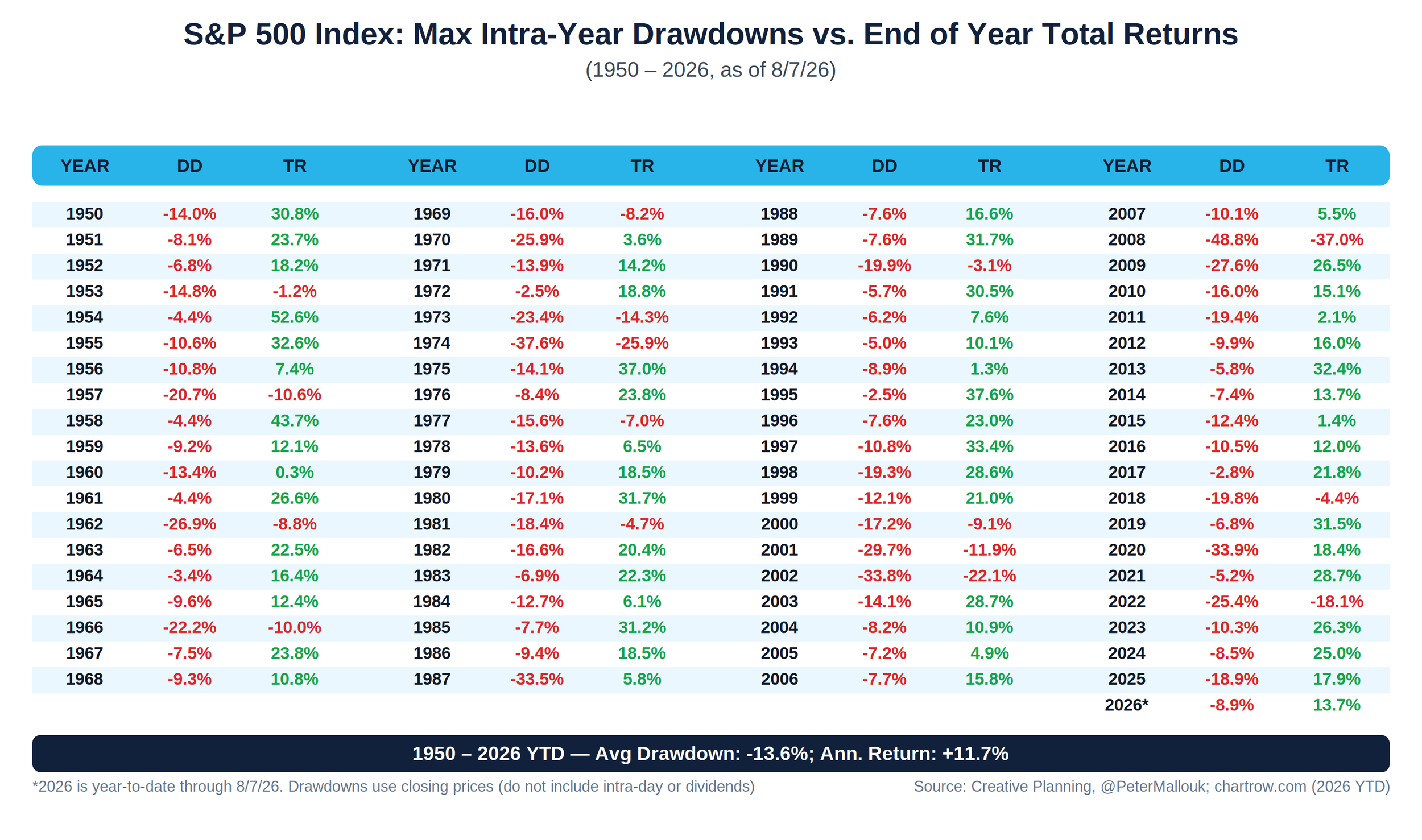
So what should you do about this?
Should you invest it all today, or should you break it off into smaller pieces and invest over time, so-called dollar cost averaging?
In this week’s Five Minute Money we are going to explain what the research and data has shown.
Now, the first thing I want to say before we get into it is that I am assuming this money you have to invest is truly money that you actually have to invest, which I need to clarify because a lot of times people will say they have money to invest, and it's really money they need in the next couple years.
So this can only be applicable for money you can actually keep in the stock market for the long term.
Why the Stock Market Has an Upward Bias.
The first thing that I want to note is that the market tends to have an upward bias over time.
In fact, in roughly 75% of all years in the past century, the market had a positive performance by year-end.
That actually makes sense if we think about it, because most businesses, they'll make cash flow during the year, then they take that cash flow and invest it back into the business, and hopefully that helps them produce more cash flows.
That, in turn, makes the business more valuable.
So to the extent that stock prices are following the valuation of businesses, we would expect that over time, the stock market continues to go up and up and up.
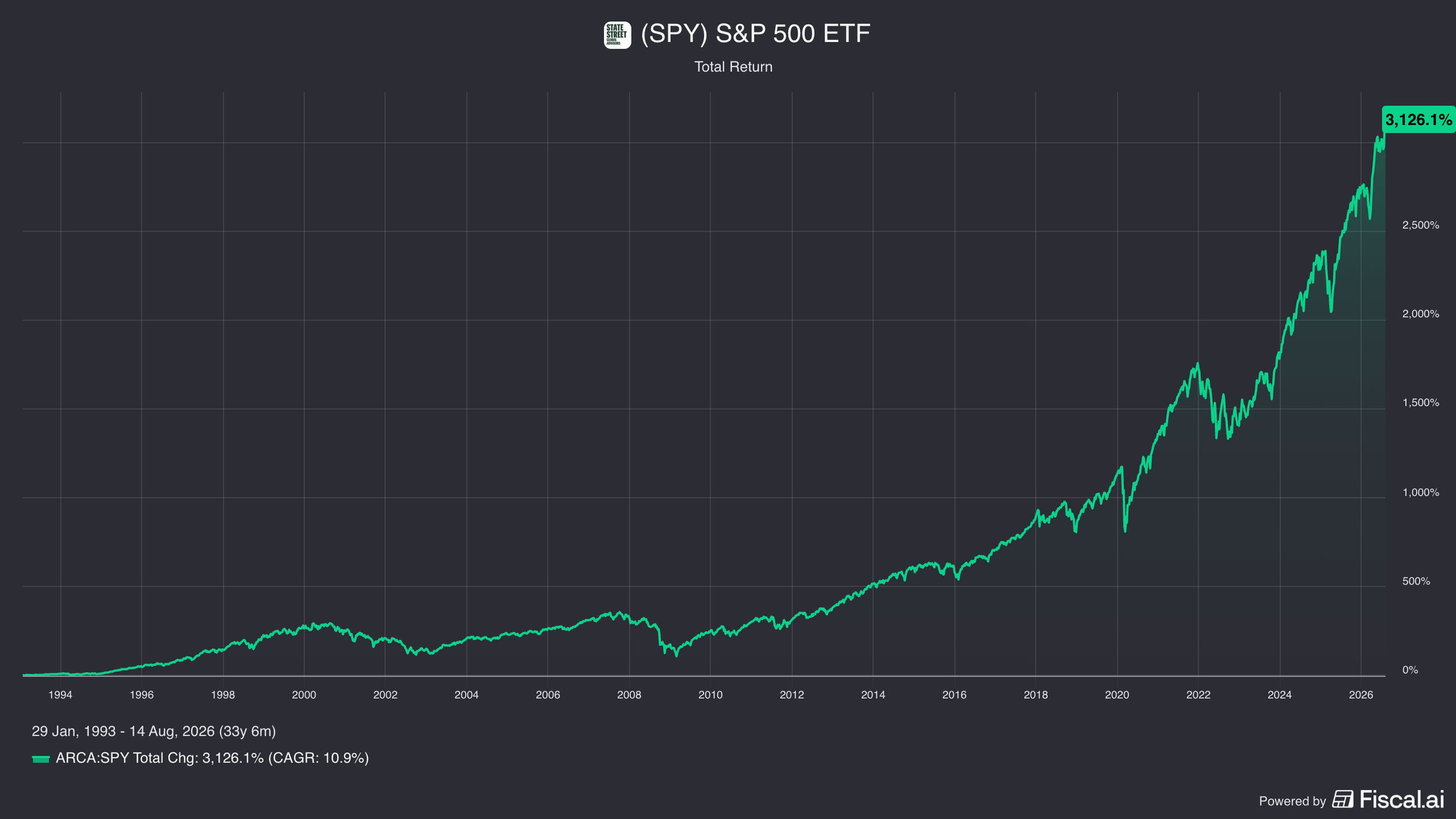
As I mentioned, almost all years, that is what happens.
Now, sure, there could be some times where the valuations of the stock market gets really disconnected from the valuation of businesses, but those moments tend to be pretty rare, at least historically.
So since the stock market has this upward bias, there's an opportunity cost to not being invested in the stock market.
If you are not invested in the stock market, you could be invested in cash equivalents, earning a little bit of interest, except that tends to be a much lower return compared to what stocks return.
The stock market on average has returned 9% to 10% over time, and if you're sitting in cash right now, you're maybe getting a high 3% return.
That difference is what you're basically losing out on.
That's what opportunity cost is called.
So the two extremes of decisions you have to make is you take this $250,000 that's sitting in cash, and you can either put it all in the stock market today and say, well, most of the time the stock market goes up, so I'm going to go ahead and just put it all in today.
Or, I'm worried maybe there's going to be a sell-off, why don't I just put some in today in equal amounts over the next six months, maybe nine months.
If you put in an equal amount of money in the market monthly, that is what dollar cost averaging is.
You could break up that $250,000 into maybe six equal payments, putting that into the stock market over the next six months.
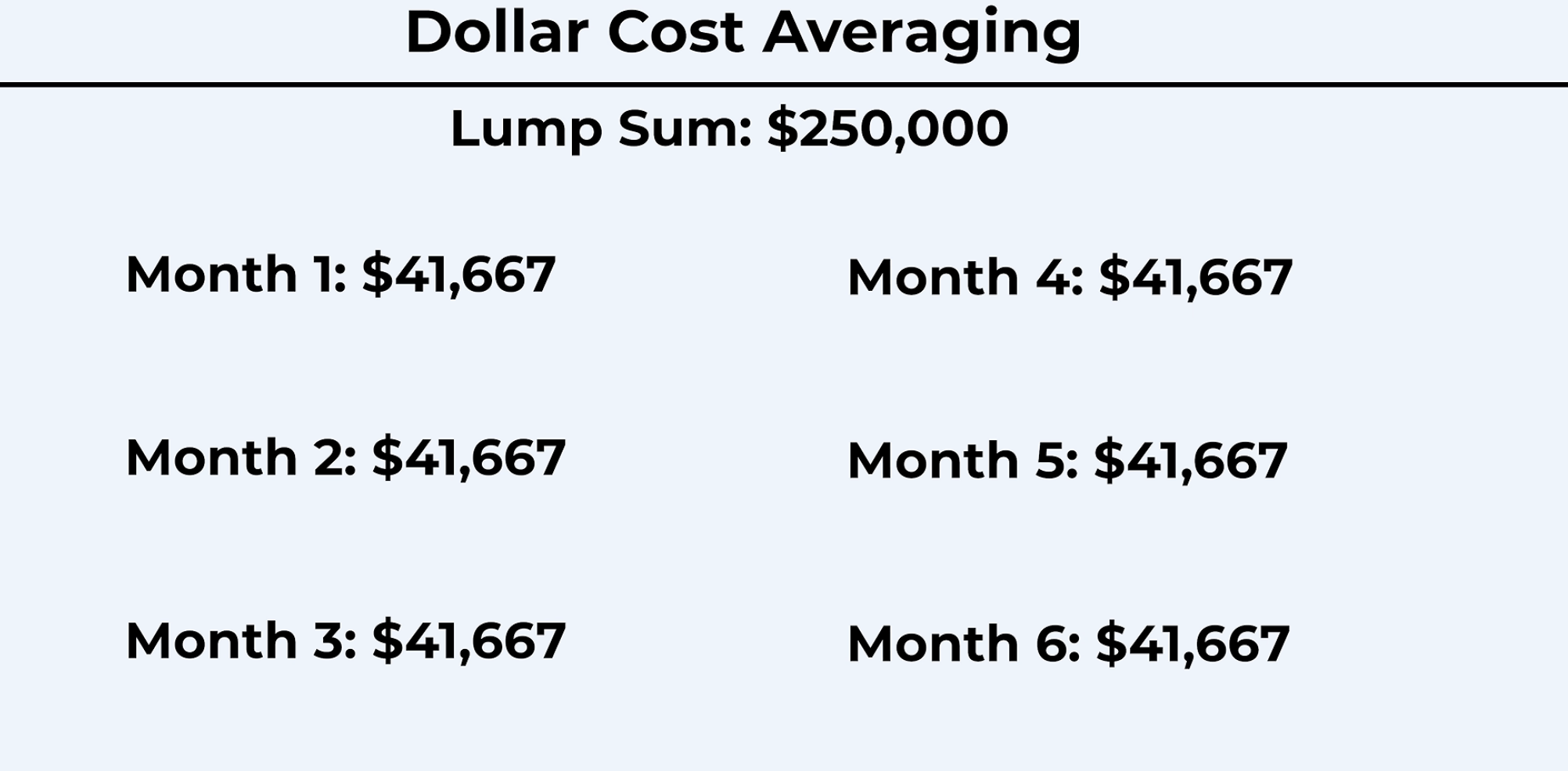
Those are kind of the two different strategies that we're analyzing.
I'll talk more about other strategies towards the end.
The Vanguard Study: Lump Sum Wins Two-Thirds of the Time.
In this sort of landmark Vanguard study, what they found was that in the majority of times, this lump sum approach actually beat the dollar cost averaging approach.
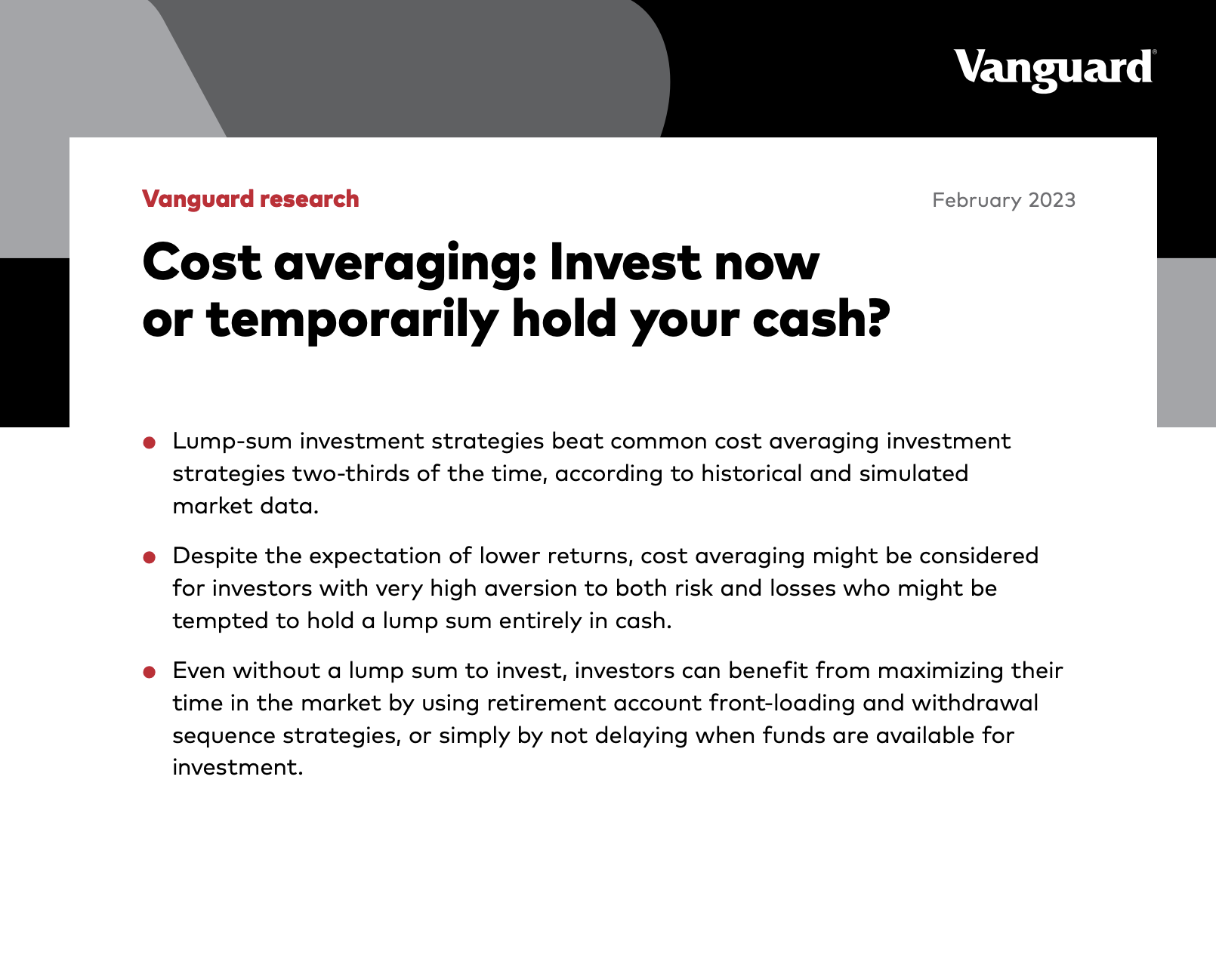
Their methods were pretty simple.
They went back to 1976, and they took a rolling 12-month average and compared lump sum investing to dollar cost averaging on different time horizons, three months, six months, et cetera.
Then they compared the results.
So they're testing not just 1976 versus 1977, but 1976 in January making your investment, 1976 in February making that investment, 1976 in March, et cetera.
What they found was that in two-thirds of all of these scenarios, lump sum investing, which means putting all of your money in the stock market on that date, actually beat the dollar cost average approach.
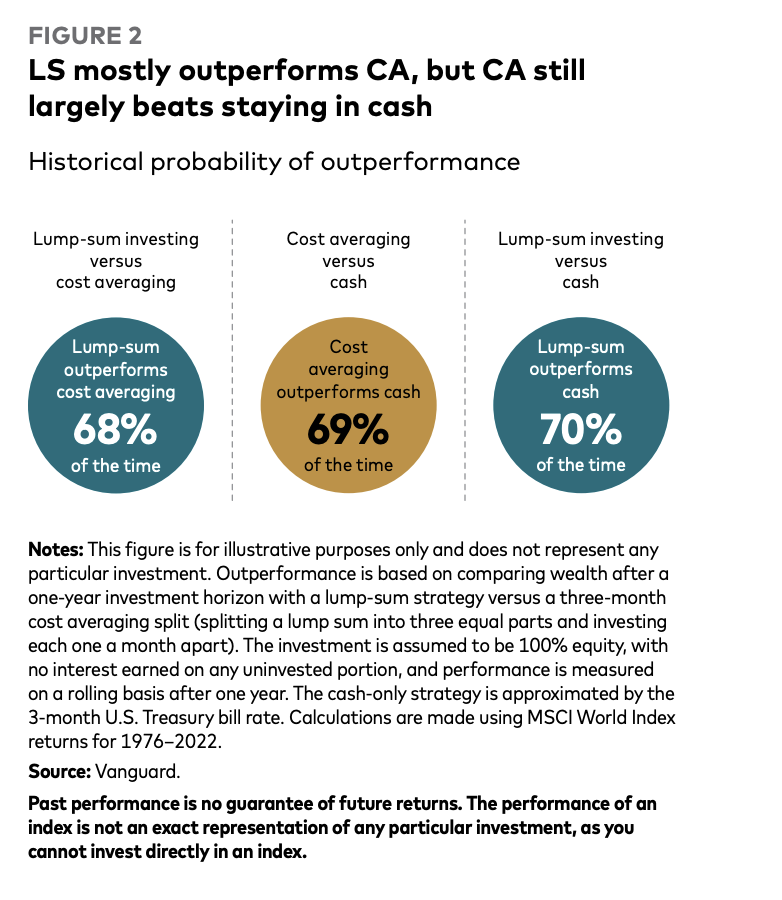
That kind of makes sense from what we were saying earlier, that the stock market has an upward bias.
Most of the time it makes sense if you're just putting your money in the stock market, it's going to be better than waiting to put money in.
So the problem with dollar cost averaging primarily is the opportunity cost, you have a lot of money on the side waiting to go in, while the stock market on average continues to go up.
These results were replicated in other stock markets globally as well.
They tested it in the UK, in Europe, in Australia, in emerging markets, and for global stocks as a whole.
These findings still stood up, that in about two-thirds of the time, the lump sum investing approach beat dollar cost averaging.
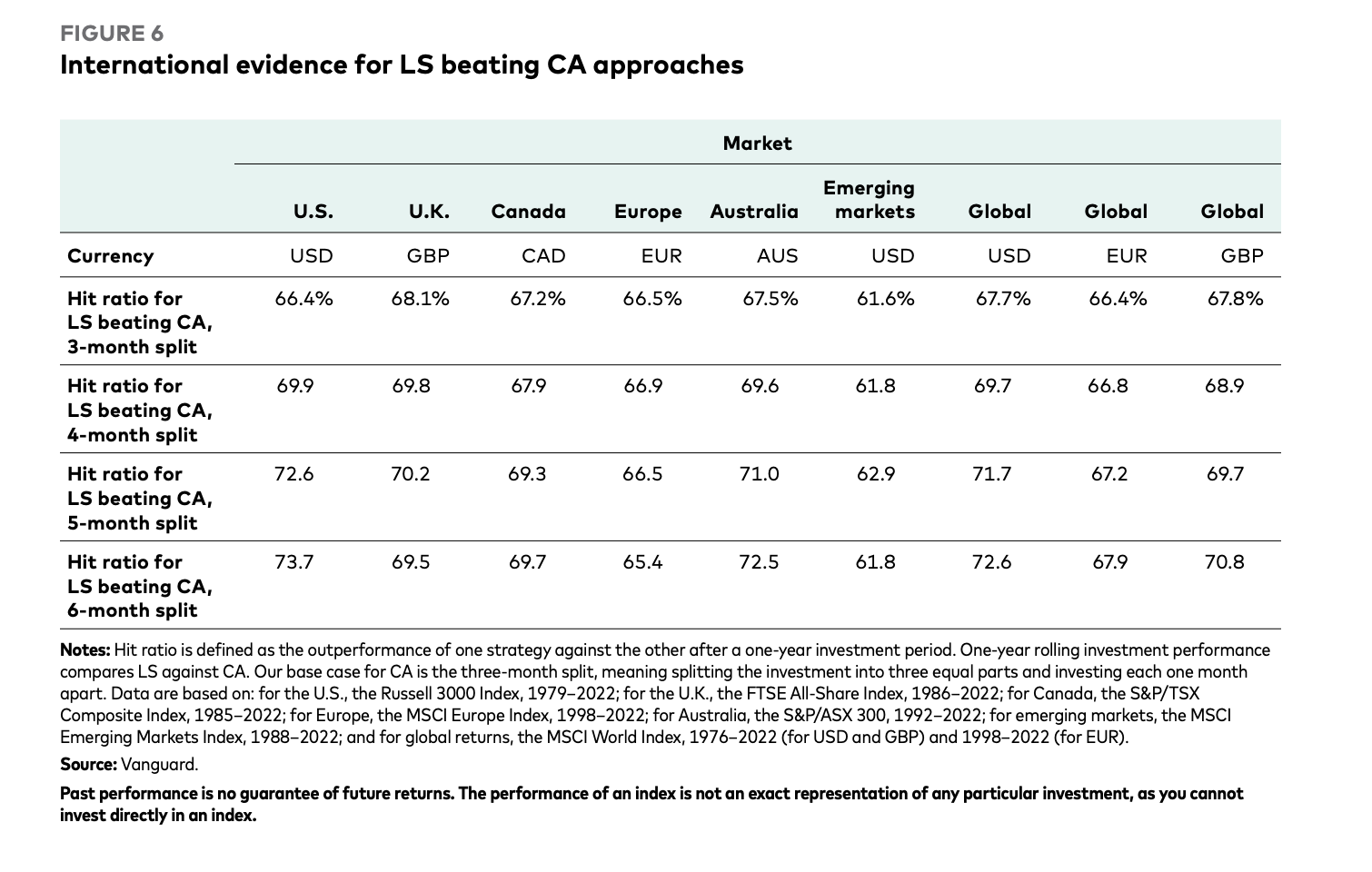
Furthermore, if you dollar cost averaged over a longer period of time, you tended to do even worse.
So does that just settle it right there?
Should you just lump sum invest?
A lot of times that is going to make sense, but what about these other one-third of these scenarios where dollar cost averaging actually won?
When Dollar Cost Averaging Actually Wins.
If we're breaking this down a little bit more, there's three sort of different categories of times where dollar cost averaging did better.
1. Stretched Valuations and Crashes.
The first one, no surprise, is when valuations in stocks are very stretched, and we get something like another dot-com crash or a 2008 financial crisis, and stocks sell off a lot precipitously.
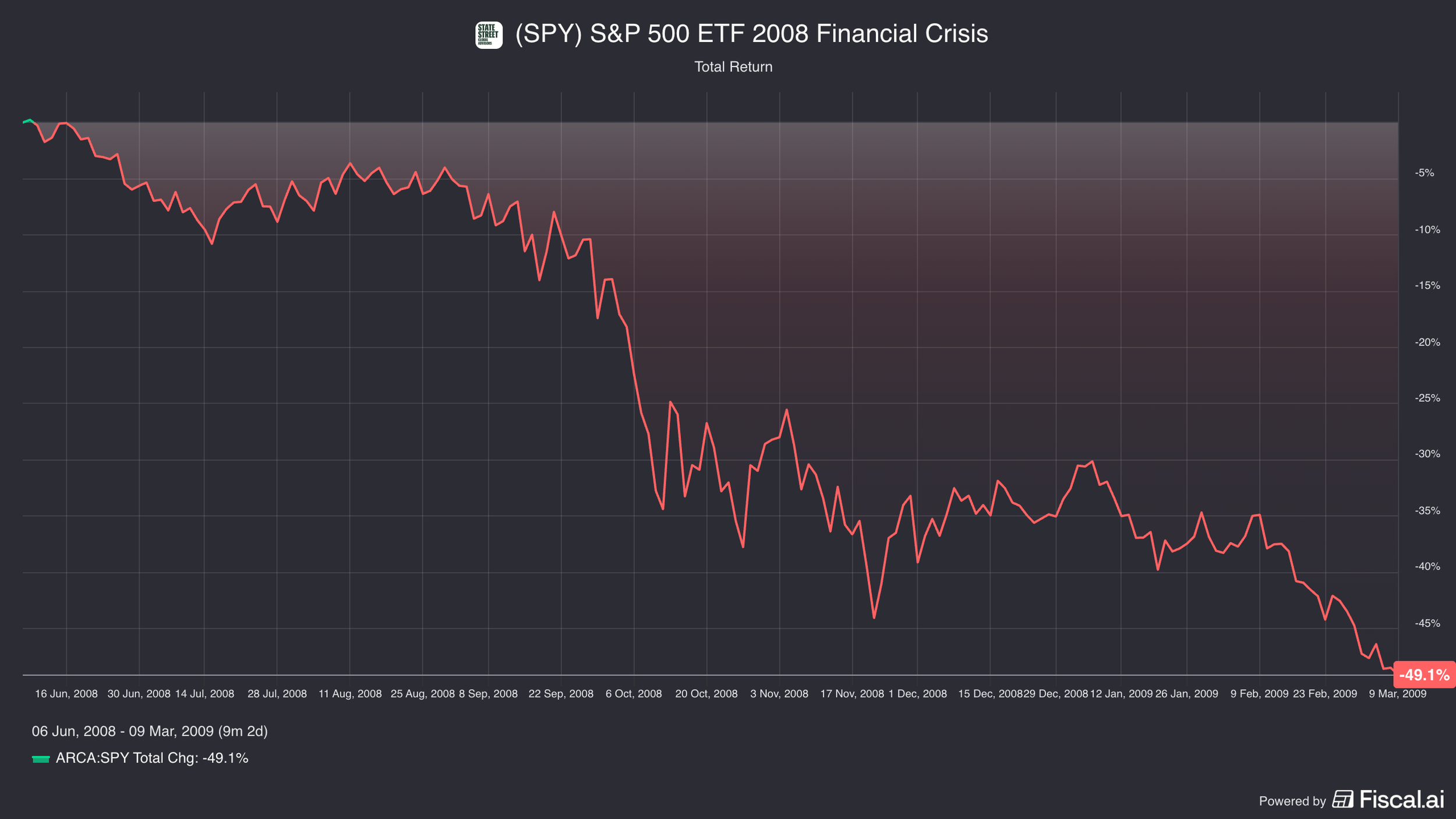
In those scenarios, dollar cost averaging beat lump sum investing.
These are really the key sort of events that investors are really worried about when they're thinking of putting money in the market.
They're saying, well, what if I put my $250,000 in today, and within the next couple months, we have this great recession again, and now I'm down 30%?
I don't want that, so doesn't it make more sense to put a little bit in over time to guard against the risk of that?
The answer is yes.
If you are exactly worried about that scenario of a big sell-off, then it does make sense to dollar cost average, because at least you're getting some money in the market today.
And if you're wrong, at least you have some money invested.
And if you're right, you're going to be investing more money at a lower valuation.
2. Market Corrections.
On average, every 1.5-2 years, there is a 10% stock market correction.
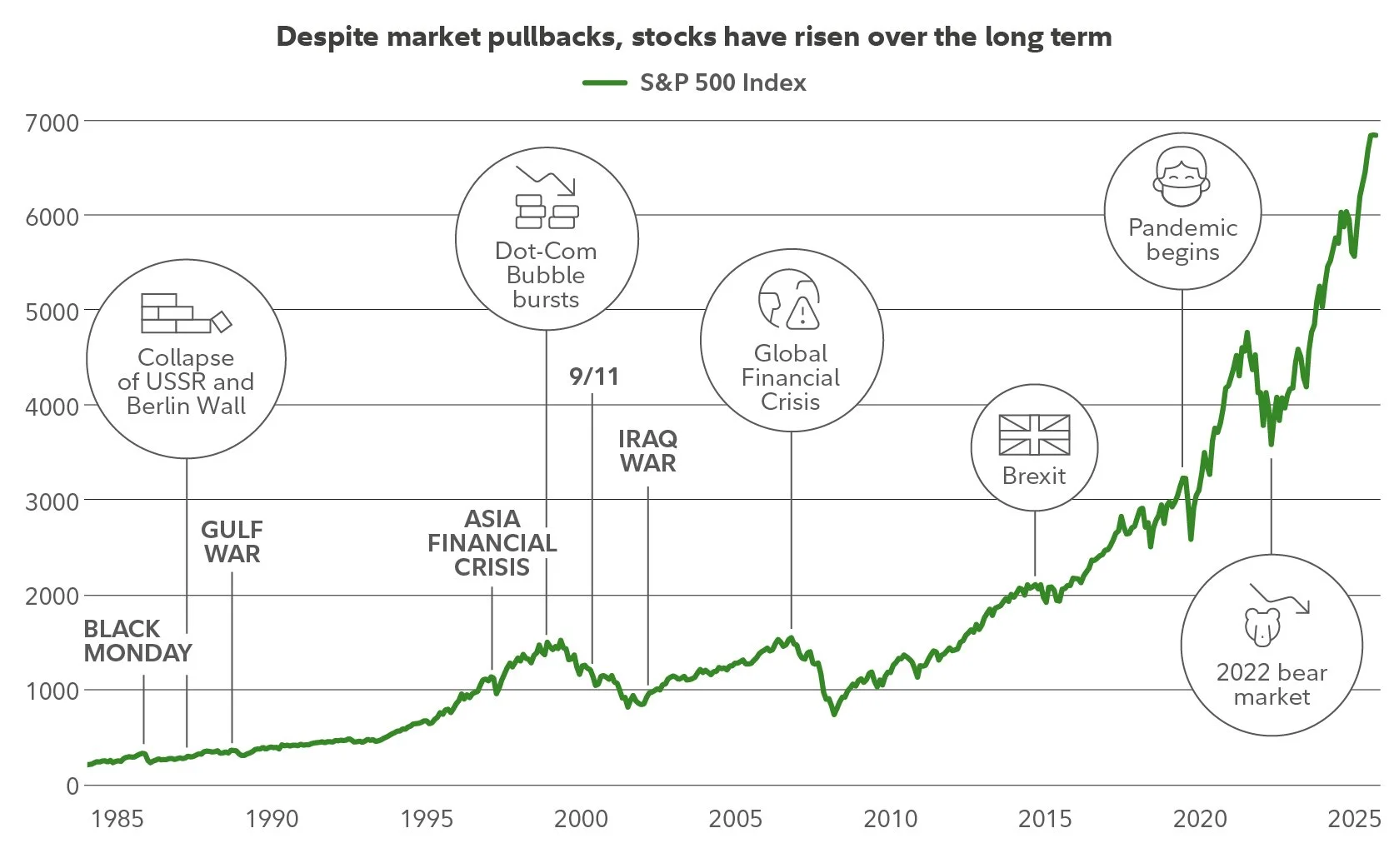
You can imagine, if you do your lump sum right before this correction, you tend to do worse than if you dollar cost average.
This is another scenario where dollar cost averaging wins a majority of the time, if it is right before a stock market correction.
3. Lost Decades.
The third category isn't totally covered by the study, but there has been three periods in the past hundred years where there's been a lost decade.
A lost decade basically means you get zero percent stock market returns for a decade.
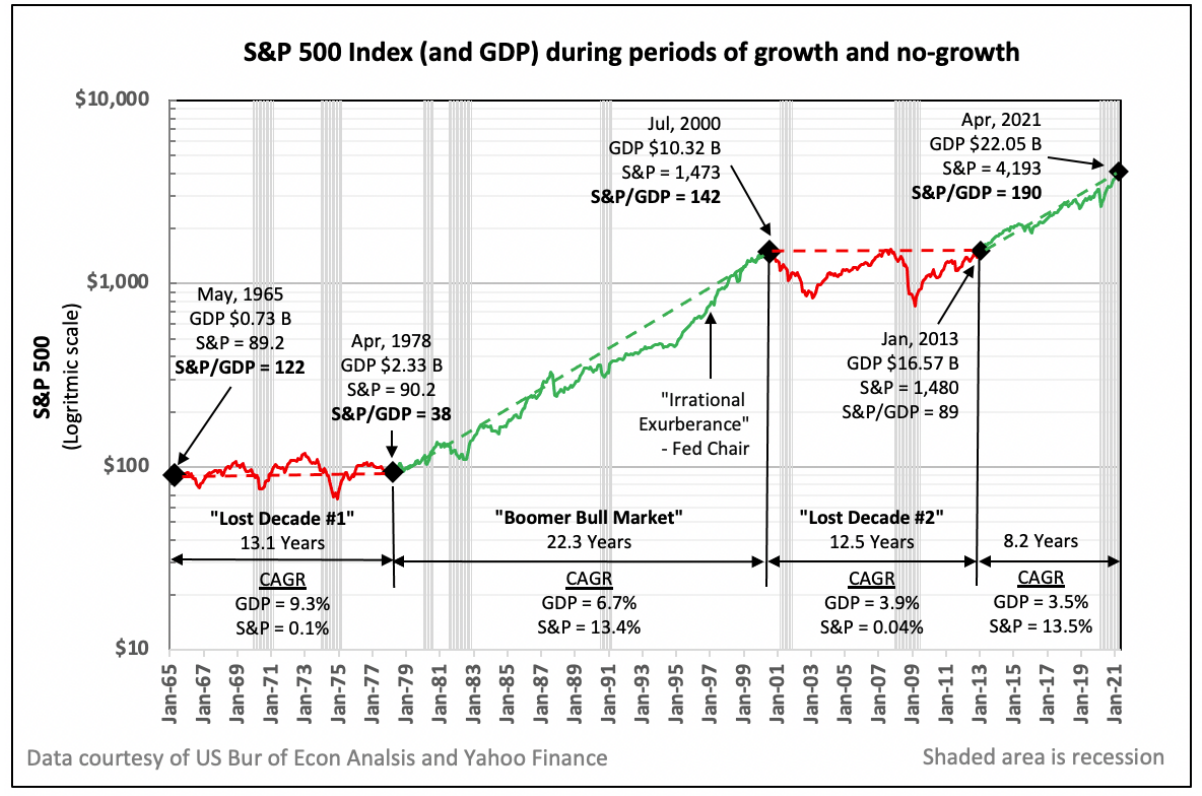
During these scenarios, dollar cost averaging also tends to do a little bit better than lump sum, although neither does terribly well, as you can imagine.
So if we're about to go into a bear market or a correction, then as you can imagine, dollar cost averaging is the better way to go.
We know that lump sum investing is a better decision in two-thirds of all scenarios, so statistically, it makes sense that that is what an investor should do.
They should just put all of their money in the stock market if it truly is money that they can invest for the long term, and they're concerned about getting the highest probability of getting the highest return, which is what most investors want.
A Mix of Both.
Now, the thing is that when I'm describing these scenarios of when the dollar cost averaging actually beats the lump sum, which is bear markets, market corrections, or the market being stretched in valuation like during the dot-com crash, very often, in my experience working with clients, they predict that these are the things that are about to happen.
That makes them more reticent to want to lump sum invest.
So what I tend to do is a mix of both.
It's going to depend on an individual's particular circumstances and what their objectives are.
But very often, I'll say I want to invest at least half of it right away immediately, and then we can dollar cost the rest over some period of time.
That kind of gives you a little bit of the best of both worlds, understanding it's not going to always be optimal relative to just lump sum investing today, but it does give people a lot more peace of mind.
A lot of investing really does have to do with controlling your emotions.
So if you know that investing all of this money today is going to make you very uncomfortable, it's really not that big of a deal if it just takes you several more months to dollar cost average over time, and you feel more comfortable that way.
So that's why I would kind of advise a mix of both of those with the caveat that I want to get to in a minute.
This is a very important caveat.
In all of the research I've seen with dollar cost averaging, it's not very dynamic, it just assumes you're putting in the same amount of money every month, regardless of what the stock market does.
But if the stock market does have a correction, and it sells off 10%, you should just invest all of the money that you put aside to invest immediately at that moment.
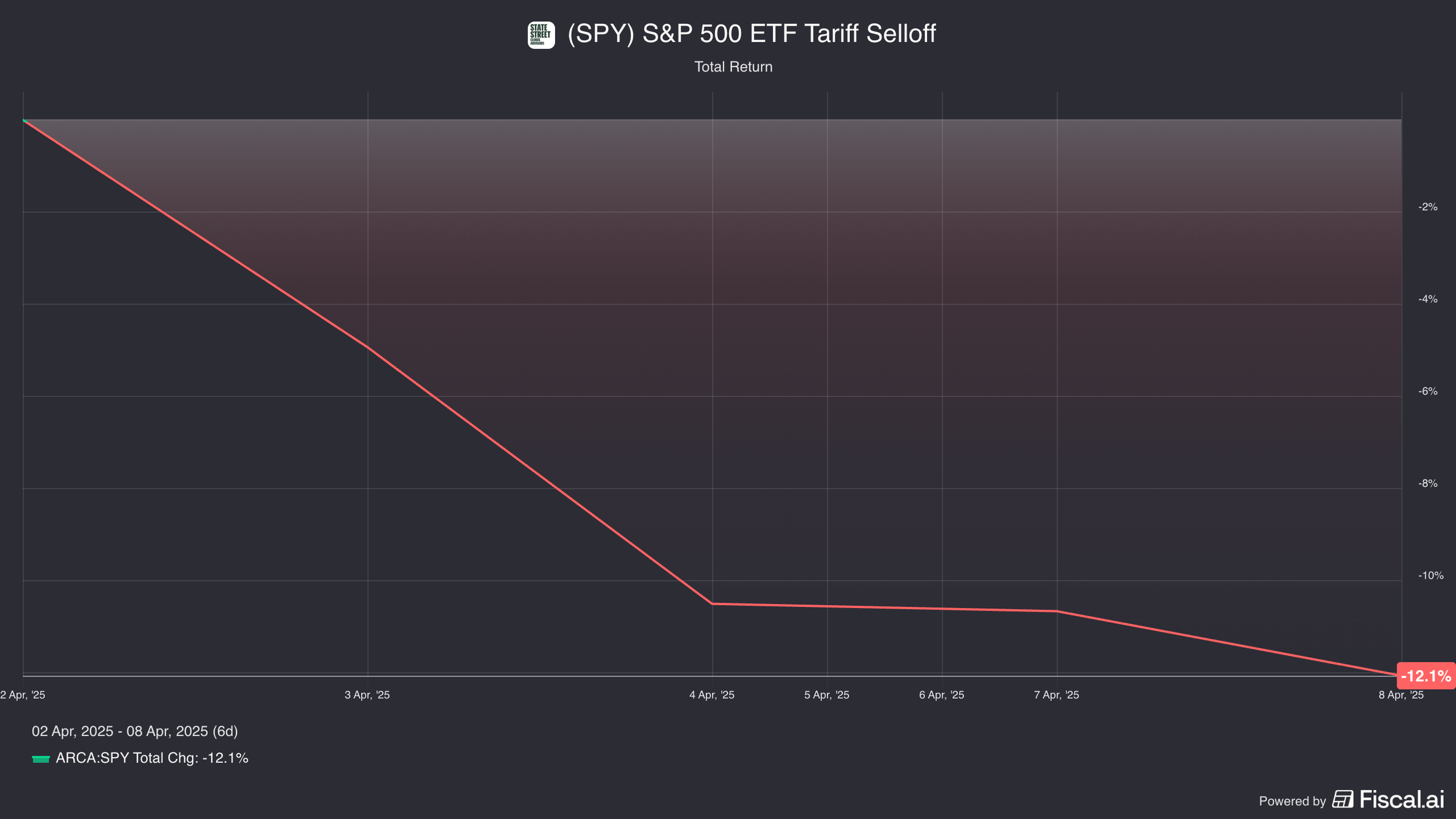
You shouldn't wait for a better opportunity or for the market to sell off even more, because it's not so likely that that's going to happen.
Of course, it's possible, but it's also possible then you're just sitting on the side again with more money waiting to invest.
So that's kind of the medium place that I landed on, where I'll lump sum a majority of it, and then I'll cost average the rest of it with the caveat that if there is a market correction, then I will invest the rest of it.
Now, some people, though, when there are these market sell-offs, that's going to be when they tend to get the most nervous, so they're not going to actually want to invest more money at that time, in which case that's fine, just stick to the dollar cost averaging approach.
I think the big main thing to focus on is getting your money actually in the stock market, and if it takes you a little bit longer to get comfortable with that, that is okay.
Two Other Factors to Consider.
Now there are two other really important factors, though.
The first one is, do you have more money coming in?
Because if you are regularly saving money, you kind of effectively are dollar cost averaging over time anyway.
You could take your savings from every month, your quarterly bonus, annual bonus, whatever, and you're putting it in the market, you're continuing to invest over time.
So if that is what you're doing, you should have a bias towards investing more of your money today.
Sometimes I like to think about when I'm talking to a client is, well, how much money do you think you're going to save over the next year, over the next couple years?
That could help them realize that the amount of money they're investing today may not actually be that significant to the amount of money they're going to be saving over the next few years, and that could help build comfort with investing more money today.
The other really important thing to hit on, though, is how significant is this amount that you're investing today to you?
If you just sold your business for $10 million, and that's all the money you have, and it is sitting in cash, and you have all of your expenses covered and all that in a separate emergency savings account, that's not an issue, and it's $10 million you could really truly invest.

I think most people, they have to know themselves, but they're going to be nervous if they put it all in today and then see it drop 10%, 20%.
That may not be something that they really can stomach.
So investor temperament is a big aspect of this as well.
Because for whatever reason, people tend to be the most sensitive to their entry prices into the stock market right when they're getting started, and they tend to watch it a little bit more than they will maybe a year or two years out.
So for those reasons, I think it makes sense to do what actually fits the investor best.
If you are just, I'm not going to be worried if the market sells off or anything, I want the highest probability of the highest return today, that's going to be lump sum investing according to the research.
If you want to guard against the downside risk of investing into a market correction, then you can dollar cost average a portion of it.
You don't necessarily need to do all of it.
That way you'll still have some cash on the side when the market draws down that you can invest.
So you could do what kind of feels best for you given your temperament as an investor.
This Doesn't Apply to Picking Individual Stocks.
Now, the thing I need to emphasize right now, though, is that this strategy is just focused on basically buying the entire stock market, something like an S&P 500 index.
There's many other ETFs that you could buy that may be weighted differently than the overall market, perhaps you're buying equal weight indexes, perhaps you're buying different ETFs with different factors.
The strategy, if you were doing that, it's going to change a little bit because you're now picking specific stocks within the overall market.
But the bigger thing I want to emphasize is that these rules do not apply to picking individual stocks.
If you are picking individual stocks, patience absolutely makes sense because you know how volatile stocks can be.
An individual stock does not have that same upward bias as the overall stock market has as a whole.
So it makes sense to be very sensitive to your entry prices when you are picking stocks.
Just to hit this point home, if you were looking at Amazon's stock price chart, you could see that it generally just goes up over time, and if you bought the stock at any point, you would have more money today because it's near an all-time high.
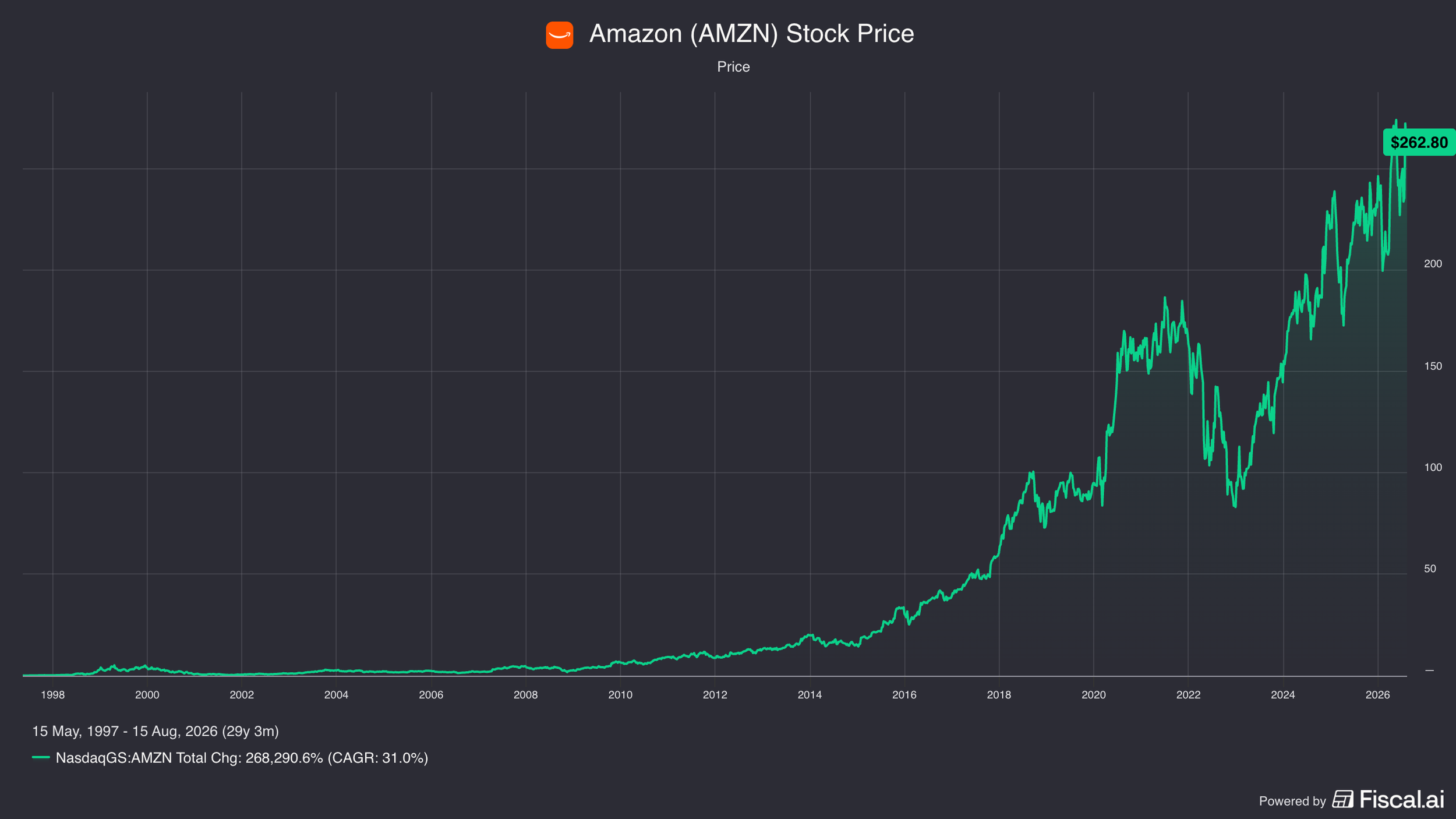
But if you are picking individual stocks, you'll see how sensitive that your entry price is to returns.
If you bought that stock at peak in 2021, right now you'd have about an 8% annualized return.
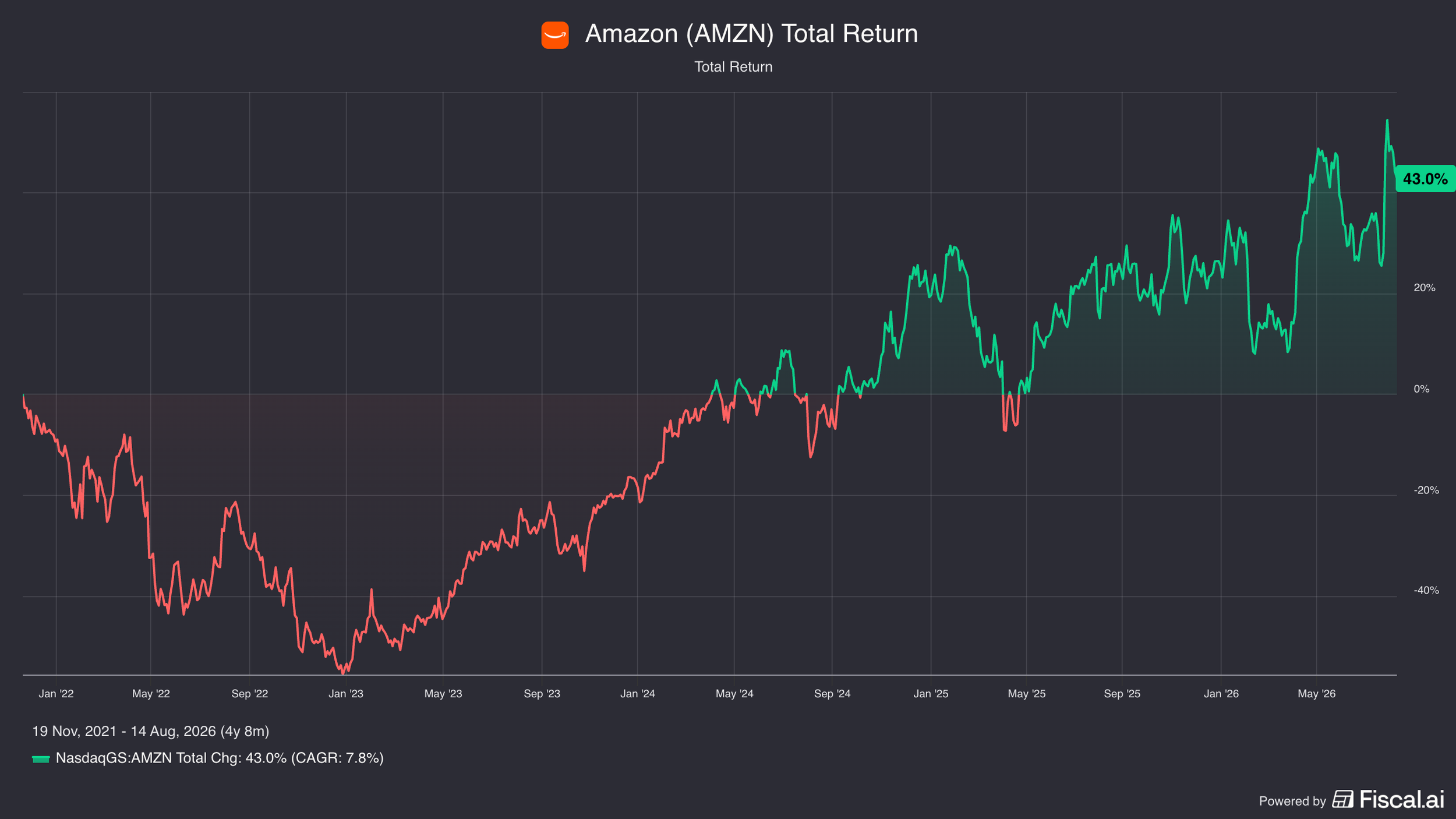
Whereas if you waited about a year, a year and a half for there to be a correction in the stock, and maybe you identified that as a good opportunity to buy it, or a better opportunity, you would have a 30% annualized return today.
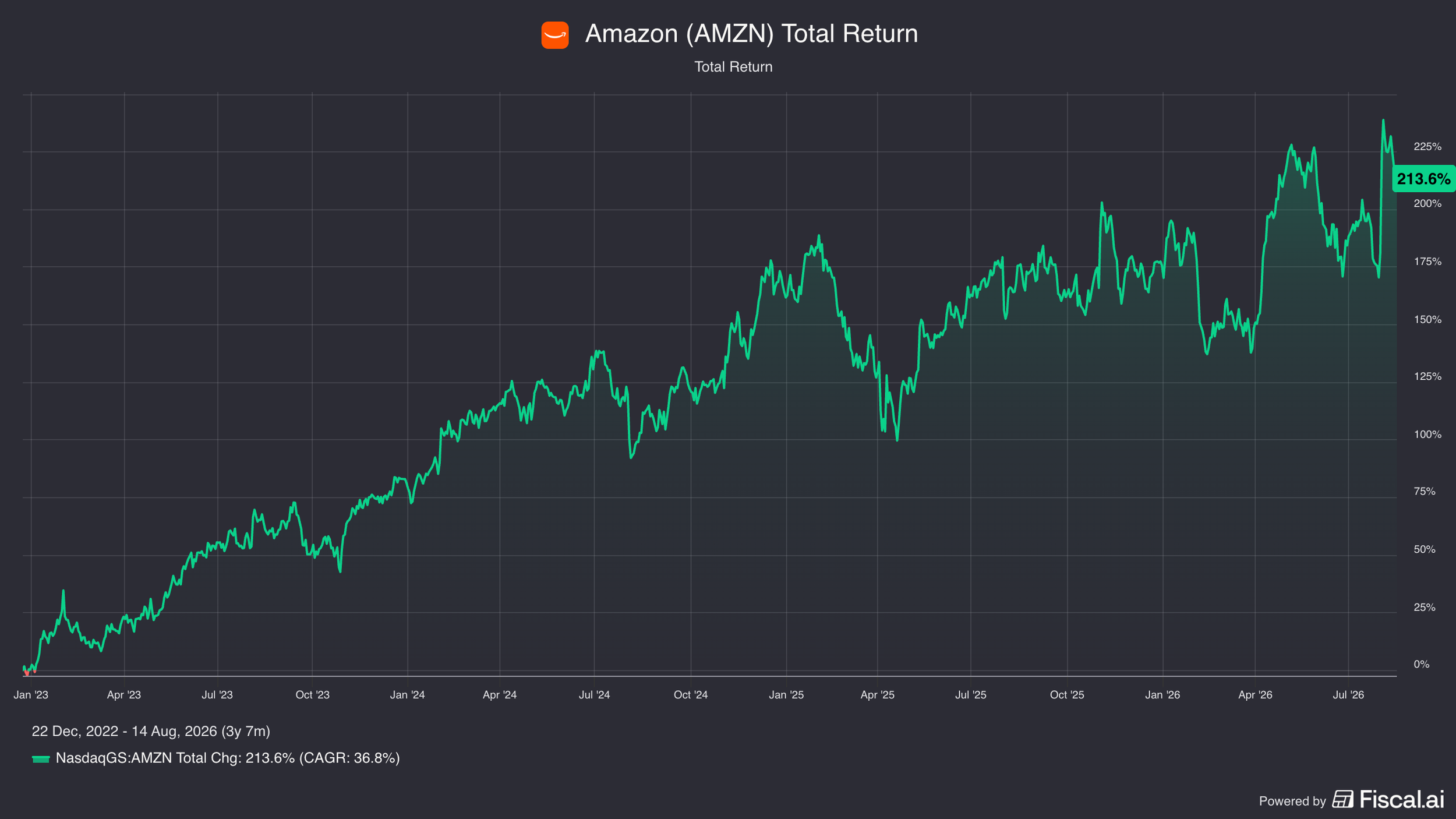
So I'm not here to say that buying it at peak in 2021 was a mistake or something like that, it just goes to show how disparate of outcomes you can have if you are more patient in picking the stock price.
Of course, this is an incredibly hard thing to do, and the average person probably shouldn't mess around with this.
But I know that most people watch this channel do a lot of stock research and do try to own individual securities at attractive prices.
So I want you to know that this advice of just being a lump sum investor, putting it all in today, it does not apply if you're going to actually pick individual stocks.
And you can't really even do the research on it, because if you think about it, then the researcher has to pick individual stocks and how would they know what stocks to pick and at what times to pick them?
Then that basically just gets to the point that you're now judging them as an investor.
So it's a totally different game if you are actually picking stocks.
Key Takeaways.
So the takeaways from this video is that if you have a big sum of money that can be invested for the long term, and you want the highest probability of the highest return, lump sum investing works.
It works two-thirds of the time, so that's what makes sense.
If you're worried about there being a big market correction, then you can dollar cost average, and that will be a better sort of scenario for you, also behaviorally that can help.
And then lastly, you could do a combo of both, you don't have to be beholden to one strategy.
There is another benefit though to dollar cost averaging that kind of gets you on board with systematically investing, which is a really good thing to do.
If you're regularly putting money in the stock market, that just tends to be a good savings behavior that just compounds over time.
So there is another benefit to dollar cost averaging that's lesser mentioned, which is just behavioral.
If you are regularly putting money in the stock market, you're going to kind of build that habit and just want to keep doing that, which is a good habit to continue to do.
For more on Lump Sum Investing vs Dollar Cost Averaging, check out this video below.
Nothing in this newsletter is investment advice nor should be construed as such. Contributors to the newsletter may own securities discussed. Furthermore, accounts contributors advise on may also have positions in companies discussed. Please see our full disclaimers here.
