Mercado Libre Update: Overlooked Opportunity or Hidden Risk?

Get smarter on investing, business, and personal finance in 5 minutes.
Business Update

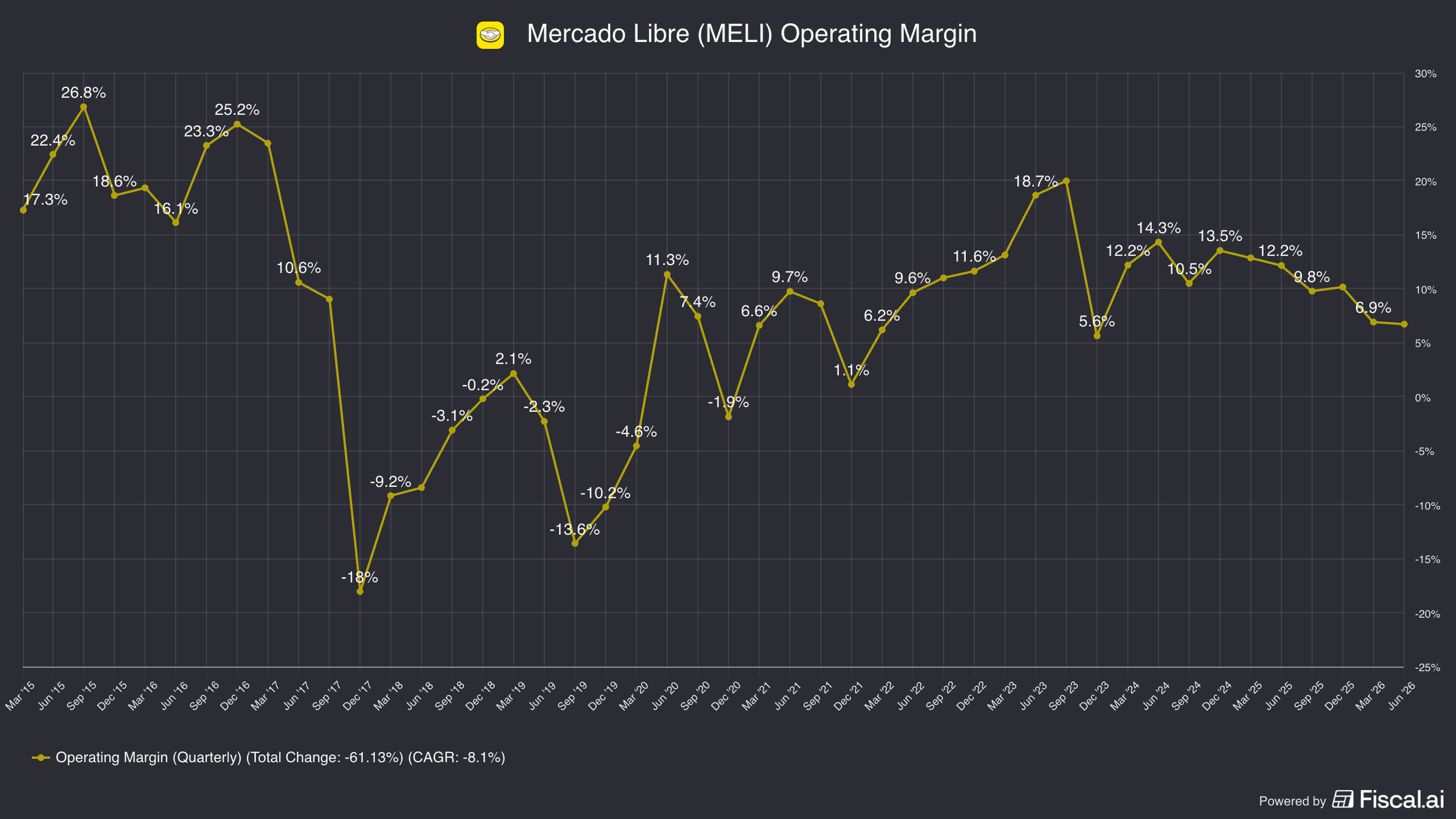
Mercado Libre’s operating margins are down to just 6.7%, a full 5.5% y/y.
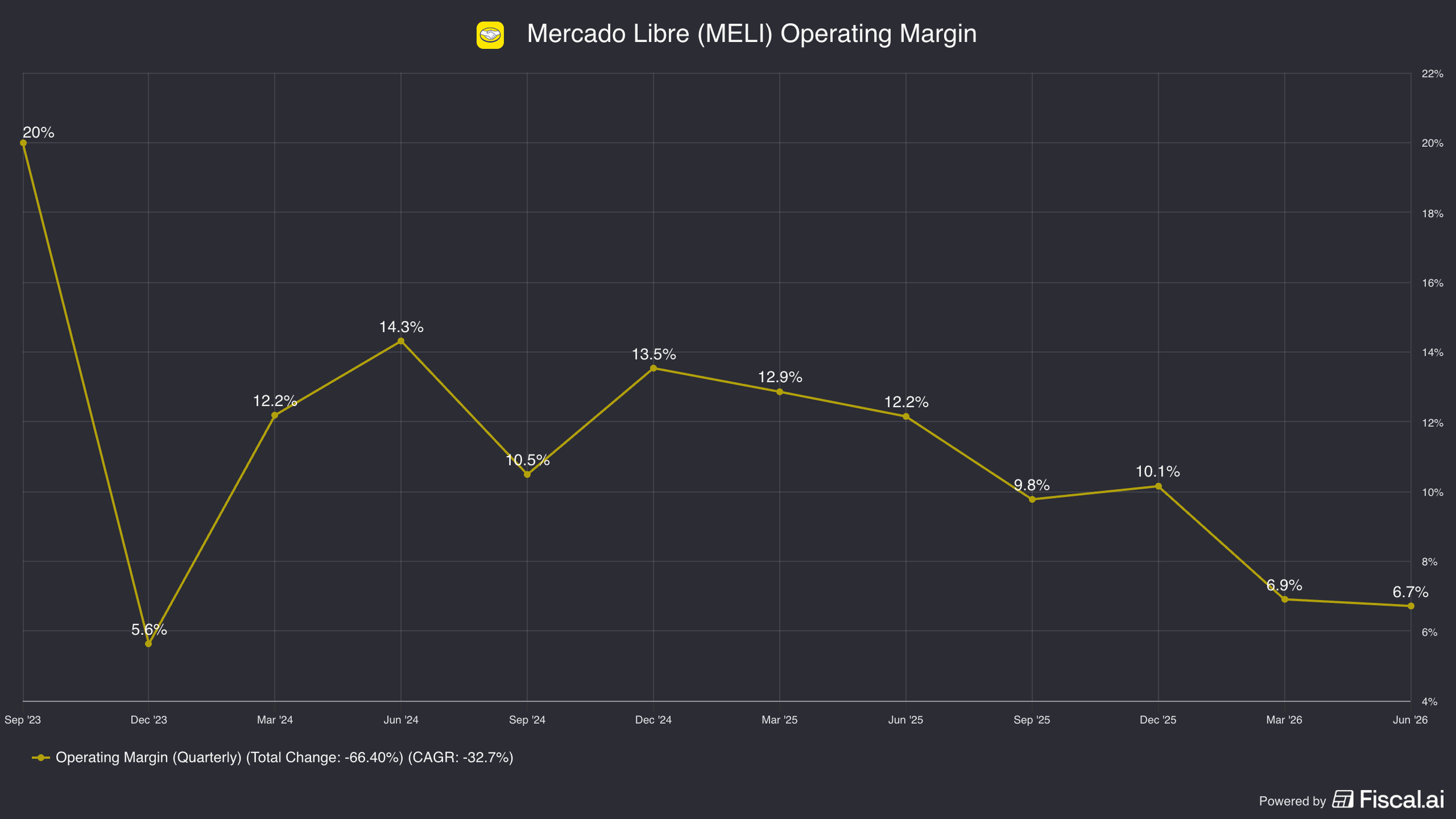
This is the lowest margin they have posted in years.
On the other hand, their revenue growth is now 50% y/y, the highest it's been in years.
So the question is, is investing back into the business in order to grow faster worth it?
In this week’s Five Minute Money, I'm going to give an update on Mercado Libre!
If you haven't already seen it, I put out a Mercado Libre stock breakdown back at the beginning of the year that goes into much more detail.
Background.
Over the past couple years, a new competitor has entered the Latin America market, Shopee, owned by Sea Limited.
Shopee competed on the lowest end of e-commerce, very low average order values, to a category of buyers that traditionally hasn't been catered to, orders with low shipping times and low order values that aren't very profitable to sell.
Shopee was still able to gain enough scale to become EBITDA neutral in that market.
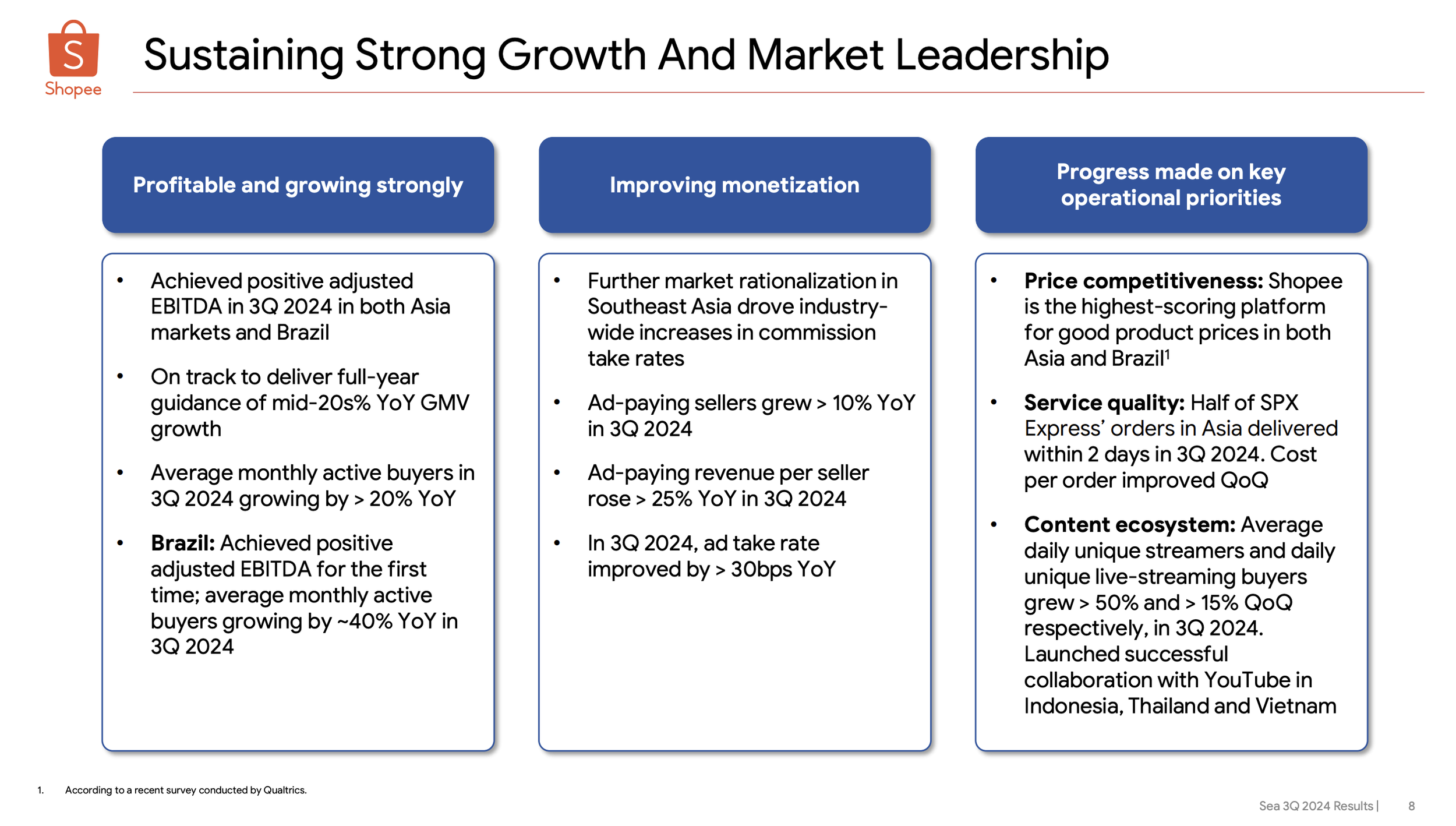
In response, Mercado Libre realized they didn't want to cede the lower end.
So they lowered their thresholds on free shipping and lowered the take rates, how much they charge sellers to sell on the platform in certain categories.

As a result, they've been able to get a lot more volume.
The hope, or the bet management was making, was basically that having lower take rates would help increase the number of sellers on the platform.
Having lower shipping rates would increase buyer frequency, people are more likely to buy on the platform.
All of this increase in volume would allow them to basically spread the cost of their logistics across a higher number of packages.
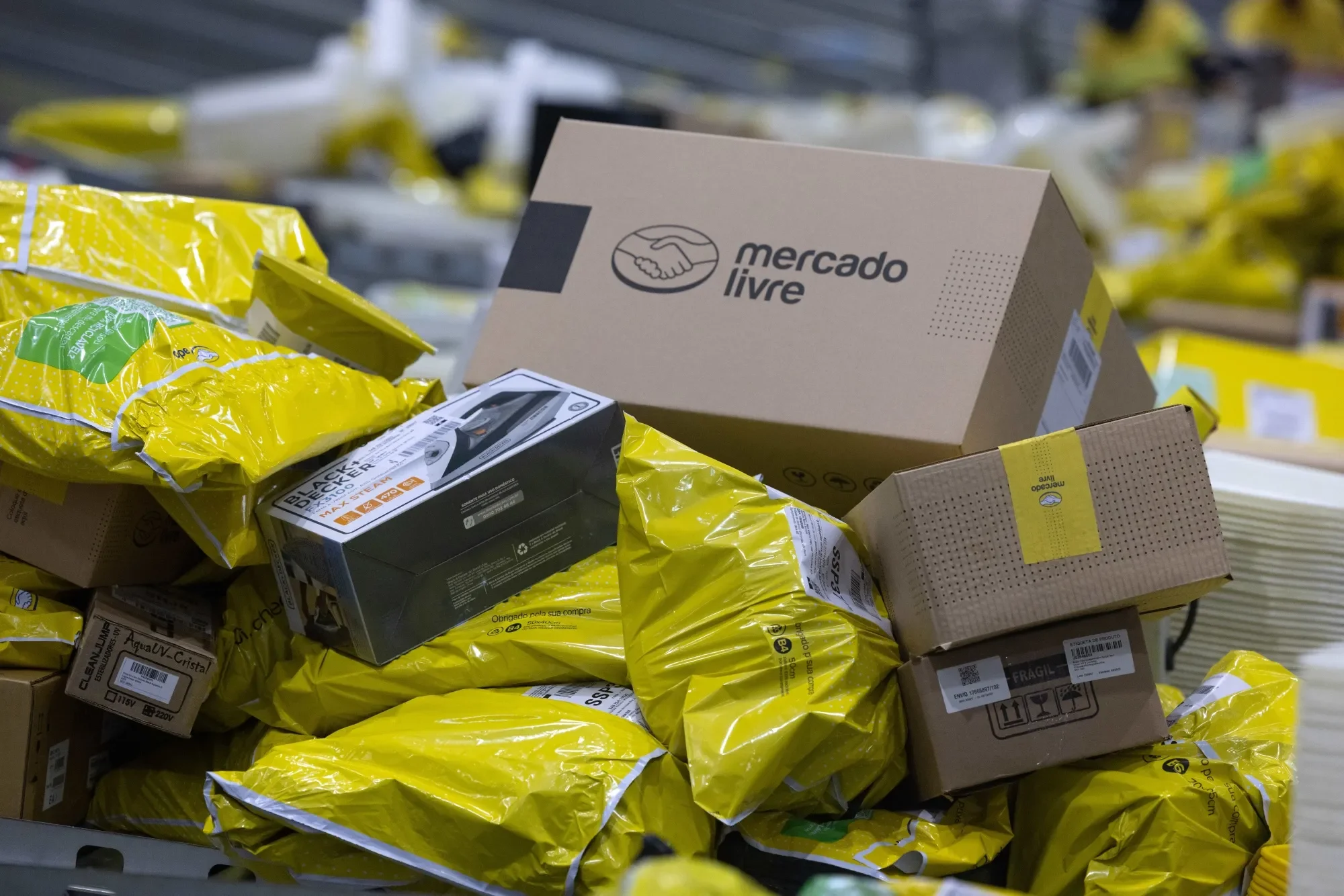
So initially, you would get higher cost, and also because of the free shipping, it would cost them money to serve that.
But over time, as you got more and more volume, you could continue to rationalize that cost across more packages, and so unit economics would improve.
Having more volume on the platform too, though, would tie into Mercado Pago.
At the same time they were investing in the e-commerce platform, they were investing in Mercado Pago in the form of a lot more loan originations.

They were giving a lot of credit cards out to different consumers in Brazil and Mexico specifically.
As a result of that, in getting more people into the Mercado Pago ecosystem, it will increase overall usage across both platforms, the commerce and the payments platform.
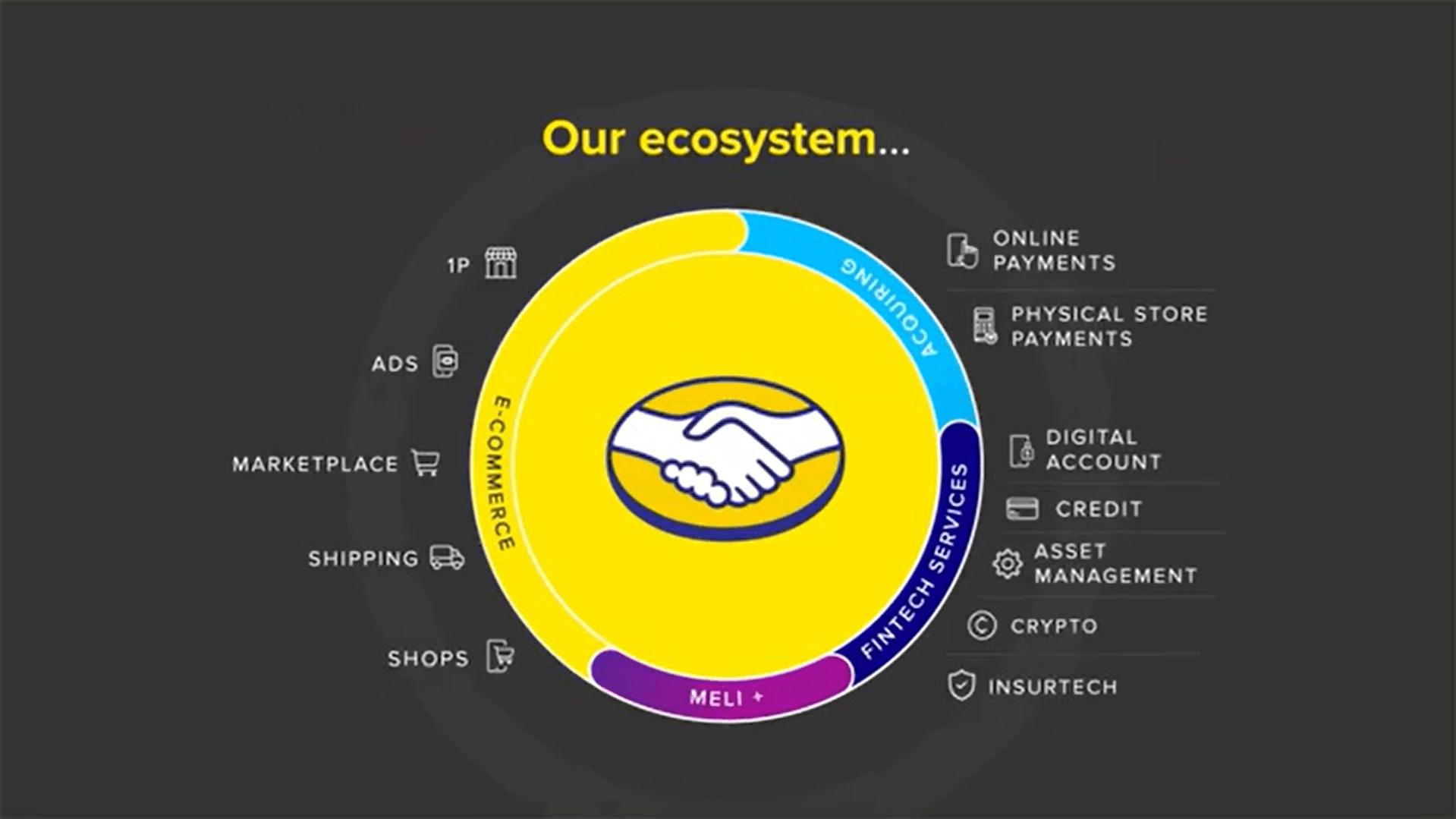
In addition to that, all of this activity means more data, and data means more targeted advertising.
So it's a little daunting for investors to see margins dip this much.
My take is that when they lowered seller take rates, it suggested they were overearning in some categories, and with Shopee's presence, they felt they had to lower them.
I don't see them raising take rates again anytime soon.
Instead, profitability is going to increase through three things.
First, more volume improves unit economics per package by spreading shipping costs.
Second, users become more engaged on Mercado Pago too, spending on personal loans and credit cards, which is a new venue to monetize them.
And third, and I think where they'll really make up the shortfall long term, is advertising.
This quarter ad revenue increased 62% year over year, and they're now 10% of the digital ad market.
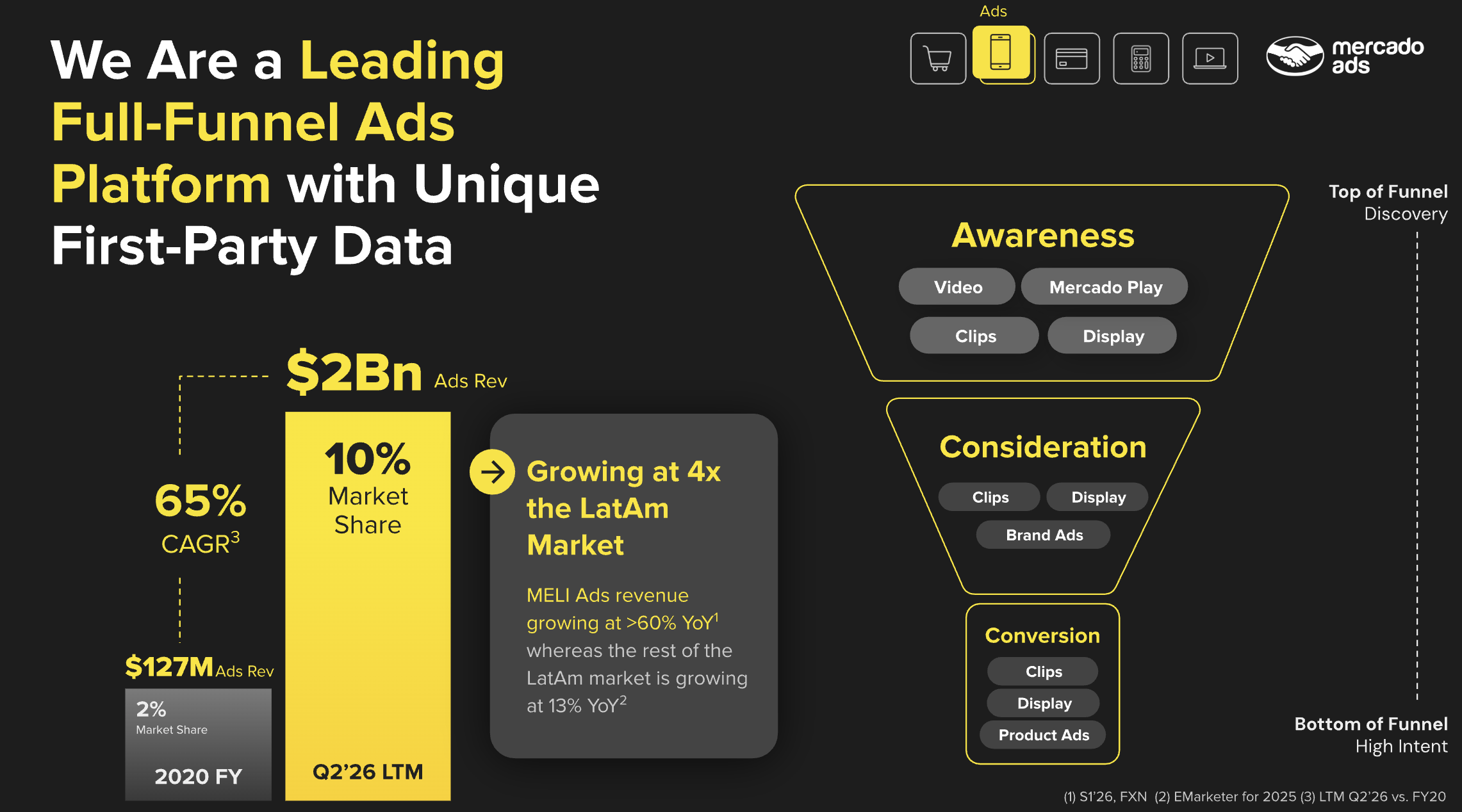
The big surface is sponsored ads on the marketplace itself, the same as Amazon or Shopee, you search for something and a sponsored result shows up, earning Mercado Libre a higher commission.
The other is through MELI+, where they bundle TV offerings and monetize advertising there too, plus a separate free content channel that also carries ads, and ads within Mercado Pago as well.
That's the game plan to bring profitability back up, though it could be a while.
Signs Their Strategy is Working.
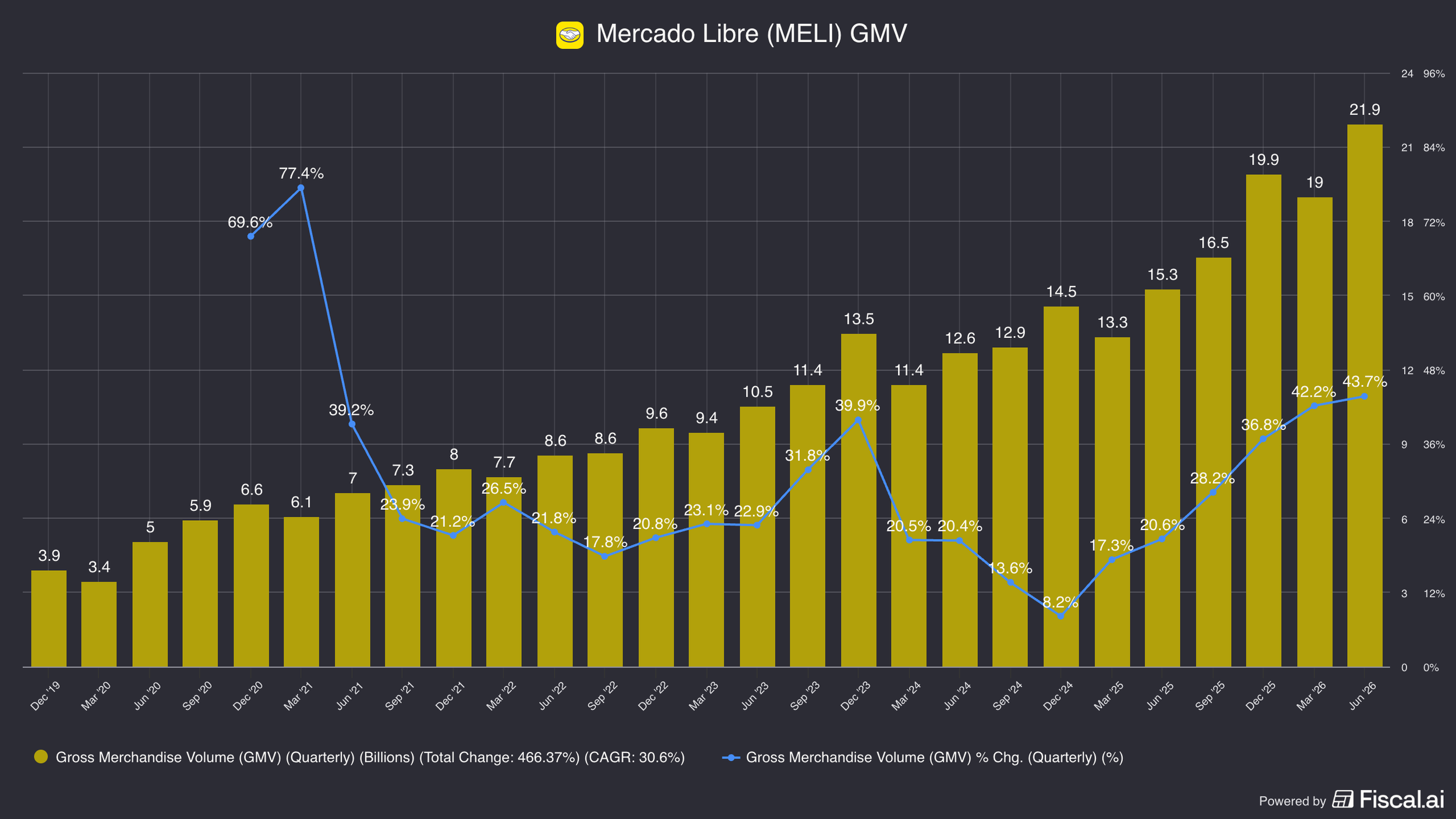
Top-line revenue growth was 50% in US dollars year over year, reaching $10 billion in revenue for the quarter for the first time ever.
Gross merchandise value, the value of all products sold on the platform, grew 44%, up from 42% last quarter, so GMV growth is actually accelerating, a rare thing to see at their scale, and it suggests the free shipping strategy is working.
Active buyer growth was 26% y/y, down a little from last quarter's 32%, but that makes sense since last quarter had the big free shipping push.
Frequency, which I think is an even more important indicator, is up 14% y/y, despite user growth also being high.
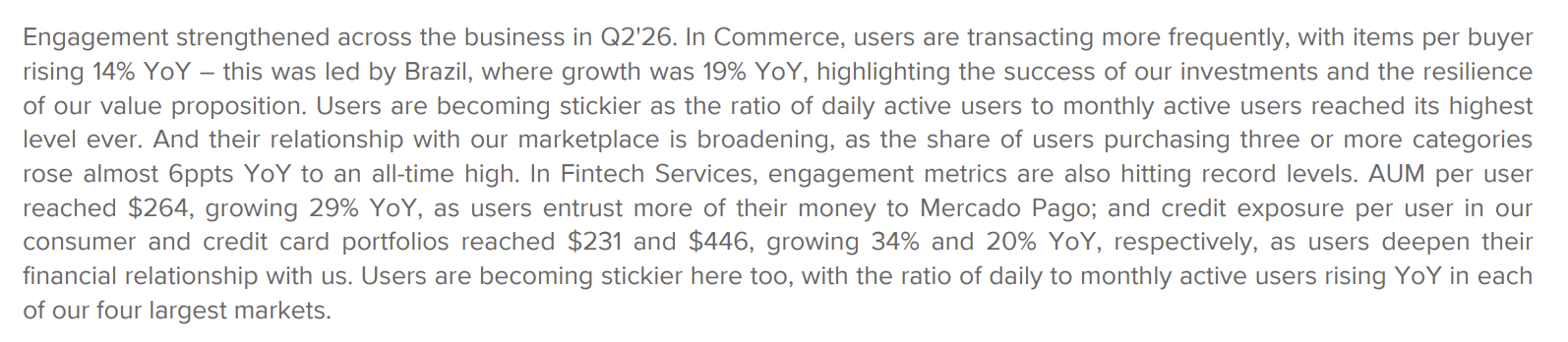
Buyers who purchase in three or more categories increased 10 points y/y, which matters because it shows Mercado Libre moving from being a place you think of for one category to a place you check first for anything, the same shift I went through with Amazon over the years.
They gave another really good stat for that, which is that buyers who buy in three or more categories increased 10 points year over year.
You want to see that people are buying not just in a couple things, but across categories, because that really means Mercado Libre is moving from this position of, "oh, I need some electronics, I'm going to go to Meli to buy that, to them saying, oh, I need to buy anything, let me check if Meli has it first."
I can say as an Amazon shopper in the US, almost anything I buy, my first thought is, let me see if Amazon has it, I don't even think what category am I buying for.
It's the same sort of idea, you have to win these purchases category by category until you get to this top-of-mind spot where you're just always thinking, let me check Meli first.
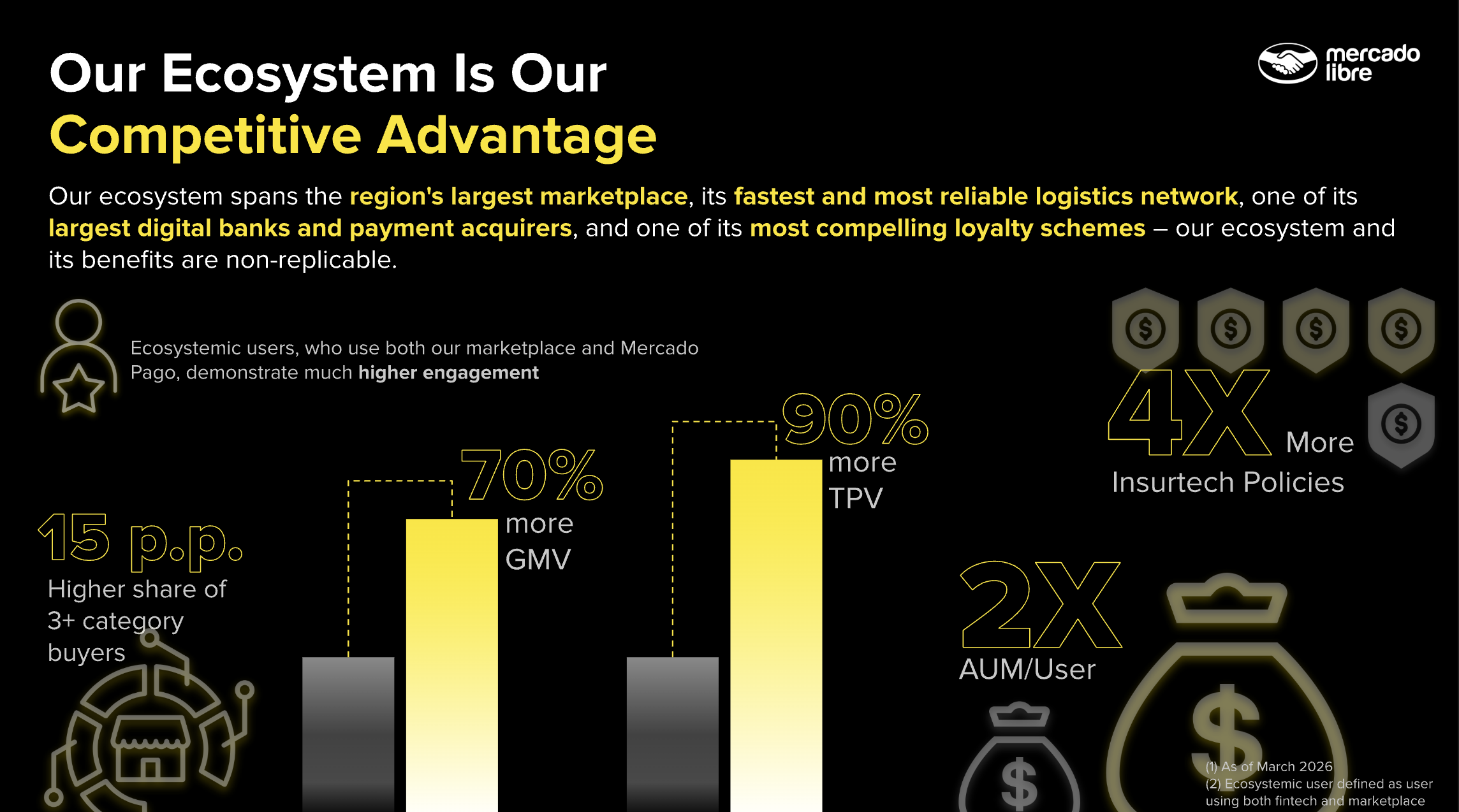
They also gave ecosystem stats, GMV from users on both Mercado Libre and Mercado Pago was up 70%, and those users are buying 55% more items y/y, since giving people a credit card enables spending they might not have otherwise done.
That last part sounds a little worrisome, so we'll get to credit quality shortly.
Market by Market.
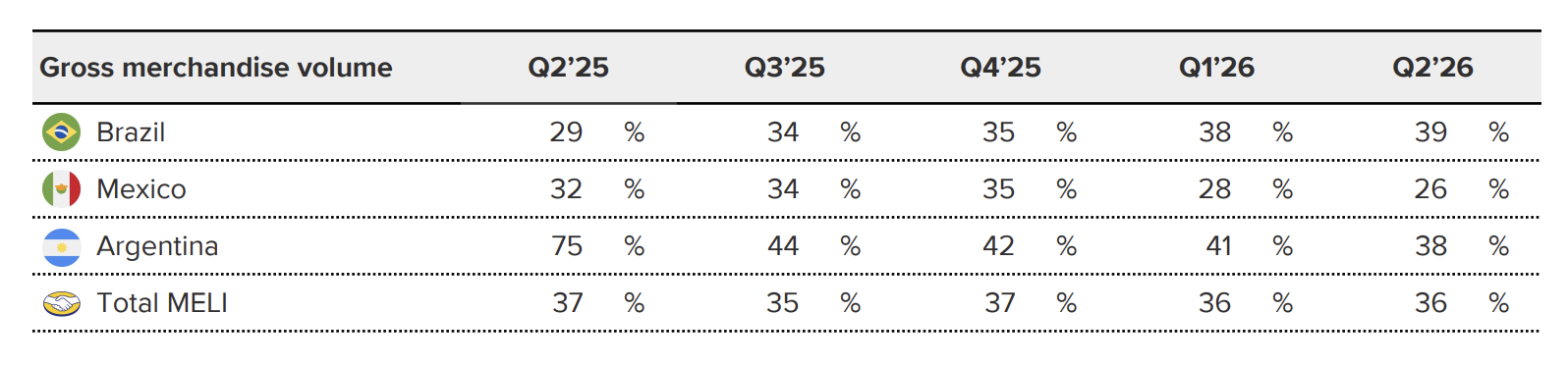
Brazil revenues grew 39% y/y, up from 38% last quarter, and up from just 28% in 2Q25, so they've accelerated 11 points versus a year ago.
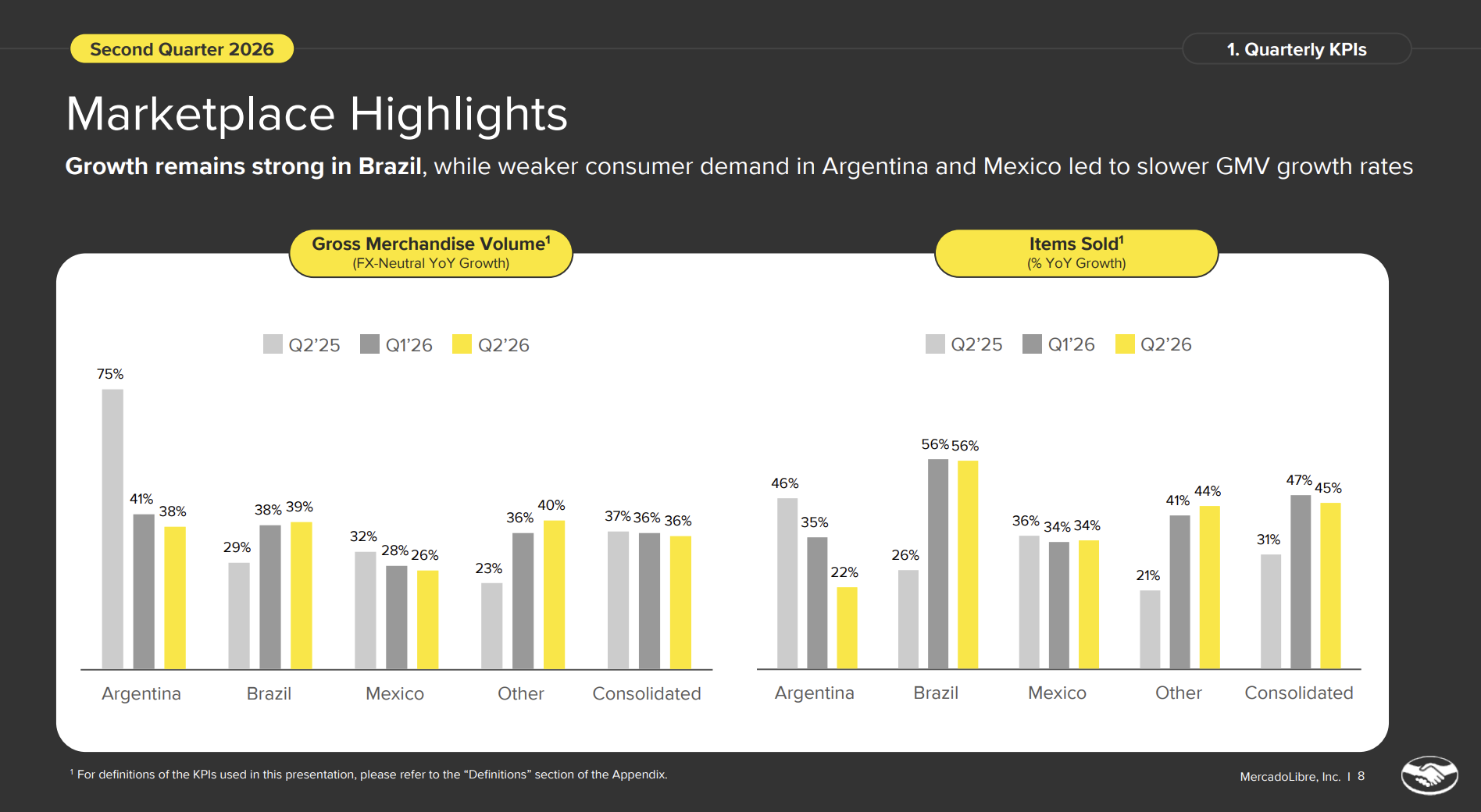
That's a clear sign the strategy is bringing in growth, though whether it eventually leads to the profits they want is still a wait and see.
It's a classic Amazon strategy, lower margins now, make up growth, and let scale eventually drive higher unit profitability, because even Amazon could have taken profits much sooner in their lifetime if they wanted to, but instead they kept reinvesting back into the business in hopes of an even bigger business in the future.
It's a little weirder for Mercado Libre though, since they'd already had pockets of high profitability and purposefully brought margins back down, which is not something you typically see a company do, because public markets don't like that.
You can look at the stock price of Mercado Libre over the last couple years and see that investors haven't been the biggest fan of this strategy, because it doesn't show up in GAAP profits.
In fact, GAAP profits are down, margins are down, and it's a long kind of harvest, if you will, you think of a farm planting all of these seeds, it takes a long time for the rewards to actually show up, and a lot of investors are not a big fan of that.
Now, I could defend investors too, though, who are a little doubtful of this strategy shift, and say that we don't know what the ultimate profitability will be, and it did seem like this was very much in response to competition, whereas if Shopee never existed in the market, they probably wouldn't have made these decisions.
So whether or not this is going to be a better business at the other end of it is still very much an open question, because Shopee is also going to continue to pressure them, they're never going to allow them to take very high margins in commission on that, which is why I think their profitability increase is really going to come again from more scale, but also advertising, because that market is a little different, you don't directly pay for the advertising, you just monetize sellers better once they get an actual sale.
A couple other proof points, Brazil frequency was up 19%, higher than the company overall, which makes sense since Brazil is where these initiatives are focused.
Mexico grew 26%, a slight deceleration from 28% last quarter, which they attributed to tax reform, the World Cup, and macro.
Argentina similarly saw macro weigh on growth, now growing 38% year over year, down from 41%, though still strong in absolute terms, and they say they're still taking share from physical retailers.
Argentina is one of their smaller, oldest markets where they're very dominant with little competition risk, Shopee isn't even there, so that deceleration really does look like pure macro rather than competitive pressure.
Mercado Pago and the Credit Quality Question.
Turning to Mercado Pago, total payment volume is now $101 billion, growing 56% y/y.
New users grew 30%, and their total credit book grew 75%.
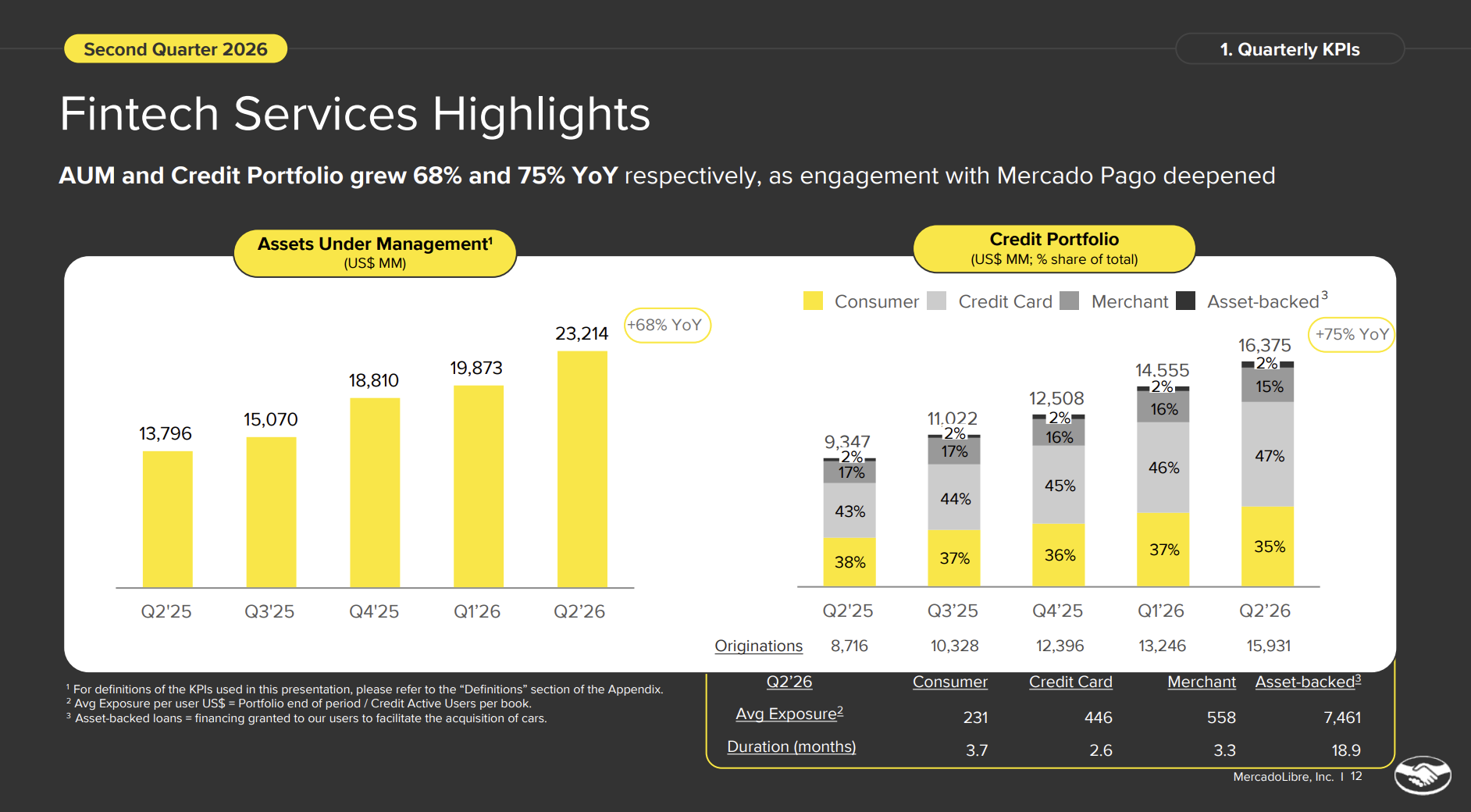
This is a good thing if it's responsible credit growth, since financial services can be very profitable at the interest rates they charge in Latin America.
So the real question is what's going on with credit quality, are they extending loans to people who shouldn't be getting them?
There are two categories of non-performing loans worth looking at: 1) <15 days and 2) 15-90 days
Under 15 days, there's a good chance of recovery.
Once it hits 15 to 90 days, recovery rates drop a lot.
That number is currently 7%, down from 8% y/y, an improvement sequentially though slightly worse than a year ago.
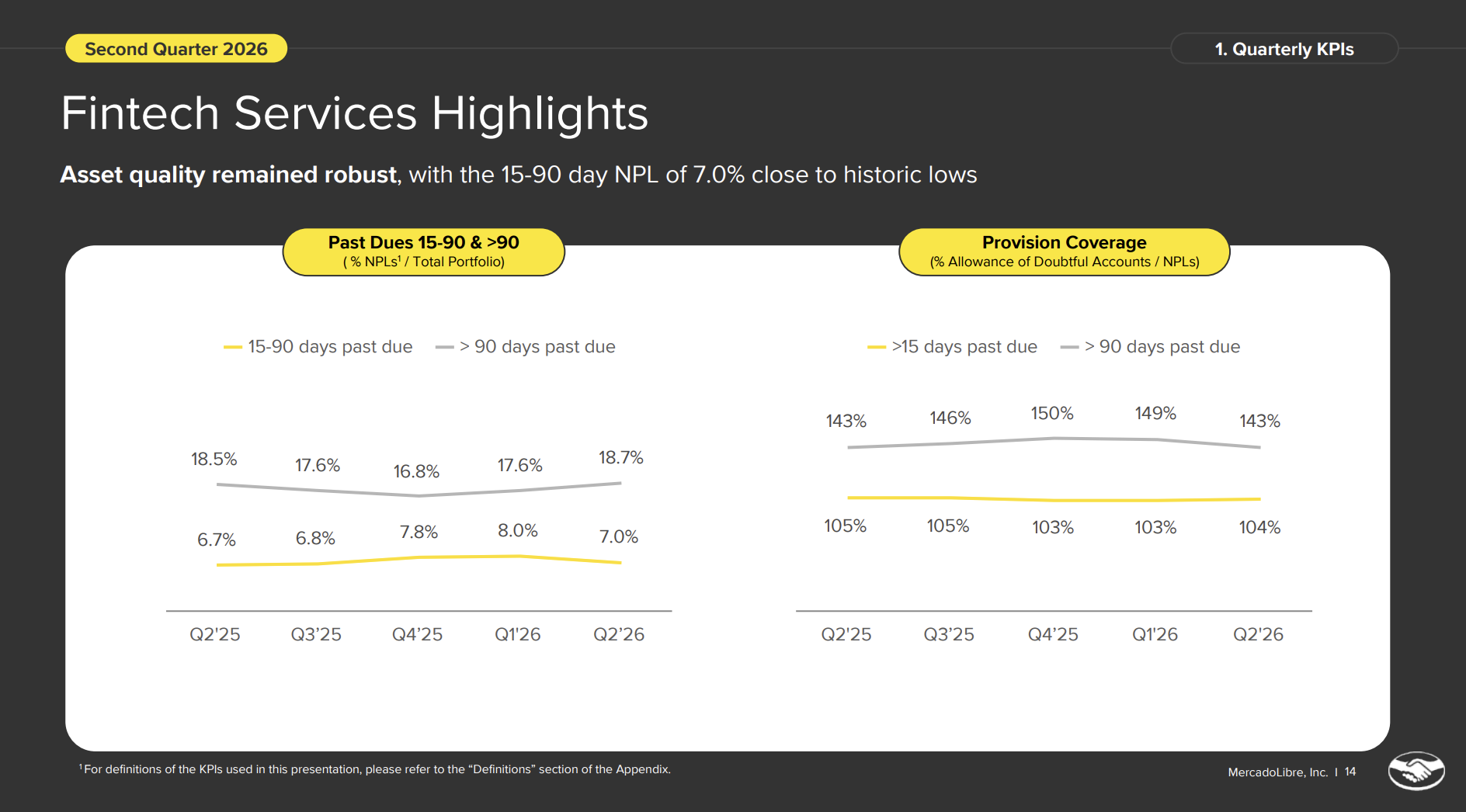
My take is this isn't worrisome yet, anytime you see a little bit of inflection, people always worry, does that mean there's much more to come.
It could, but again, these are still volatile markets extending a lot of credit to new people, so there's going to be a little bit of room for error, a little bit of volatility in these numbers, it's going to be hard to draw into them.
To be honest, if there is a credit event, we're probably not going to really know until it's kind of too late.
You're going to see a really big, stark uptick in them, and it's going to be very clearly concerning, and it's going to probably be too late too at the same time, which is a key risk with this business.
Most of these loans are pretty short term, credit card loans and personal loans, so by the time that people actually default, and you see it show up in the numbers, it's kind of too late, there's not going to be very obvious warning signs.
Now, they could respond to that very quickly by stopping originating new credit, stop basically issuing loans, or stop letting loans roll over, pulling back on credit card lines.
So the company can make plenty of responses to that, and they do monitor that every day to see if there's anything problematic.
But as an investor, you're not going to really know.
I think if you decide to invest in Mercado Libre, you kind of just have to accept this risk and accept that you're trusting management to manage the loan book correctly, because by the time it's showing up in the financials, it's kind of too late.
But again, right now, there's nothing I would say that's worrisome in this.
Loans delinquent over 90 days, where recovery odds are low, sit at 18.7%, up 1.1 points quarter over quarter and up 20 basis points y/y from 18.5%.
I don't think you can draw too much from that.
The number I like looking at is NIMAL, net interest margin less losses, this is a kind of banking specific metric, basically you have interest income, less your interest expense, divided by your loan book, that's the yield you're making on the loans.
So maybe I'm borrowing money at 10% and lending it out at 30%, that would give me a 20% net interest margin, roughly speaking.
Now if you have losses though, that should be subtracted for that, because if I'm lending money out at a 20% interest rate, there's a good chance I have a good amount of losses.
Let's say that you have 5% losses, that means we're going to take that 20% in sort of interest yield after interest expenses, and we're going to back out the losses of the money we lost.
That's a rough metric of how much money, net of losses, we expect to make on our loan book.
The actual number for Mercado Libre this quarter was 20.7%.
This is actually up from last quarter when it was 17.8%.
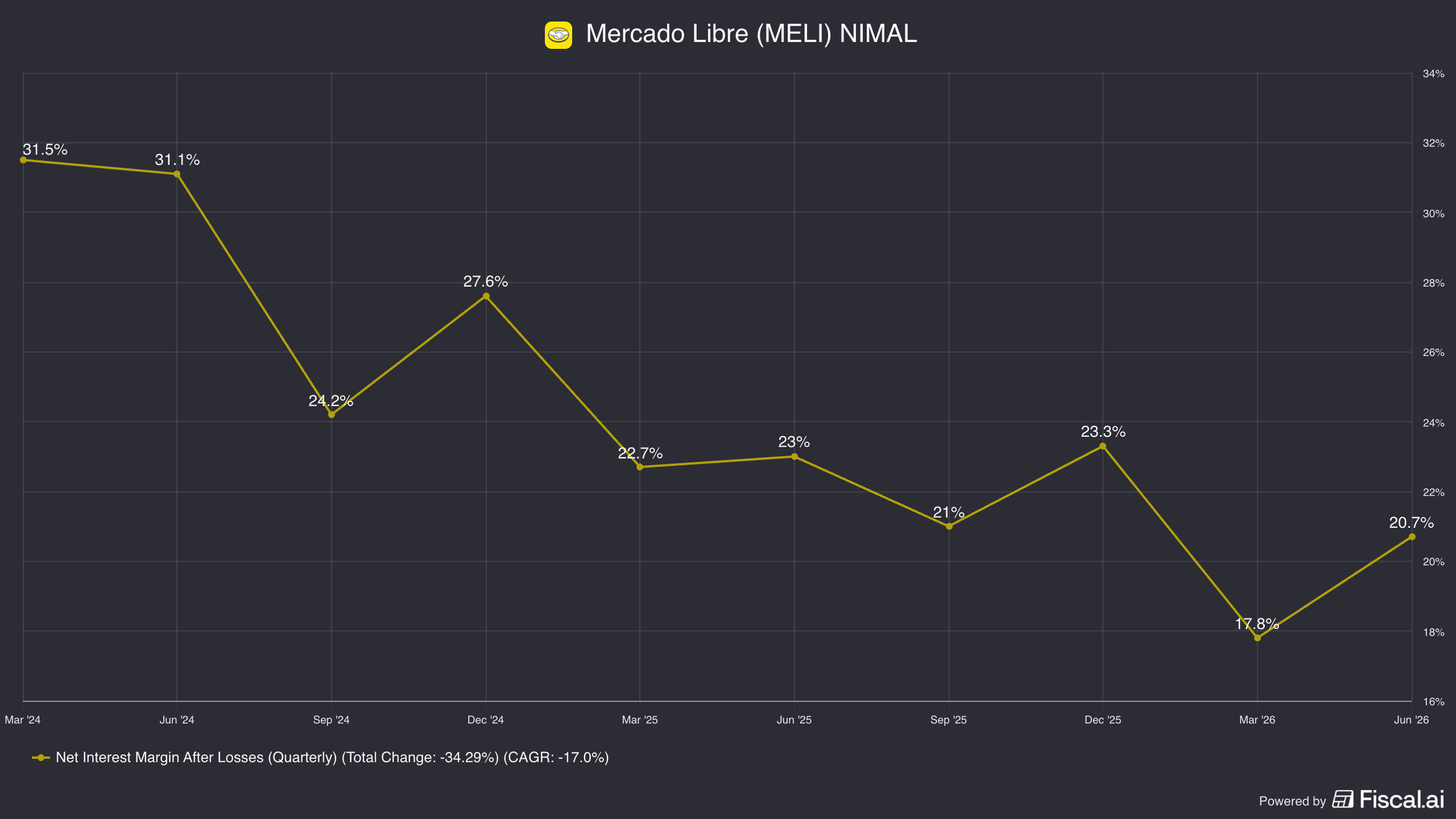
This suggests basically that the amount they're being compensated to take these risks on loans has actually gone up, which is what you want to see, you want to see that there's more room to go before they're actually losing money.
So that is up quarter over quarter, but it is down y/y, a year ago it was 23%, now it's 20.7%, but again, that's up from last quarter where it was roughly 18%, so that is going in the right direction.
I do have a hypothesis that this gets competed down over time, since it's currently sustainable mostly because so few institutions want to lend to this population, Mercado Libre included, thanks to proprietary data from the commerce and payments platforms.
Over 5-10 years, more traditional institutions entering the market will probably pressure that.
But historically, banks haven't wanted this customer base, so this should remain a good business for Mercado Libre for a while.
A new disclosure broke NIMAL out by loan type.
Other loans, mostly personal loans and merchant loans, had NIMAL up y/y to 40.9%.
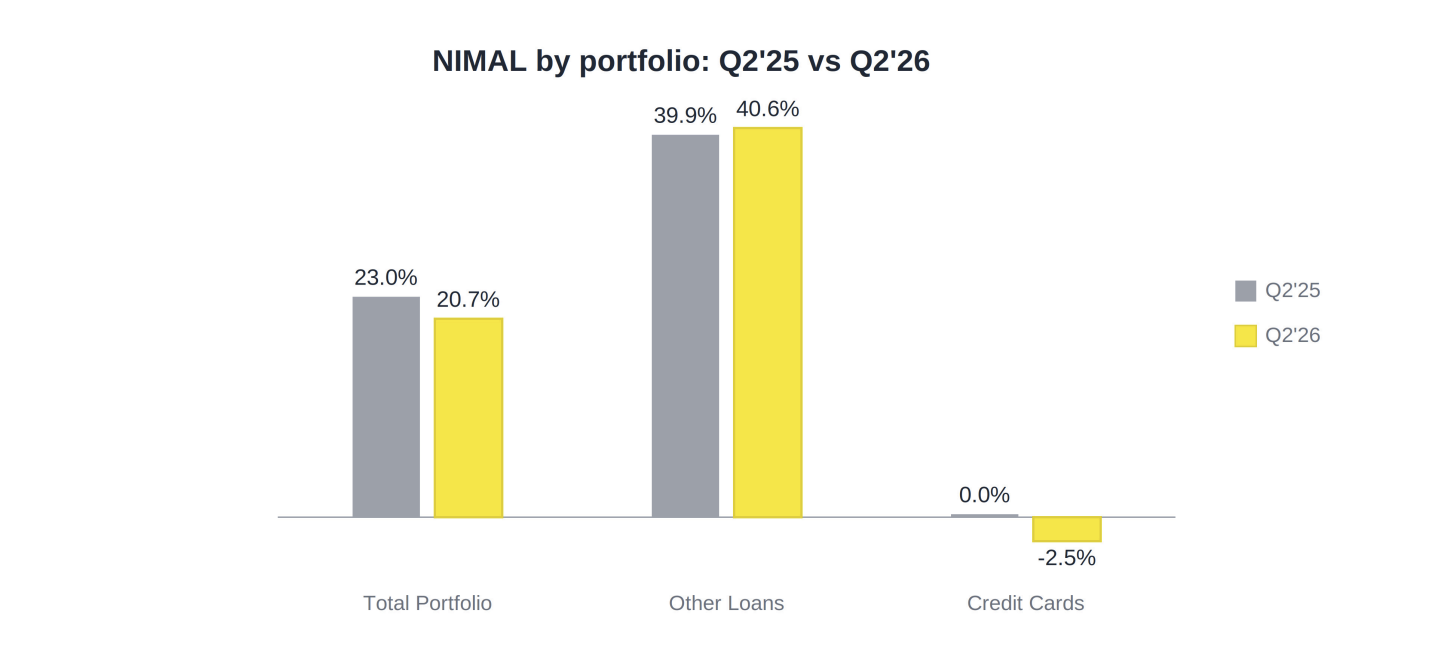
The pressure is coming from credit cards, where NIMAL was zero last year and is now negative 2.5%, because of upfront provisioning under CECL accounting, credit card losses hit the P&L on day one while interest income takes 12 to 18 months to catch up to breakeven.
They issued about 2.6 million cards, up a million year over year, which is what's weighing on the number now, but the loans become profitable after that breakeven point.
This matters beyond direct profitability too, cardholders are two to three times more likely to stay in the ecosystem, and TPV for users on both Mercado Pago and Mercado Libre is 90% higher.
So a credit card is a key way to lock in a better quality, stickier user.
MELI+, their Amazon Prime equivalent, saw subscribers grow 72%, another layer of stickiness.
All of this is trending the right way, but the profitability question mark remains.
Valuation.
To estimate mature profitability, I'm assuming Mercado Libre eventually earns a 4% EBIT margin on gross merchandise value, not revenue, since that keeps the math agnostic to whether a sale is first-party or third-party.
If they sell $100 of a good and it's a first-party transaction, they record $100 in revenue.
If they sell $100 of goods and it's a third-party transaction, they may record $15 of revenue, so less revenue but a similar profit, which makes their margin look much higher.
In theory, and I've asked a lot of different e-commerce executives this question, 1P versus 3P should converge to a very similar unit economic profitability at maturity, even though today's mix affects reported margins.
For comparison, Amazon North America runs around 6% EBIT margin on GMV.
I'm estimating Mercado Libre gets to 4%, with room to grow further from advertising, which is a better lever than raising take rates since sellers tolerate paying for a sale much more than losing margin on one.
Applying that 4% to their annualized GMV gets roughly $2.6 billion in NOPAT.
On the fintech side, applying a 30% pre-tax margin to credit revenue gets about $2.2 billion in earnings after tax.
Together, that's $4.8 billion in mature earnings.
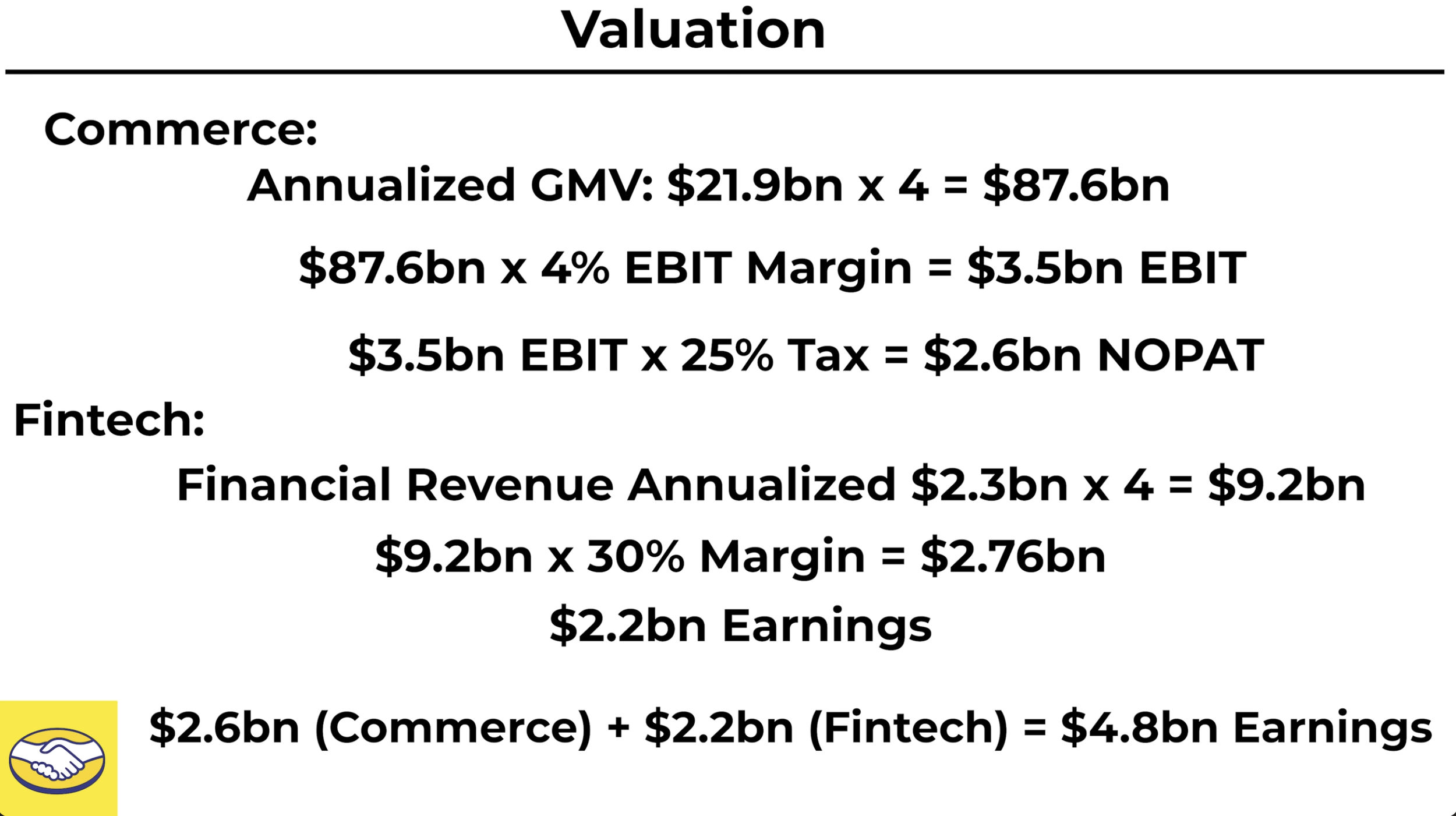
Their enterprise value at a stock price around $1,830 a share is about $100 billion, so that's roughly a 20 times multiple on these mature margin economics.
The caveat is that this assumes they've stopped sacrificing margin for growth, so you can't pair a 20 times mature multiple with 50% growth assumptions, that combination doesn't exist together.
If they're growing low double digits, 25x looks fair, if 20%+, more like 30x.
Another way to think about it is how many years of growth it'll take to get to a market multiple.
I'm not sure offhand what the S&P market multiple is right now, last time I checked it was around 21 times, that could be a little off, but if you're looking at Mercado Libre's trailing earnings, they're trading at a mid-40s multiple.
So you could think of how many years of earnings growth you need to get to a market multiple, maybe three or four years depending what earnings estimates you assume, and then what's your confidence they'll be growing faster than the market once they hit that, because that's when your excess return kicks in.
It's admittedly messy for Mercado Libre right now given all the investment pressuring margins, an unclear mature steady-state margin, and the fact that they have multiple segments.
For more detail, check out the Mercado Libre stock breakdown where the valuation assumptions are laid out, still mostly current since it's only a few months old.
As always, it is ultimately up to you to make your own judgment on whether or not you think the potential returns are worth the risks.
For more on Mercado Libre, check out this video below.
Nothing in this newsletter is investment advice nor should be construed as such. Contributors to the newsletter may own securities discussed. Furthermore, accounts contributors advise on may also have positions in companies discussed. Please see our full disclaimers here.
